
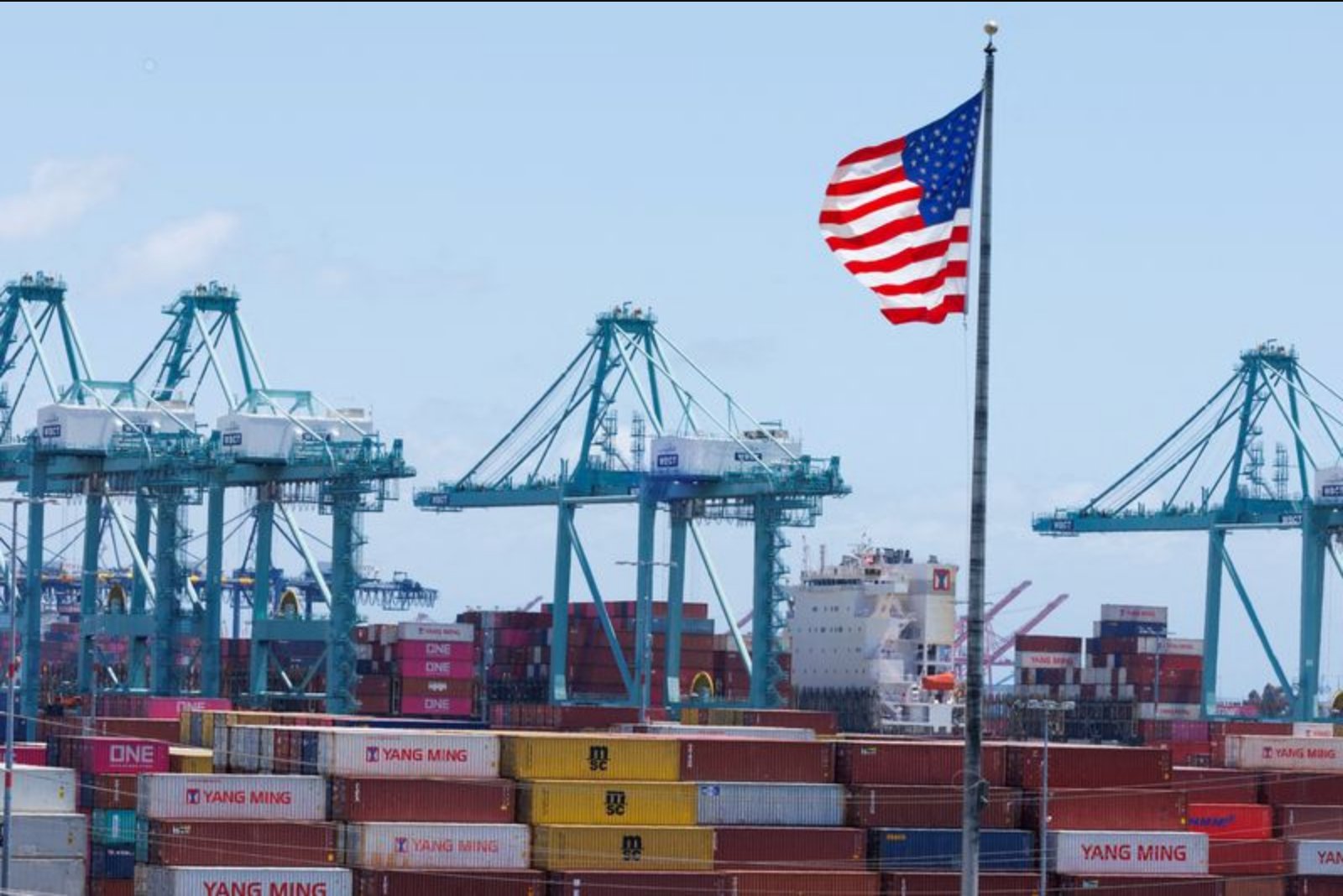
LOS ANGELES, Feb 9 - U.S. seaports recorded a 6.8% decline in container import volume in January compared with the same month a year earlier, according to data released by Descartes Systems Group on Monday. The prior-year figure was inflated when U.S. companies accelerated purchases to avoid tariffs introduced under President Donald Trump, producing a record high for the month.
Descartes reported total imports of 2,318,722 20-foot equivalent units (TEUs) for January. While lower year-over-year, that level still exceeded the historical average for the month. The technology provider interpreted the result as a move toward a more normalized trade dynamic - one driven by steady demand rather than the frontloading behavior that distorted the comparison period.
The data highlight a substantial reduction in shipments from China. Imports from that market totaled 771,093 TEUs in January, a 22.7% drop versus January 2025. China made up roughly one-third of total U.S. container imports for the month.
Investors and market watchers commonly track U.S. container import volumes as a leading indicator of economic activity, because consumer demand is a central engine of the domestic economy and import flows reflect that demand. The figures also illustrate how trade policy decisions, including tariff measures tied to President Donald Trump, can reverberate across supply chains and financial markets.
By comparing the January numbers to both the historical average and the elevated prior-year reading, Descartes framed the decline as less a sign of weakening demand and more a correction from an abnormal peak caused by frontloading. The company emphasized that the January volume points to trade being shaped by steady consumption rather than one-off rushes to import ahead of tariff changes.
Beyond the headline percentage change, the composition of imports remains notable: with China accounting for about a third of inbound containers, shifts in Chinese export volumes continue to have a meaningful effect on overall U.S. port activity.
Key points
- U.S. container imports fell 6.8% in January year-over-year, a pullback from a prior-year surge tied to tariff-driven frontloading.
- Total January imports were 2,318,722 TEUs, above the historical average and interpreted as a move toward normalized trade activity.
- Imports from China dropped 22.7% to 771,093 TEUs and represented roughly one-third of U.S. container imports in January.
Sectors affected - Retail, logistics and shipping, consumer goods distribution, and port services are directly influenced by the trends in container import volumes.
Risks and uncertainties
- Trade-policy driven distortions: Past tariff-driven frontloading created an elevated comparison base that can complicate year-over-year interpretations - impacting sectors like retail and manufacturing that rely on imported inputs.
- Concentration risk: With approximately one-third of imports originating from China, changes in Chinese export volumes or policy shifts could materially affect U.S. port activity and related supply chains.