
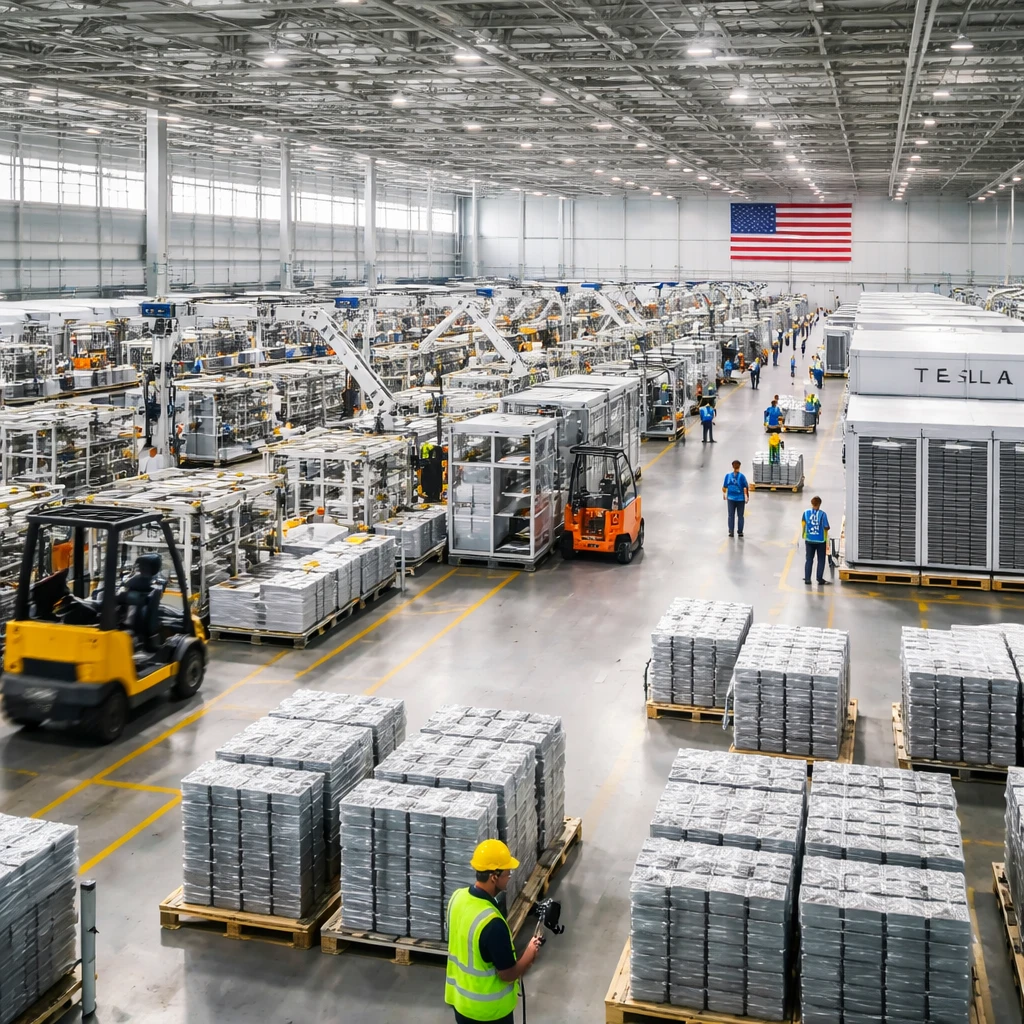
WASHINGTON, March 16 - The U.S. government announced that Tesla and South Korea's LG Energy Solution have entered a supply agreement to build a $4.3 billion lithium iron phosphate (LFP) prismatic battery cell manufacturing plant in Lansing, Michigan, with production slated to begin in 2027.
The U.S. Department of the Interior said in a statement that "American-made cells will power Tesla’s Megapack 3 energy storage systems produced in Houston, creating a robust domestic battery supply chain." The department noted the agreement as one of several deals highlighted by the administration at the Indo-Pacific Energy Security Summit.
Earlier reporting indicated that in July a source said LG Energy Solution had signed a $4.3 billion deal to supply Tesla with energy storage system batteries as Tesla sought to lower reliance on Chinese imports amid tariff considerations. At that time, LG Energy Solution stated it had signed a $4.3 billion contract to supply LFP batteries over three years on a global basis but did not identify the customer or whether the cells would be used in vehicles or energy-storage systems.
The announcement emphasizes LG Energy Solution's role as one of the few producers of LFP batteries with manufacturing presence in the United States. The LFP chemistry has been largely dominated by Chinese competitors that have limited operations in the U.S. market.
This arrangement links cell production in Michigan to energy storage assembly in Houston, reflecting a vertically connected supply plan for Megapack 3 systems. The Department of the Interior highlighted the arrangement as supporting a more domestic battery supply chain.
Observers should note the limited public detail about contract timing and end use beyond the statements released. The July statements from LG left open whether the batteries were intended primarily for electric vehicles or for stationary energy-storage applications, and the company did not identify the buyer at that time.
The article also referenced interest in how Tesla shares might be viewed in light of such supply developments, mentioning that some market tools evaluate TSLA alongside other companies to assess fundamentals, momentum, and valuation.
Key takeaways
- The U.S. government confirmed a $4.3 billion Tesla-LG Energy Solution agreement to build an LFP prismatic battery cell plant in Lansing, Michigan, aiming for production in 2027.
- The Department of the Interior said cells from the facility will power Tesla’s Megapack 3 energy storage systems assembled in Houston, intended to strengthen the domestic battery supply chain.
- LG Energy Solution previously disclosed a global, three-year $4.3 billion supply contract for LFP batteries without naming the customer or specifying whether cells would go to vehicles or energy-storage systems.
Sectors affected: Electric vehicle manufacturing, energy storage, and battery manufacturing supply chains.