
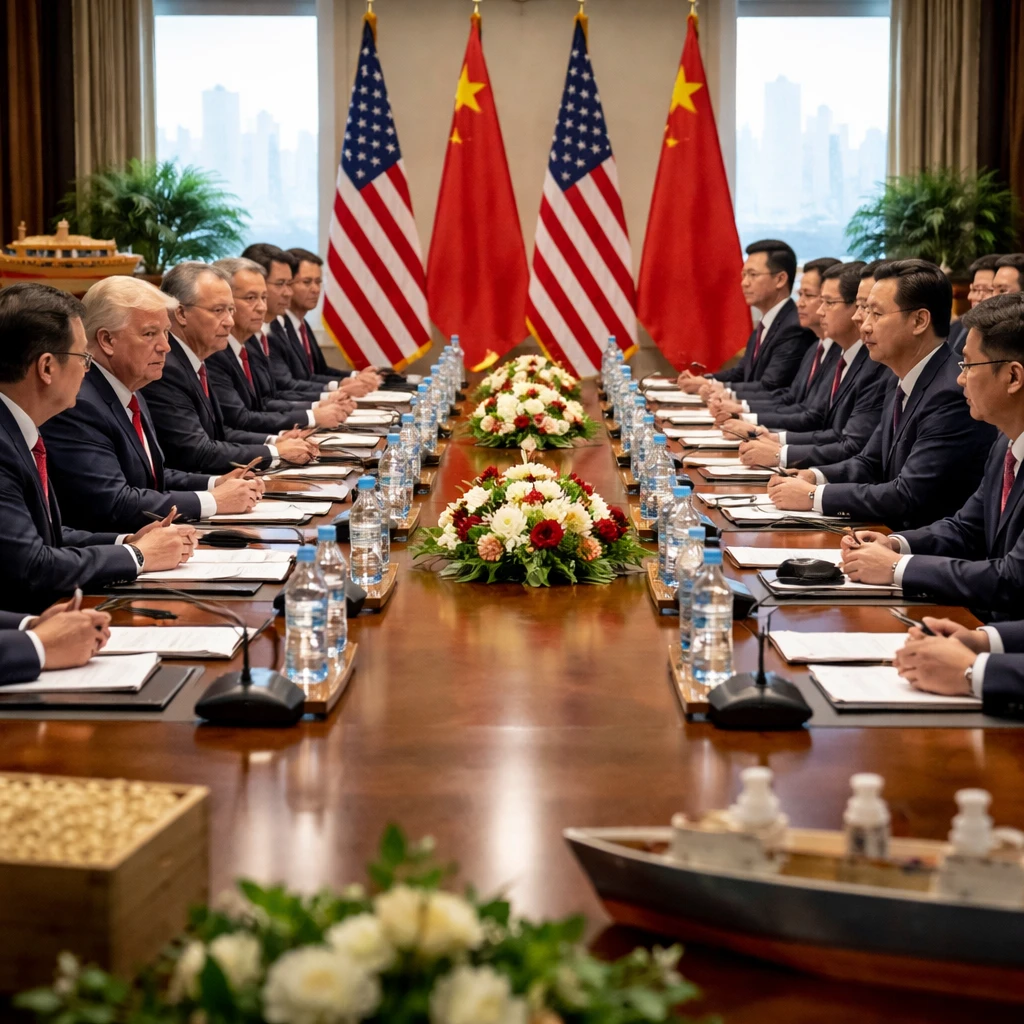
Sources with direct knowledge of the discussions have told reporters that U.S. and Chinese leaders are expected to agree to extend an existing trade truce for up to one year when President Donald Trump and President Xi Jinping convene in Beijing in early April. The extension would preserve an informal arrangement first negotiated in October during a bilateral meeting in Busan, South Korea.
The original understanding eased a period of sharply escalating trade tensions across 2025. That escalation included the imposition of triple-digit "retaliatory" tariffs on both sides and a broad Chinese boycott of U.S. agricultural produce that lasted for much of 2025. As part of the October deal, certain tariffs and export controls were rolled back to reduce immediate tensions.
Since the Busan accord, China has restarted purchases of American soybeans, a commodity noted in these discussions for its political salience in the United States. Sources say keeping the informal truce in place is viewed as a practical and attainable objective for the forthcoming summit in Beijing.
Delegations are expected to concentrate on measures that deliver short-term economic benefits. Officials anticipate the summit will include fresh commitments by China to buy U.S. goods, reinforcing the transaction-focused tenor of the talks. The informal nature of the arrangement means the emphasis will be on near-term steps to stabilize trade relations rather than a comprehensive, long-term settlement.
Observers close to the negotiations describe the extension as a means to sustain reduced tensions and to secure tangible purchases that can be implemented quickly. The forthcoming meeting will test whether both sides can convert the existing, informal understanding into continued practical cooperation for up to another year.
Contextual note: The projections and expectations reported here are based on sources familiar with the discussions and reflect plans as characterized by those sources. The focus, as described by those sources, remains the practical extension of the informal truce and short-term economic commitments rather than a formalized, multi-year agreement.