
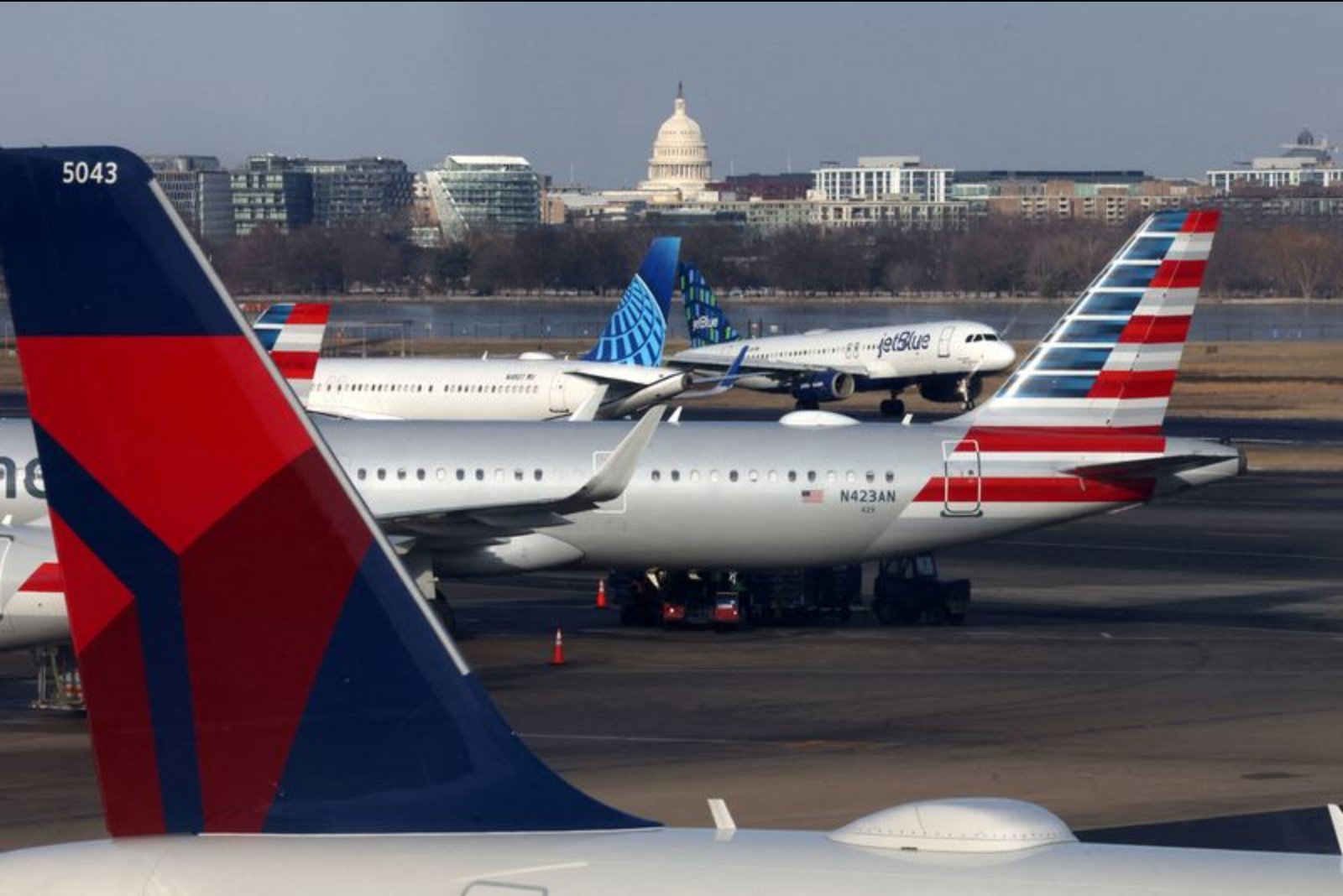
U.S. airline executives are publicly signaling that they can weather the economic impact of the U.S.-Israeli war on Iran by relying on robust demand and higher fares, even as jet fuel prices have jumped sharply since late February and global aviation faces disruption.
For the largest U.S. carriers - which do not hedge against rising oil costs - the immediate effect of the conflict has shown up primarily on the fuel line of their income statements. Jet fuel prices have nearly doubled since the outbreak of hostilities in late February, pressuring operating costs.
At the same time, executives at several leading U.S. airlines told attendees at an industry conference that bookings and revenues remain solid. United Airlines CEO Scott Kirby described the revenue backdrop as "really strong," noting the carrier has a goal "this year to fully offset the increase in fuel prices." He also reported that fares booked over the past week rose between 15% and 20%, and said that, for now, airlines could recover "100%" of the fuel price increase.
United has taken steps to remove some lower-yield flying from its schedule, trimming weaker services such as certain midweek, Saturday and overnight flights. Kirby said the airline would rather leave some demand unmet than operate routes that lose money if fuel costs remain elevated.
Delta Air Lines has communicated similar flexibility, saying it can reduce capacity if fuel prices remain high. Both Delta and American Airlines raised quarterly revenue outlooks this week even as each warned of roughly a $400 million hit to first-quarter results from higher fuel costs. Southwest Airlines forecasted meaningful margin expansion for the year despite the jump in fuel expense.
U.S. carriers’ confidence is not only a function of current bookings. Part of the picture reflects an unusually easy comparison to the prior year: travel demand had abruptly dropped last year when President Donald Trump unveiled sweeping tariffs, prompting most airlines to withdraw guidance. That weak base makes year-over-year growth look stronger.
Another structural factor is how tight the U.S. market was before fuel prices surged. Low-cost carriers had already been curbing growth - trimming routes, grounding aircraft and slowing expansion after a period of weak profitability. Sector data cited by TD Cowen show U.S. airlines plan to add 2.8% more seats in the second quarter of 2026, a figure that includes a 10% capacity reduction by ultra-low-cost carriers. Removing some of the cheapest seats from the market is giving larger airlines more ability to raise fares without triggering a broader fare war.
Across Europe and Asia, executives have adopted a more cautious tone. Lufthansa said its 2026 outlook was unclear because of geopolitical uncertainty. Wizz Air warned the conflict in the Middle East would reduce net profit in fiscal 2026. Air New Zealand suspended its full-year earnings outlook and said it would cut about 5% of flights through early May. For some carriers, the situation is not only a fuel-cost story but an operational one: networks that run closer to the conflict zone are more exposed to airspace closures, reroutings and demand uncertainty, even as short-term Asia-Europe fares have surged amid lost Gulf capacity.
Air France-KLM has warned about higher costs and added complexity from reroutings. British Airways extended a temporary reduction in flights across the Middle East. Scandinavian carrier SAS said it would cancel 1,000 flights in April. Those kinds of operational changes are adding costs and clouding near-term outlooks for many overseas carriers.
Analysts have largely sided with the more optimistic U.S. assessment. Melius Research observed that carriers have already enacted two fare increases of roughly $10 each way, and said the current demand environment could support an additional 5% to 7% rise in fares. TD Cowen raised its 2026 earnings estimates for the six largest U.S. carriers on the strength of persistent demand and a better-than-expected ability to lift fares to offset fuel costs.
Still, there are limits to how far pricing can be pushed. Some travelers accelerated bookings to lock in travel before fares rose, but airline executives reported booking patterns were largely normal over the March quarter. Delta executives characterized the uplift in bookings as a normalization and recovery in travel patterns, rather than primarily driven by fear or urgency.
Demand could come under strain if the conflict persists and sustained high energy prices begin to erode household budgets and corporate travel spending. For now, however, demand has held up particularly well at the largest U.S. carriers in part because they skew toward premium travelers, corporate accounts and loyalty program members - customer segments that are typically slower to cut back when fares rise.
Delta CEO Ed Bastian said the U.S. economy "has remained healthy at the high end," which he identified as Delta's core customer base, helping sustain demand despite the uncertainty. Delta has reported only a modest decline in bookings originating in Europe since the conflict began, even as U.S. demand for travel to Europe has remained strong. "When you got a war in your backyard, people tend to stay home," Bastian said, summarizing a pattern he has observed in the marketplace.
The contrast between U.S. carriers and many of their overseas peers comes down to a mix of cost exposure, network geography and market structure. For the biggest U.S. airlines, the immediate pain is concentrated in fuel expenses because they generally do not hedge oil. For many carriers in Europe and Asia, the shock includes operational complexity from closed airspace, longer routings and the need to adjust schedules, in addition to surcharges and fare increases.
How this evolves will depend on the trajectory of both the geopolitical situation and energy prices. For now, U.S. executives and some analysts are betting that a tighter domestic capacity environment and strong participation from premium travel segments will allow carriers to pass through fuel cost increases without severely damaging demand. Overseas carriers, particularly those with networks nearer to the conflict zone, are confronting a mix of higher costs and operational disruptions that creates a more uncertain near-term outlook.
As airlines adjust capacity and pricing, investors and market participants will be watching fuel costs, booking trends across different traveler segments, and how long reroutings and airspace constraints persist. Those variables will be central to how airlines’ revenues and margins perform in the months ahead.