
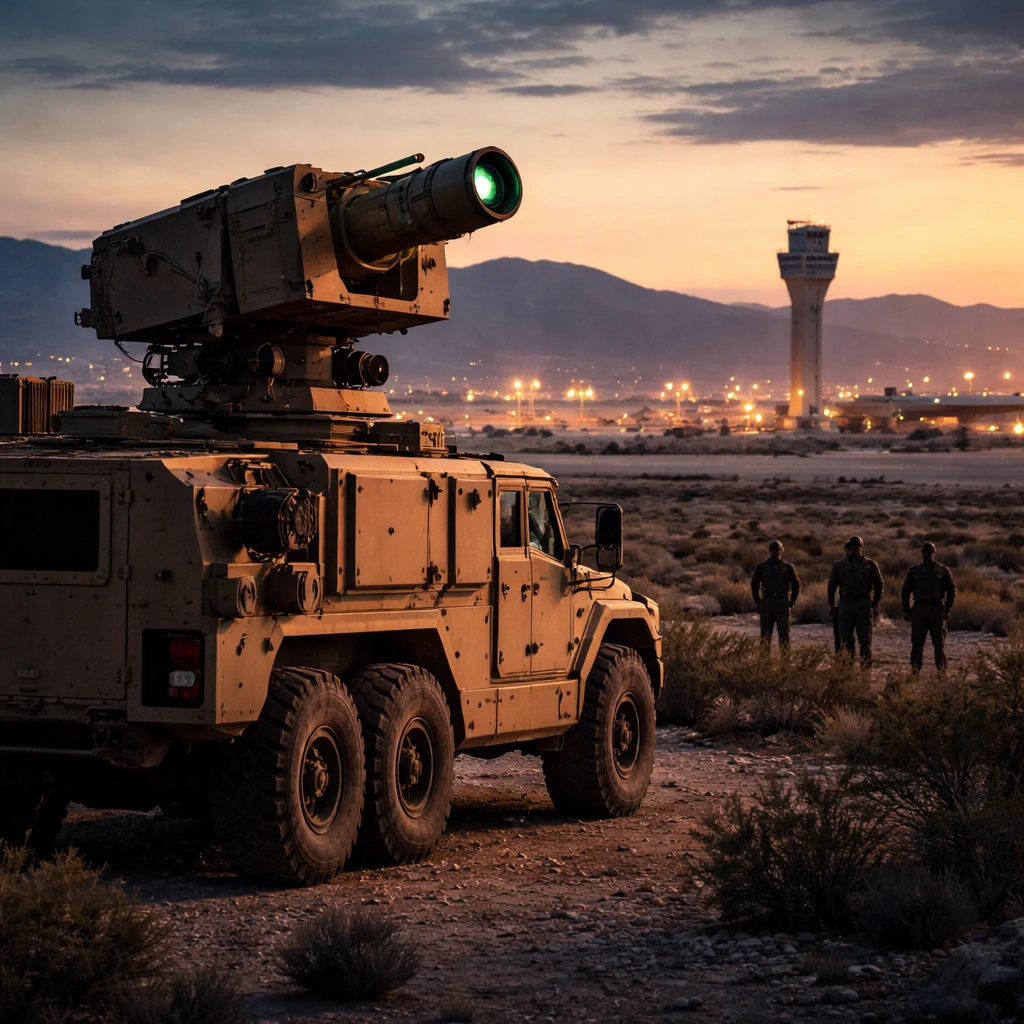
The U.S. Army positioned AeroVironment Inc.'s (NASDAQ:AVAV) LOCUST laser-based counter-drone system near El Paso International Airport on Wednesday, leading to a seven-hour shutdown of airspace after officials flagged potential hazards to commercial traffic.
The system deployed was a 20-kilowatt direct-energy weapon installed at Fort Bliss, immediately adjacent to the airport. According to two people briefed on the matter, the Federal Aviation Administration paused flights while the device was in place because of concerns about risks to aircraft.
LOCUST is designed to disable or neutralize small unmanned aircraft using focused laser energy. The platform has been described by military officials and the manufacturer as a lower-cost alternative to kinetic interceptors, aiming to defeat drones without expending traditional missiles.
The recent use is a notable example of the system operating outside of purely testing scenarios. Virginia-based AeroVironment delivered the Army’s first two LOCUST systems in September 2024 under a high-energy laser prototyping effort, and the Fort Bliss deployment is among the earliest known operational appearances.
Officials have said that the U.S. is intensifying measures to guard against drone threats in and around airports and at high-profile public gatherings. Efforts cited in planning and security discussions include protections around upcoming international sporting events and national celebrations such as the FIFA World Cup and America250 events.
Military and aviation authorities took a precautionary approach when the LOCUST system went active near El Paso, prioritizing the safety of commercial flights. The interruption to air traffic lasted seven hours while the device remained in position at the military installation adjacent to the airport.
Observers note that directed-energy systems like LOCUST are intended to offer a cost-efficient option for countering small aerial threats. The deployment highlights both the growing field use of high-energy lasers and the need for coordination between military operators and civilian aviation regulators when such systems are sited near active commercial airspace.
Context limitations: This report reflects information provided by people briefed on the deployment and details released about deliveries under the Army’s prototyping program. The account does not introduce additional operational particulars beyond those sources and the manufacturer delivery timeline.