
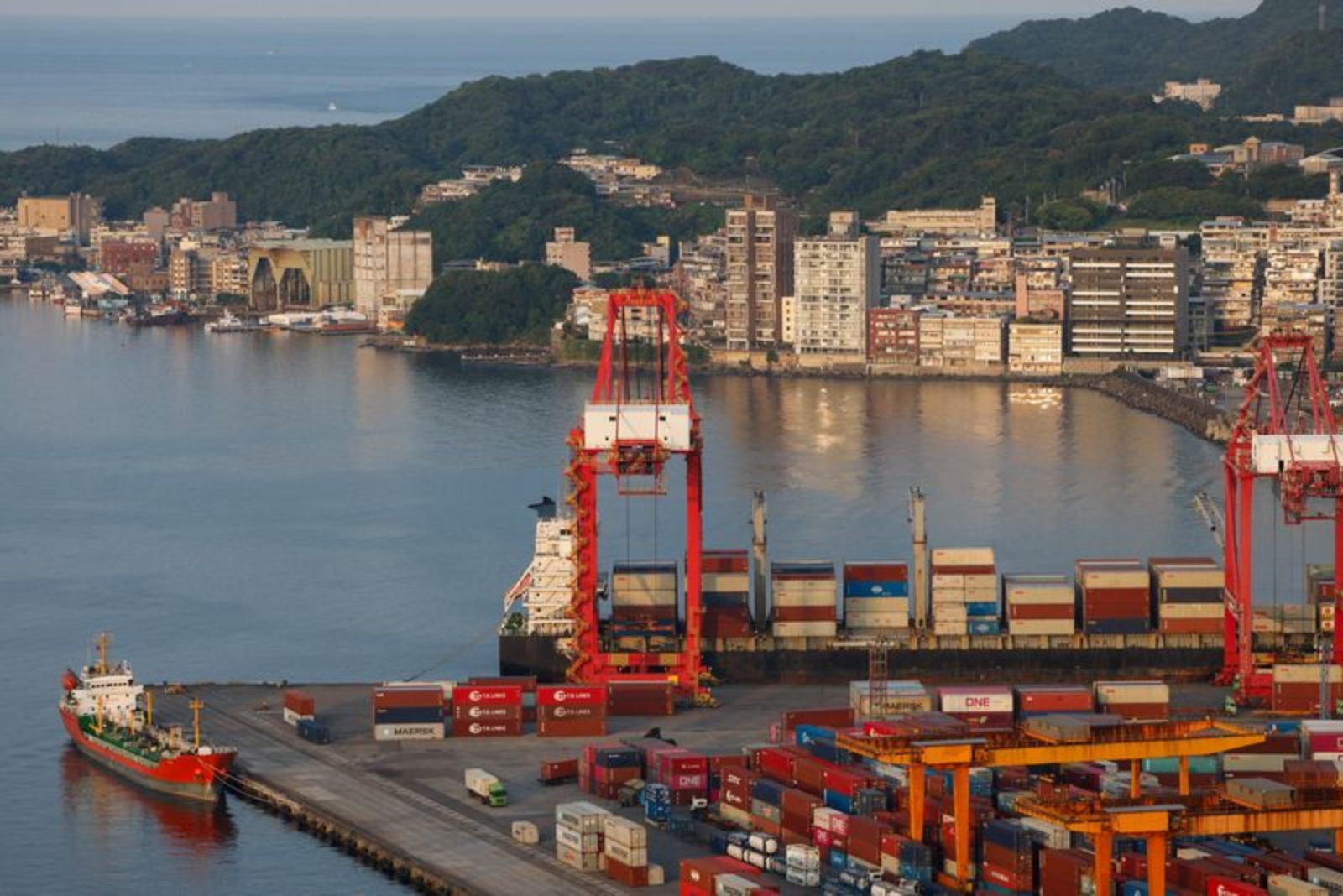
WASHINGTON, Feb 12 - Officials representing the Trump administration completed a final reciprocal trade agreement with Taiwan that cements a 15% U.S. tariff rate on imports from Taiwan while obligating Taiwan to adopt a schedule to eliminate or reduce tariffs on nearly all U.S. goods.
The document, published by the U.S. Trade Representative’s office, spells out Taiwan’s commitments to substantially increase purchases of U.S. products between 2025 and 2029. Those purchase commitments include $44.4 billion in liquefied natural gas and crude oil, $15.2 billion in civil aircraft and engines, and $25.2 billion in power grid equipment and generators, marine equipment and steelmaking equipment.
The finalized text adds technical provisions and specifics to an agreement first reached in January. That earlier accord reduced tariffs on Taiwanese goods - including those from the island’s major semiconductor sector - to 15% from the 20% level that was originally imposed by the Trump administration. The current deal places Taiwan on par with its nearest Asian export rivals, South Korea and Japan, on the tariff front.
Under the agreement, Taiwan will immediately remove tariffs of up to 26% on a range of agricultural imports from the United States, covering beef, dairy, corn and other items.
U.S. Trade Representative Jamieson Greer said the pact will expand export prospects for U.S. farmers, ranchers, fishermen, workers and manufacturers. "This agreement also builds on our longstanding economic and trade relationship with Taiwan and will significantly enhance the resilience of our supply chains, particularly in high-technology sectors," Greer added.
Separately in the text of the original release, promotional material about investment products noted performance metrics for AI-driven stock portfolios. The material stated that year to date, two out of three global portfolios were outperforming their benchmark indexes, with 88% of portfolios in the green. It also cited a flagship strategy that doubled the S&P 500 within 18 months and highlighted specific past winners with documented gains of +185% for Super Micro Computer and +157% for AppLovin.
The finalized trade instrument therefore combines tariff-rate decisions, a timetable for Taiwanese tariff liberalization on U.S. goods, concrete multi-year purchase commitments across several sectors and the immediate lifting of significant agricultural levies.
Key sectors directly referenced in the agreement include energy (liquefied natural gas and crude oil), civil aerospace (aircraft and engines), power and utilities (grid equipment and generators), marine and steelmaking equipment, semiconductors by implication through tariff alignment, and U.S. agriculture (beef, dairy, corn and other imports).