
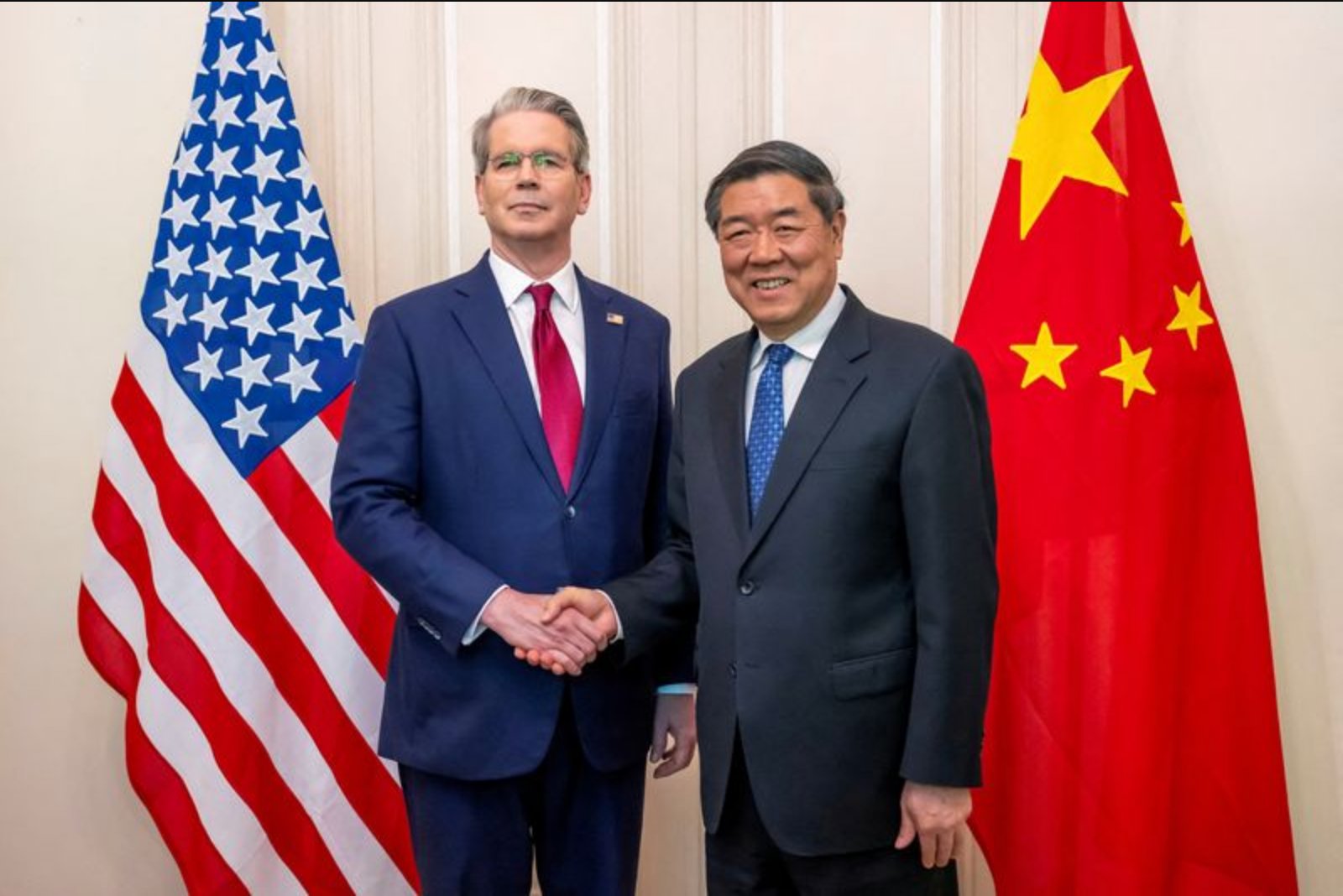
Senior trade representatives from the United States and China are expected to hold talks in mid-March, a development that suggests the planned summit between President Donald Trump and Chinese leader Xi Jinping remains on course despite recent geopolitical activity, according to people familiar with the planning.
U.S. Treasury Secretary Scott Bessent and Chinese Vice Premier He Lifeng are reported to be scheduled to meet in Paris late next week to discuss potential commercial commitments tied to the leaders' meeting. Spokespeople for the U.S. Treasury in Washington did not respond on Tuesday to requests seeking confirmation of the planned meetings. The Chinese commerce ministry and the U.S. Department of State also did not immediately respond to requests for comment.
Those familiar with the sessions' agenda say purchase commitments for Boeing aircraft and U.S. soybeans are expected to be among the topics on the table. The discussions reportedly will also touch on the future of tariffs that were designed to curb fentanyl flows after the U.S. Supreme Court struck down the duties. In addition, planners may raise the topic of Taiwan, with Beijing having increased military drills around the democratically governed island in recent years as part of its sovereignty assertions.
The scheduled face-to-face engagements come as President Trump is due to arrive in Beijing at the end of March. Sources cited analysts who say that recent U.S. military actions - including a campaign against Iran that reportedly killed Supreme Leader Ayatollah Ali Khamenei, following the U.S. capture of Venezuelan leader Nicolas Maduro in a risky Caracas raid in January - have placed Chinese leader Xi Jinping on the defensive.
Earlier reporting in the day indicated that Beijing and Washington have opened talks about restarting reciprocal investment flows. One high-profile trade topic under discussion is a potential Boeing sale: the aircraft maker is reported to be in negotiations to sell as many as 500 jets to China, which would mark a substantial recovery for Boeing in the country, the world's second-largest aviation market, where orders have slowed amid tensions between the two nations.
Boeing has historically sent roughly one quarter of its planes to China, but the company has not landed a significant Chinese purchase since the former U.S. administration's first term. Separately, President Trump said last month that China was considering boosting U.S. soybean purchases to 20 million metric tons for the current season, though traders remain skeptical given that higher prices can make U.S. soybeans uneconomic.
Chinese buyers only resumed booking U.S. soybeans in late October, shortly before the last leaders' meeting, a move analysts described as a gesture of goodwill at the time. Beijing has said it is closely watching whether the White House will pursue other tools to reimpose tariffs that were struck down by the U.S. Supreme Court. Beijing did not retaliate when the White House announced a new temporary tariff of 15% on U.S. imports from all countries late last month.
Context and implications
The reported mid-March talks would aim to finalize or at least move forward any commercial items that could be announced during the leaders' meeting at the end of March. Aviation and agriculture sectors feature prominently in the planning discussions, given the potential scale of aircraft purchases and soybean shipments. At the same time, unresolved tariff questions and rising regional tensions - including activities around Taiwan - add layers of uncertainty to the diplomatic and commercial engagements.
Observers note that confirmation from official channels is still pending, leaving the timing and content of any formal announcements open to change.