
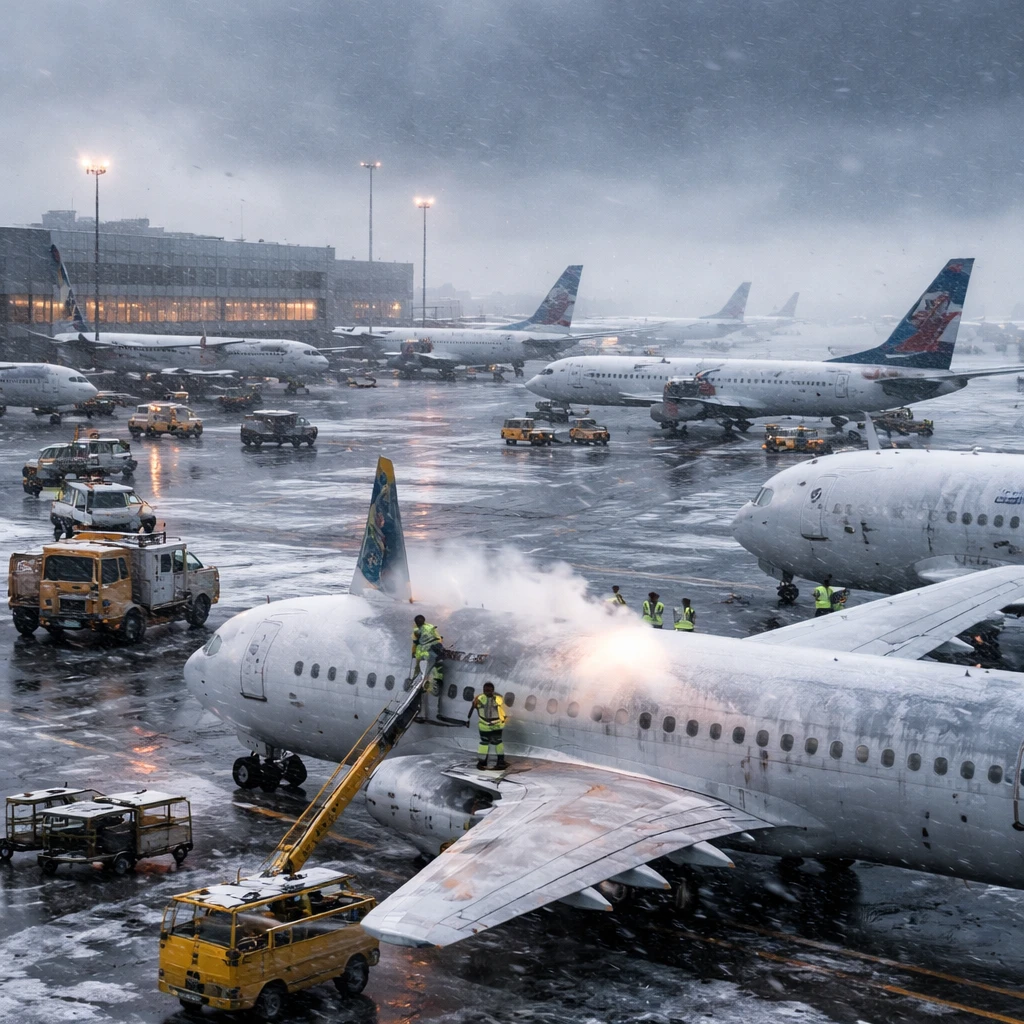
U.S. airline stocks ticked down broadly in premarket trading on Monday as a significant winter storm disrupted flight schedules and raised the prospect of continued travel interruptions.
Over the weekend, freezing temperatures alongside snow and ice impacted large areas of the country. The severe weather affected the eastern third of the United States, placing roughly 118 million people under harsh conditions.
The National Weather Service warned that travel disruptions were likely to be widespread and prolonged. Industry flight-tracking figures from FlightAware.com showed total delays within, into, or out of the U.S. at 818 on Monday, with cancellations registering 3,662.
Flight-aware data for Sunday reflected even heavier disruption, with 5,596 flights delayed and 11,599 flights cancelled, levels described as comparable to the heavy interruption seen during the COVID-19 period.
In premarket trading, shares of major carriers moved lower. American Airlines, Delta Air Lines and United Airlines each declined by more than 1% before the market opened, while Southwest Airlines and JetBlue also slipped.
American Airlines was notably impacted, with FlightAware indicating that roughly 20% of the carrier's flights had been cancelled on Monday. Key airports along the eastern seaboard - including hubs in Boston, New York and locations in Virginia - experienced cancellations for incoming and outgoing flights. Other airports outside the northeast, such as Dallas, were also affected by the storm.
In response to the conditions, the federal government approved emergency disaster declarations for a dozen states. Several additional states and the District of Columbia issued weather emergency declarations as well.
Forecasts indicated the storm was expected to begin moving off the U.S. into the Atlantic on Monday, though icy conditions were likely to persist for several more days in parts of the affected region.
Market reaction in the premarket session reflected investor concern over the immediate operational and revenue impacts from the cancellations and delays. The data from flight-tracking services provided a near-real-time picture of the disruptions, with particular pressure noted on carriers with high proportions of cancelled flights on Monday.
While the storm's movement toward the Atlantic suggested the worst of the system might pass, the persistence of hazardous conditions means airlines and travelers could face additional schedule volatility in the days ahead.