
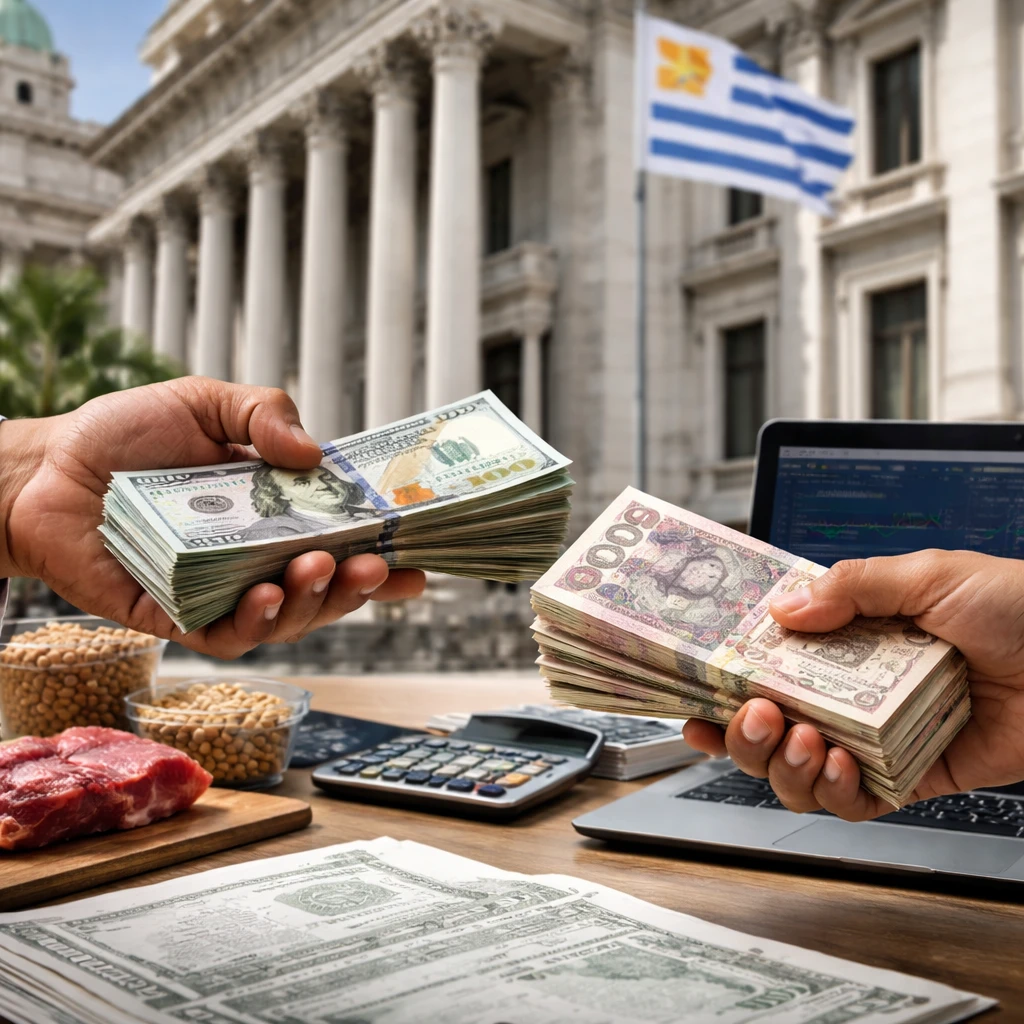
Uruguay is pressing forward with a strategy to substitute U.S. dollar-denominated sovereign debt with obligations issued in its own currency, the finance minister said, describing the shift as part of a broader effort to strengthen economic resilience and foster growth.
Gabriel Oddone said the move is supported by robust demand from investors, some of whom now view the Uruguayan peso as a relatively stable store of value amid a softer dollar and heightened geopolitical turmoil that has unsettled assets once seen as dependable in Western markets. "We are moving (forward) in the de-dollarization process," he said, describing a government objective to have roughly half of public debt in domestic currency in the near term.
Oddone recalled that in the early 2000s, around 90% of Uruguay's public debt was denominated in dollars. At that time, limited appetite for peso debt and cheaper borrowing costs in dollars made dollar issuance the dominant option. The finance minister said that the calculus has changed, and that expanding peso issuance offers protection from currency movements that the government cannot control.
Issuing local-currency debt does come with a cost trade-off. "Issuing pesos is more expensive than using dollars, but ... it’s part of the strategy to diversify our risks, and especially be prepared (for) shocks coming from abroad," Oddone said, adding that repaying debt in the currency the government uses to collect taxes provides greater predictability for public finances.
Investor behavior has helped make the policy feasible. Emerging and frontier market local-currency securities have attracted interest from investors seeking yield and a means to diversify away from the dollar. Uruguay, which maintains an investment-grade sovereign rating, recorded its highest-ever share of international debt issued in pesos last year at 40%.
The government expects to secure about the equivalent of $6 billion in financing this year, the majority through debt issuance, Oddone said. The finance ministry also plans another green bond issue in 2027, even as some investors and issuers have moderated their activity in these instruments following backlash in the U.S. and other markets over environmental goals. Oddone noted that for European investors, green bonds remain an important part of the offering.
On macroeconomic performance, the International Monetary Fund estimated Uruguay’s growth at 2.5% last year, a pace that Oddone said has slowed along with a deceleration in inflation. Observers have urged the center-left government, which took office about a year ago, to press ahead with reforms aimed at addressing recurring fiscal deficits.
Oddone reported that the central government deficit edged to just above 4% of GDP by the end of 2025. He expects the deficit to dip to just under 4% in 2026 and to decline more noticeably in 2027, in part as a result of a tax arrangement aligned with OECD standards that is projected to increase revenue.
Policy measures designed to lift growth include tax changes, tax incentives, and a targeted "redesign" of specific sectors considered vital to attracting investment. Uruguay’s economic profile, which is heavily dependent on agricultural exports such as beef and soybeans, informs these priorities.
Regionally, Oddone said Uruguay seeks to play a leading role within the Mercosur trade bloc - aiming to be the "tip of the spear" - while also cultivating broader economic connections. Mercosur recently signed its largest-ever trade agreement with the European Union, and is engaged in talks with China and Canada on potential accords. "We need to be members of Mercosur, but we need to be more connected, to be more connected to the economic world," Oddone said.
The finance minister’s comments sketch a policy path that blends a recalibration of the government’s currency exposure with steps to strengthen revenue and attract fresh investment, while continuing to leverage trade relationships both inside and beyond the region.