
Overview
Ultra-low-cost carriers have invested in fleets dominated by recent-generation aircraft, delivering industry-leading fuel efficiency per passenger. That efficiency is a key operational advantage as jet fuel stands as airlines' largest expense after labor. Yet the very newness and higher ownership costs of those aircraft create a distinct financial vulnerability should U.S. travel demand falter amid broader macroeconomic uncertainty.
Demand dynamics and recent fuel moves
U.S. carriers recently reported stronger-than-expected spring travel demand, but the conflict involving Iran and Israel has driven jet fuel prices sharply higher. Kloza Advisors principal analyst Tom Kloza noted jet fuel surpassed $200 per barrel, up from about $105 before the conflict began. That spike has prompted legacy carriers such as United Airlines to cut capacity and park aircraft in an effort to reduce costs. Those capacity-management options may not be equally available to ultra-low-cost carriers that have sizable obligations tied to newer jets.
Frontier’s position
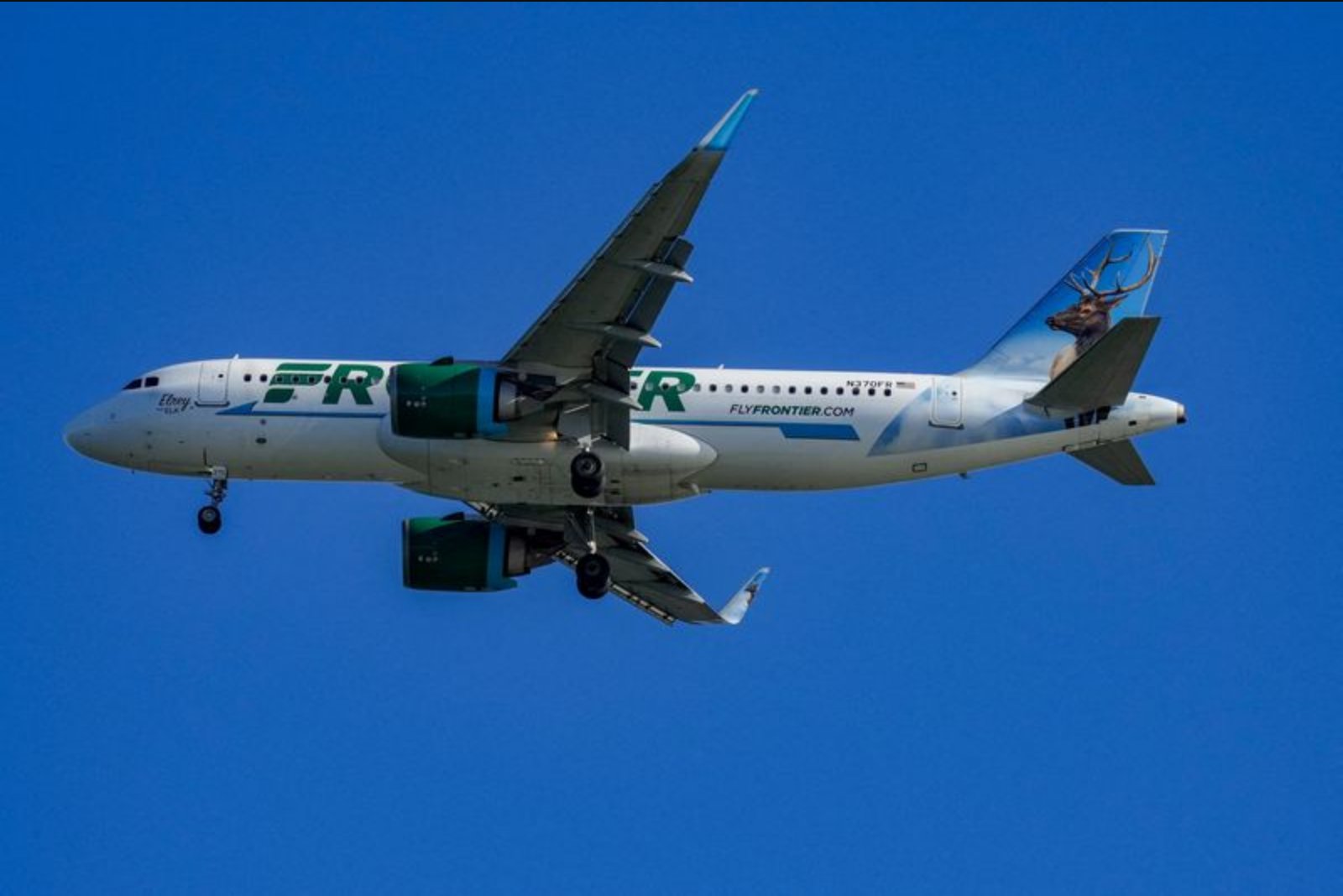
Frontier Airlines has said it has seen improving demand in the first quarter and that it benefited from filling capacity gaps left by Spirit Airlines’ contraction on the U.S. West Coast. A company spokesperson noted that Frontier’s adjusted revenue per available seat mile, a commonly used proxy for pricing power, was trending higher prior to the recent fuel spike.
Frontier entered 2026 committed to lifting aircraft utilization rates as a way to lower unit costs and pass savings to customers through lower fares. James Dempsey, Frontier CEO, told attendees at the JP Morgan Industrials conference that the carrier starts from a better place on a per-passenger basis because of its high-density business model and the predominance of new aircraft in the fleet. As of December 2025, roughly 85% of Frontier’s fleet comprised Airbus A320neo family aircraft, which the carrier says deliver the most fuel-efficient operations in the U.S., with fuel burn per passenger 40% below peers.
Cost trade-offs of newer aircraft
While newer planes deliver meaningful fuel savings, analysts caution that they also carry higher ownership and maintenance burdens. Deutsche Bank research analyst Michael Linenberg emphasized that ULCCs rely heavily on keeping aircraft in the air to realize their cost advantages. In a research note, Linenberg wrote that it is far more 'expensive' for an airline to idle a new aircraft rather than an older one that is fully depreciated and financially unencumbered. He added that if fuel prices were to more than double, operating a newer aircraft that is 15% more efficient than an older generation would not offset the financial pain.
Aviation industry analyst Henry Harteveldt pointed to Spirit Airlines as an example of how those ownership costs can shape fleet strategy. He said Spirit, which is aiming to emerge from bankruptcy later this year, decided to return to lessors or sell most, possibly all, of its newer Airbus A320neo aircraft because the higher ownership costs rendered the jets too expensive to retain. Spirit declined to comment.
That dynamic shows up in Frontier’s reported results for 2025. The carrier’s full-year fuel expenses fell 11% to $929 million in 2025, aided in part by a 10% decrease in fuel costs. At the same time, Frontier’s aircraft rent expense rose 11% to $748 million as it added new aircraft to its fleet. A company spokesperson said Frontier was confident in its ability to weather the current volatile fuel environment. Separately, Dempsey said this week that Frontier was 'following suit' other airlines in raising fares.
Analysts’ perspective on fleet economics
Christopher Anderson, a professor at the Cornell SC Johnson College of Business, noted that carriers with newer fleets face pressure to generate sufficient cash flow to service those aircraft. The requirement to produce cash just to cover financing and leasing costs increases the sensitivity of these carriers to demand swings.
Tom Fitzgerald, an equity analyst at TD Cowen, observed that the challenge is not new. Even before the recent fuel spike, ultra-low-cost carriers with newer jets had been lowering utilization and encountering the financial headwind associated with parking pricey new assets. Fitzgerald also highlighted that newer planes can bring higher maintenance bills, saying that the fuel efficiency gains from the new-generation engines came at a cost in terms of durability.
Operational implications
The operational model of ULCCs centers on high-density seating and elevated utilization to drive low unit costs. Those levers become harder to pull if either demand drops or fuel shocks force carriers into capacity adjustments. While fuel-efficient aircraft reduce per-passenger fuel burn, they do not remove the capital servicing obligations tied to recent fleet investments. When an airline must ground or reduce the use of newer jets, the financial impact can be larger compared with older, fully depreciated aircraft.
Conclusion
Ultra-low-cost carriers have pursued a strategy that trades higher upfront and ongoing ownership costs for superior fuel efficiency and lower per-passenger fuel burn. This approach yields advantages when demand remains steady or grows, and when fuel prices are stable or declining. However, the current environment of elevated jet fuel costs and the potential for weaker demand creates uncertainty about whether those advantages will be sufficient to preserve profitability for carriers heavily invested in new aircraft.
Key points
- ULCCs operate highly fuel-efficient, recently acquired fleets, giving them lower fuel burn per passenger compared with peers.
- The newer aircraft carry higher ownership and rental costs, which increase financial strain if utilization falls.
- Rising jet fuel prices above $200 per barrel, and capacity cuts by legacy carriers, underscore the uneven tools available to manage costs across different carrier models.
Sectors impacted
- Airlines and aviation services
- Aircraft leasing and financing
- Energy and jet fuel markets
Risks and uncertainties
- Further increases in jet fuel prices could negate the operating cost advantage of more fuel-efficient aircraft and raise overall operating expenses for carriers.
- A weakening in U.S. travel demand would reduce utilization rates, making it costly to idle or park newer, higher-cost aircraft and pressuring cash flow.
- Higher maintenance and rent expenses associated with newer fleets can strain margins, especially for carriers with limited ability to flex capacity.