
UBS has moved Southwest Airlines up to a Buy rating from Neutral, citing what it describes as meaningful earnings leverage from newly announced seating and fee programs. The firm raised its price target on the carrier to $73, up from $51, after incorporating revenue and margin upside from extra-legroom (ELR) seating, assigned seats and checked bag charges.
In UBS’s base-case scenario, the combination of ELR, assigned seating and bag fees will contribute about $4.25 to $4.50 of incremental earnings per share once those initiatives reach full maturity in fiscal 2027. The analyst team noted that these items would account for the majority of a projected swing in EPS from under $1 in fiscal 2025 to more than $6 in fiscal 2027.
UBS signalled that some of this upside could become visible when Southwest issues the upper end of its fiscal 2026 guidance range. The airline currently guides to at least $4 in EPS for 2026; UBS said that presenting a higher range would likely be a positive catalyst. Based on its model, UBS now forecasts EPS of $5.05 for 2026 and $6.07 for 2027, figures it says are roughly 20% above consensus estimates.
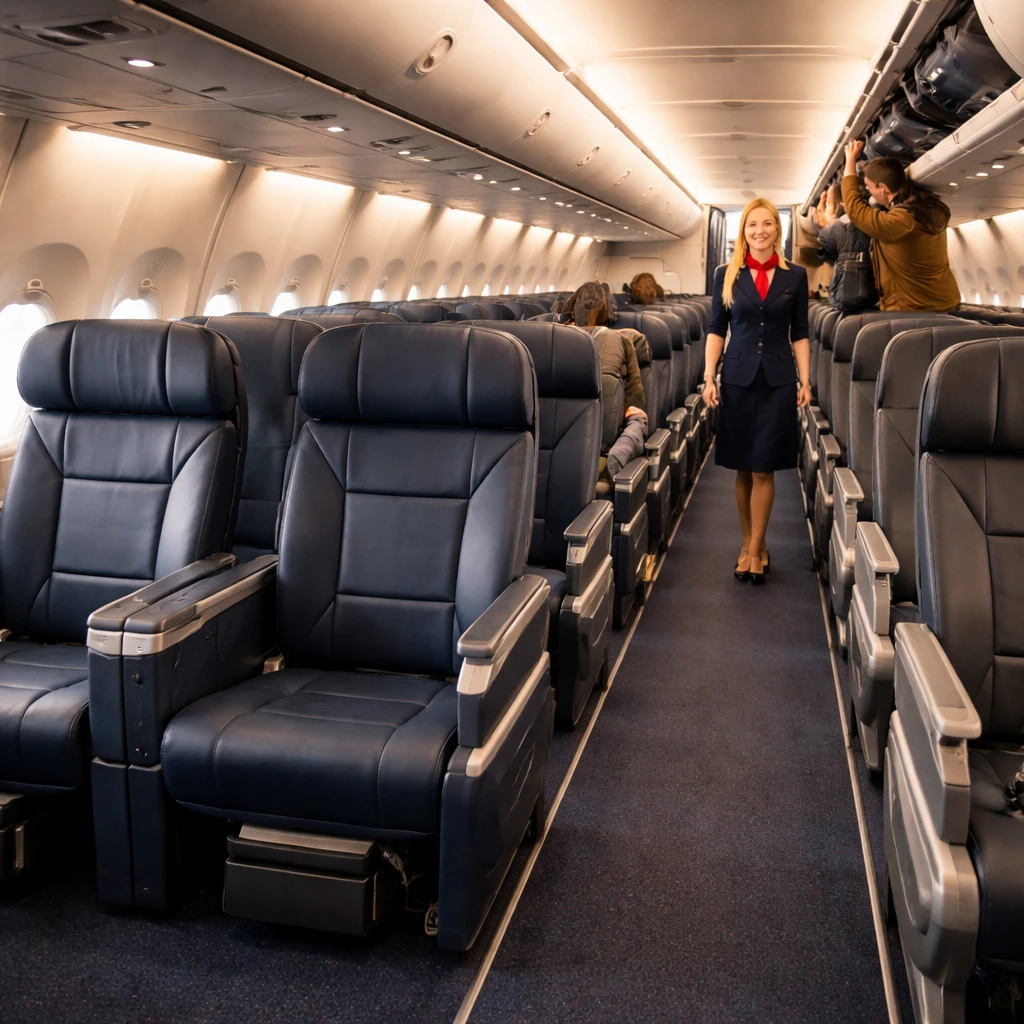
The research note also emphasised the revenue potential from the carrier’s cabin reconfiguration. UBS interprets the new configuration as implying roughly 28% of seats designated as ELR and 22% as preferred seats. Under the firm’s illustrative paid uptake assumptions - a 40% paid load factor on ELR seats and 70% on preferred seats - the change could generate approximately $1.7 billion in additional EBIT by 2027, or about $2.70 in EPS.
Separately, UBS characterised checked-bag fees as a "sizeable opportunity," estimating incremental EBIT in the range of $1 billion to $1.5 billion depending on adoption. Those figures were incorporated into the firm’s upgraded earnings trajectory for the carrier.
UBS’s upgrade and higher target reflect a view that monetization through cabin segmentation and ancillary fees will materially boost profitability over the next two years, contingent on adoption levels and how management frames near-term guidance.
Analyst takeaway - focused considerations
- Pricing power via seat-product segmentation and ancillaries is central to UBS’s thesis.
- Realization of modeled upside hinges on customer adoption rates for paid ELR, preferred seating and checked-bag charges.
- Near-term guidance that illustrates higher EPS for fiscal 2026 could act as a market catalyst.