
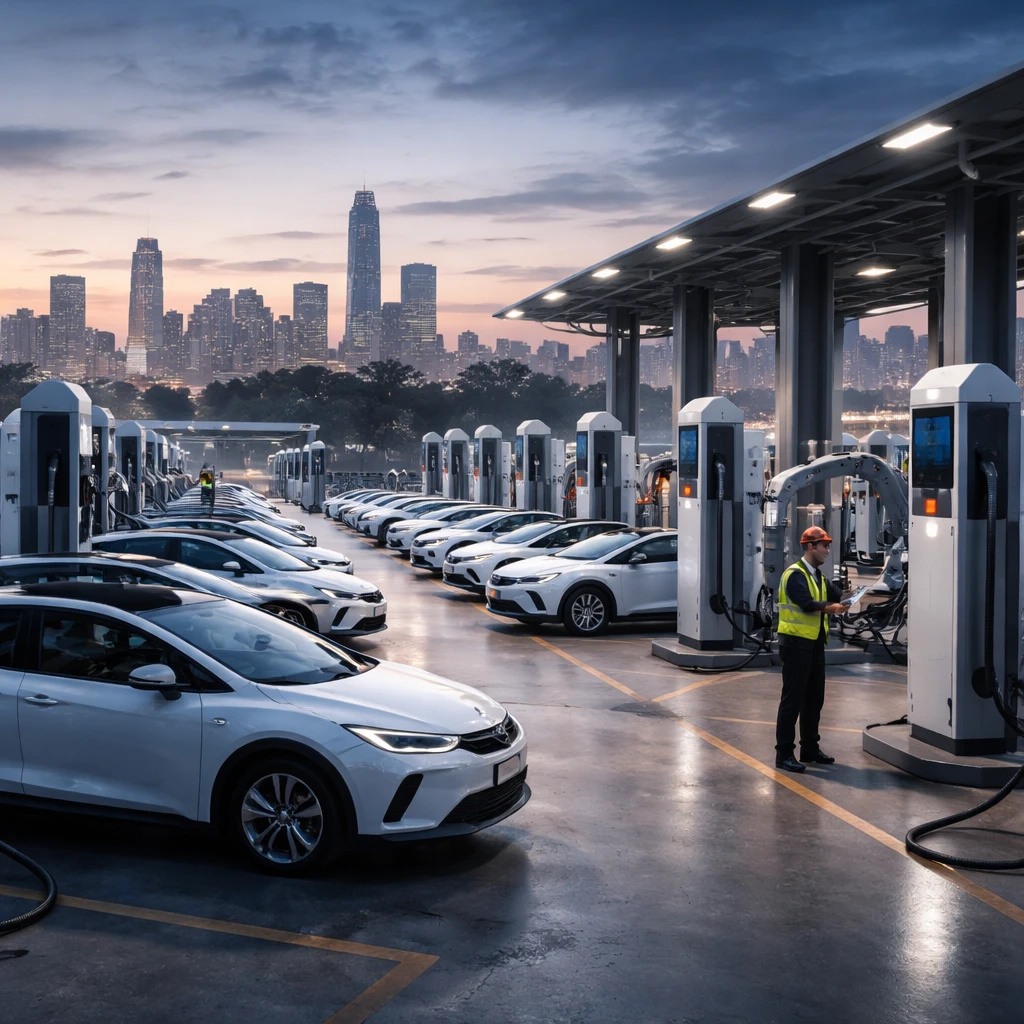
Uber Technologies Inc is allocating in excess of $100 million to build high-capacity, fast-charging stations designed for autonomous vehicle fleets in the U.S., the company said in a statement. The program will begin in the San Francisco Bay Area, Los Angeles, and Dallas, with the stated objective of supporting robotaxi operations and improving overall fleet economics.
Shares of the company rose 2.9% on the day the plan was announced. Uber framed the investment as a way to strengthen its position in the autonomous mobility market at a time when competitors deploying self-driving fleets, such as Waymo, are expanding their presence.
Uber said it will run the ground operations for these autonomous fleets and argued that owning charging and depot infrastructure "improves efficiency, lowers costs and keeps vehicles on the road longer, maximizing utilization and uptime." The company intends to pair the new charging hubs with the operational services it already provides at certain depots, such as cleaning and vehicle inspections.
Pradeep Parameswaran, Uber’s Global Head of Mobility, said: "Cities can only unlock the full promise of autonomy and electrification if the right charging infrastructure is built for scale." He added that by "putting capital on the table," Uber is supporting municipal preparations for an all-electric vehicle future while aiming to reduce costs for drivers.
The rollout will include full-service DC fast-charging installations located at autonomous depots where Uber already manages day-to-day fleet activities. The company currently handles such operations in Atlanta and Austin through its partnership with Waymo, and it does so in Abu Dhabi and Dubai for WeRide vehicles.
Alongside direct investment, Uber said it is offering utilization guarantees to help charging networks attract financing and expand. Those guarantees are intended to unlock more than $100 million in net-new public EV charging capacity for drivers around the world. Using internal trip and fleet data to target locations with the greatest need, Uber plans to support the installation of over 1,000 new chargers in cities including New York, London, and Paris.
Despite the spending commitment, the company is operating in a challenging market environment. The statement noted that Uber’s shares had declined 14% over the prior month, even as management projects that autonomous vehicles will be active on its network in at least 10 cities by the end of 2026.
Key points
- Uber will invest more than $100 million to build DC fast-charging hubs for autonomous vehicle fleets in the U.S., starting in the Bay Area, Los Angeles, and Dallas.
- The company plans to operate ground services at these depots, arguing that owning infrastructure raises utilization and lowers costs for fleet operations.
- Sectors affected include transportation and mobility services, electric vehicle charging infrastructure, and equity markets where Uber shares trade.
Risks and uncertainties
- Market sentiment - Uber’s shares had fallen 14% over the past month, signaling investor uncertainty despite the announced capital deployment.
- Competitive pressure - Skepticism about Uber’s long-term viability in robotaxi operations remains as rivals such as Waymo expand autonomous fleets.
- Infrastructure scale-up - Cities and operators must build the appropriate charging infrastructure for autonomy and electrification to reach scale, a limitation the company itself acknowledges.