
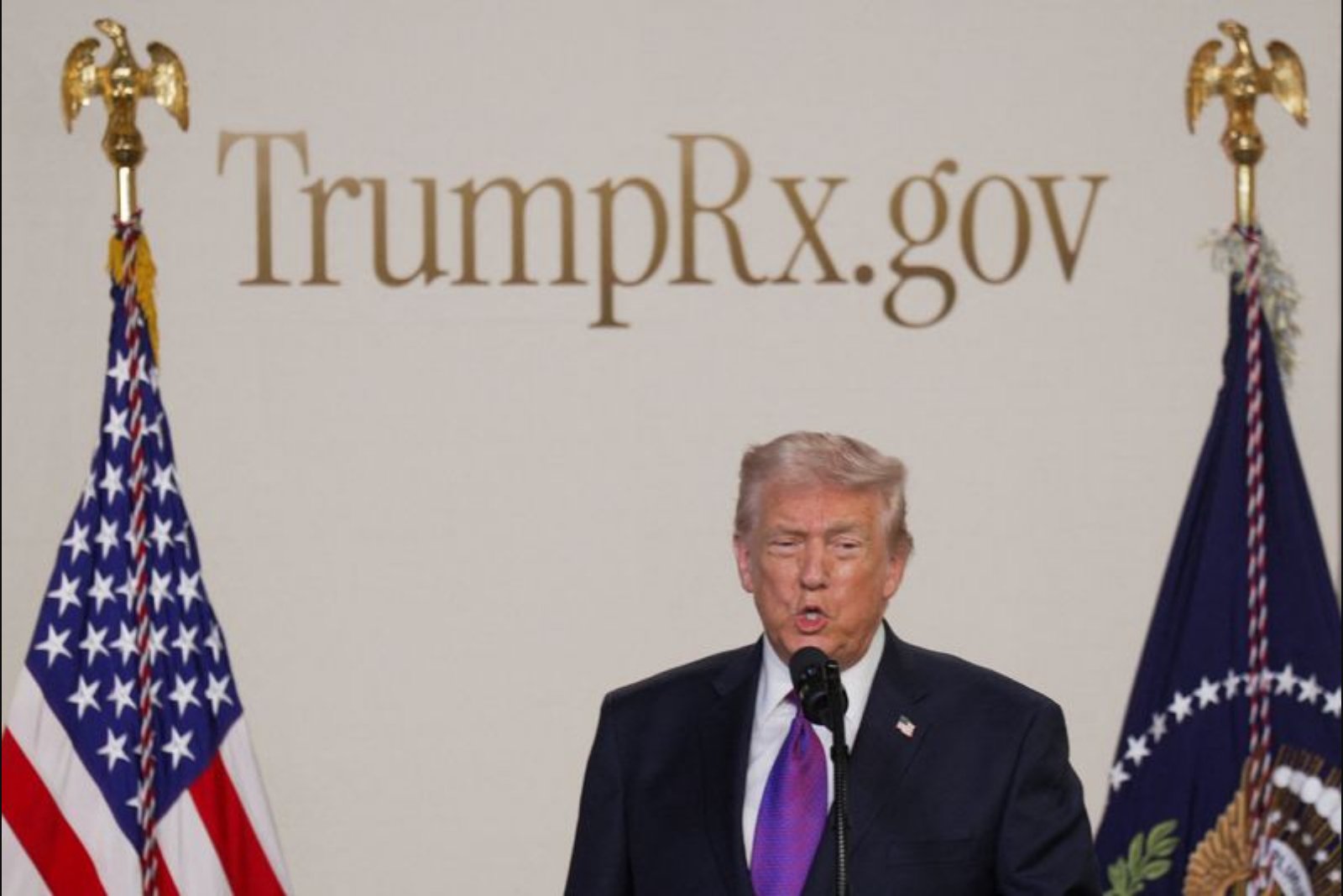
President Donald Trump introduced a new federal prescription drug portal, TrumpRx.gov, at a White House event on Thursday night as a central element of his administration's effort to lower drug costs. The site centers on manufacturer-offered discounts and coupons rather than direct government sales, and experts who reviewed the listings said the savings appear concentrated and limited in scope.
The administration negotiated deals with 16 of the world’s largest drugmakers under a "most-favored nation" framework intended to reduce U.S. drug prices in exchange for tariff exemptions and commitments to place products on the portal. Despite those agreements, only five companies had actually listed medicines on TrumpRx.gov as of Friday.
Overall, the site’s discounts apply to fewer than 45 drugs. More than 30 of those listings come from a single manufacturer, Pfizer, and a notable portion of the medicines shown already faces inexpensive generic substitutes on the market. The White House indicated that additional medicines from other manufacturers will be added in the coming months.
Health policy experts said the combination of a narrow initial catalogue and the website’s structure - which provides coupons or links to manufacturer-run purchasing pages rather than functioning as a retail storefront - limits the program’s reach.
"A small proportion of people may be able to find a better deal on their medicines," wrote Stacie Dusetzina, professor of Health Policy at Vanderbilt University School of Medicine, in an email. "For most people in the US, they are likely to be better off paying for their medicines with their health insurance and not using TrumpRx, assuming the drug they need is covered by their plan."
The discounts shown on the site range widely - from around one-third off list prices to reductions exceeding 90%. But even where percentage cuts are large, the sticker price can remain substantial. For example, Pfizer’s rheumatoid arthritis drug Xeljanz appears at roughly one-third off its list price on the portal, yet a monthly supply still exceeds $1,500.
The most prominent savings publicized by the administration are for GLP-1 weight-loss drugs, where negotiated prices fall to as low as $149 per month and average near $350 per month, down from list prices that exceed $1,000 per month. Those lower figures were highlighted as meaningful relief for Americans who pay for these medicines outside of traditional insurance coverage.
Fertility medications are among the other categories represented. The portal lists Gonal-F, produced by EMD Serono - a unit of Merck KGAA - at $168, which the site describes as an 83% reduction from the list price.
Juliette Cubanski, deputy director for Medicare policy at the KFF health-policy organization, said the portal could help patients who need fertility drugs because those therapies frequently are not well covered by insurance. At the same time, she cautioned that even reduced prices may remain unaffordable for many. "Paying $200 a month for Ozempic, for example, is still a lot of money for a lot of people ... these prices may still represent a price tag that’s too much," she said.
Operationally, TrumpRx.gov does not sell medication directly. Instead, it furnishes patients with manufacturer coupons or directs them to company-operated web pages where purchases can be completed. The White House framed the portal as delivering "massive, immediate savings to millions of Americans," particularly for those incurring out-of-pocket costs on the GLP-1 class of drugs.
Observers highlighted several structural limits to the site’s near-term impact: the small number of medicines available at launch, the concentration of listings from a single firm, and the fact that many listed drugs are already subject to lower-priced generics. The administration’s statement that additional products will be added over time suggests a potential expansion, but the timetable and breadth of future listings were not specified.
For consumers who obtain medications through comprehensive health plans or Medicare, the portal is unlikely to supplant existing coverage as the primary route to lower net drug costs. For those paying fully out-of-pocket, the portal’s coupons and manufacturer pages could reduce some bills, particularly for medicines that are not well covered by insurance. However, for many patients the remaining price after discount could still represent a meaningful financial burden.
Summary
The TrumpRx.gov portal launched with discounts concentrated on GLP-1 weight-loss drugs and a limited set of fewer than 45 medicines, many from a single manufacturer. Experts say most insured patients will likely continue to receive better pricing through their health plans, while those paying out-of-pocket may see relief for specific drugs but still face potentially high costs.