
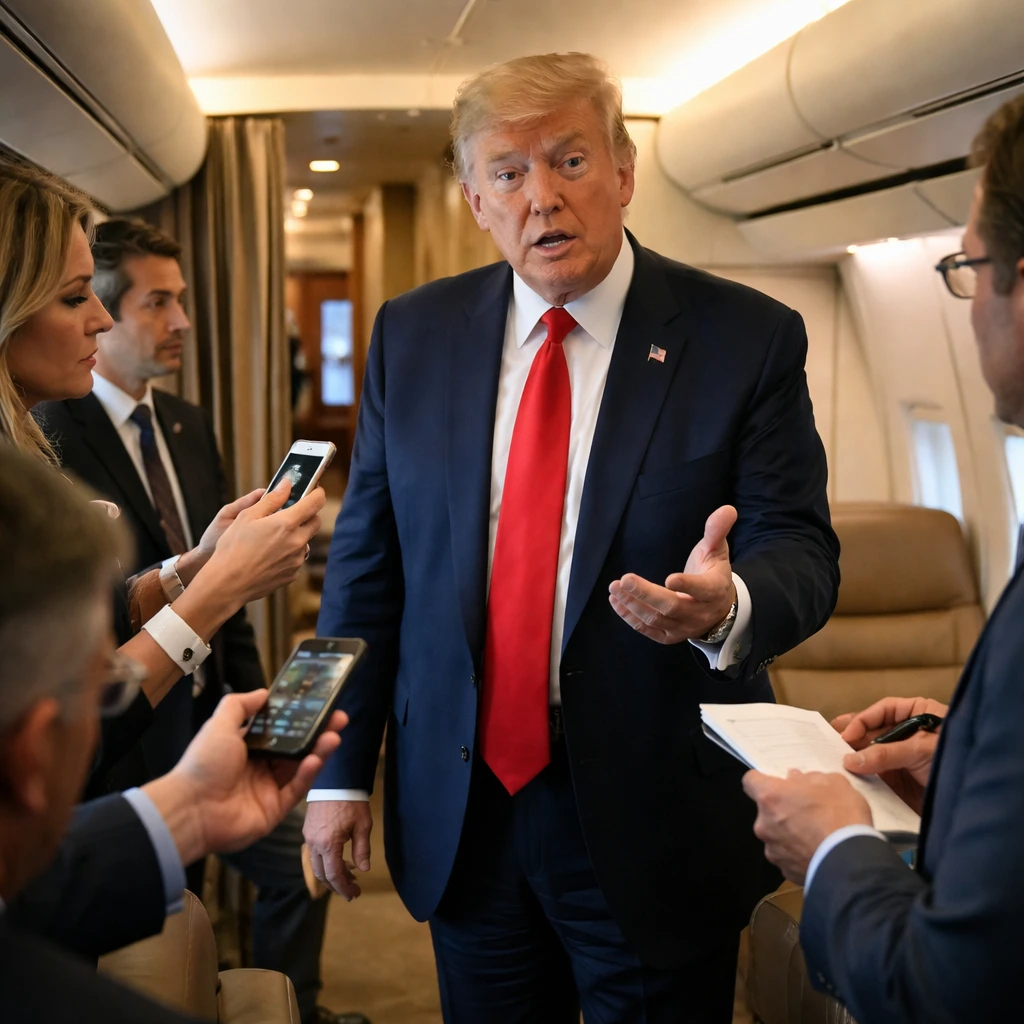
U.S. President Donald Trump said Monday that he will take an indirect role in high-stakes negotiations on Iran's nuclear program set to take place Tuesday in Geneva.
Speaking to reporters while aboard Air Force One, the president said, "I’ll be involved in those talks, indirectly. And they’ll be very important." His remarks framed the discussions as consequential while characterizing his participation as not direct face-to-face engagement.
The planned talks occur against a backdrop of rising tensions in the Middle East. The U.S. has deployed a second aircraft carrier to the region, a move reported alongside accounts that military preparations are under way for a potential sustained campaign if diplomacy fails. Those latter details were described in recent reports, rather than by administration officials in the comments cited.
When pressed on the prospects for reaching a deal, the president invoked Iran's history of tough negotiating positions, noting what he characterized as Tehran having faced consequences the previous summer when, he said, the U.S. bombed Iranian nuclear facilities. He suggested that such outcomes have influenced Iran's calculus ahead of the Geneva meetings.
On the prospects for an agreement, Mr. Trump said, "I don’t think they want the consequences of not making a deal." The statement conveyed the president's view that Iran may be motivated to avoid further punitive outcomes.
Details on the exact nature of the president's indirect involvement were not provided in his remarks, and the public comments focused on the broad stakes of the negotiations and the coincident military positioning. Observers will be watching to see how the Geneva talks proceed and whether the combination of diplomatic engagement and military posture affects the negotiation dynamics.
Summary of key facts:
- President Trump said he will be "indirectly" involved in Tehran-U.S. nuclear talks in Geneva.
- He spoke aboard Air Force One and described the talks as "very important."
- The remarks coincided with the U.S. deploying a second aircraft carrier to the Middle East and recent reports of military preparations for a possible sustained campaign if negotiations fail.
- Trump referenced Iran's firm negotiating stance and cited consequences Iran faced last summer when the U.S. bombed Iranian nuclear facilities, saying he believes Iran does not want further consequences.