
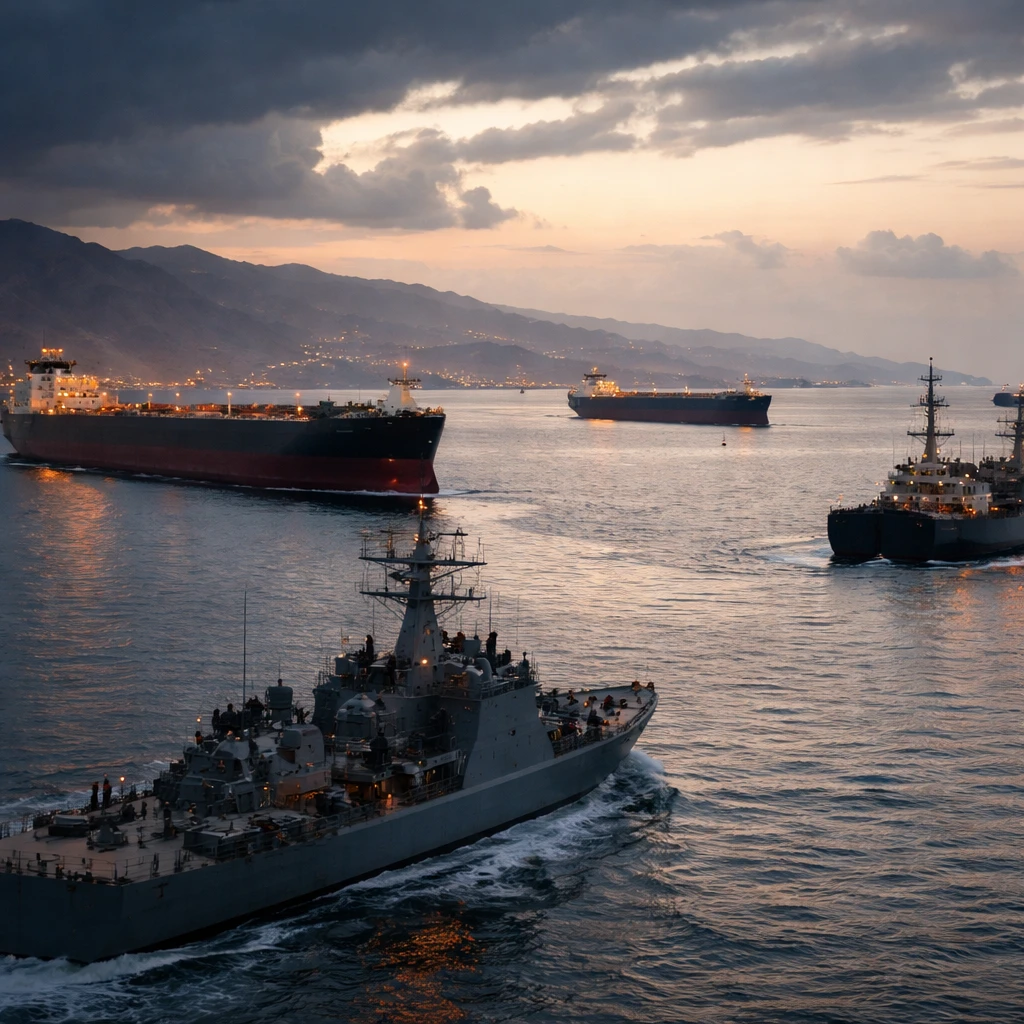
U.S. President Donald Trump told reporters at his Florida golf club that he expects the military campaign in Iran to finish "very soon," while also reserving the option for further action alongside Israel. Trump said the United States would respond more forcefully if Iran attempted to block shipments through the Strait of Hormuz - the strategic chokepoint that carries roughly a fifth of global crude supplies.
During the remarks, the president said he had considered taking control of the strait should Tehran try to impede oil flows. He added that Washington "could go further, and we're going to go further." In a pointed statement, Trump said he would kill Mojtaba Khamenei - identified as a son of Ali Khamenei, who the president said was slain in U.S.-Israeli strikes at the start of the conflict in February - if Mojtaba Khamenei did not meet U.S. demands. The administration has framed Mojtaba Khamenei as a selection that could continue Iran's hardline posture.
Iranian authorities have reportedly warned that not "one liter of oil" would be allowed to transit the Strait of Hormuz if the United States and Israel persist with their assault. Iran's foreign minister has also dismissed the possibility of ceasefire negotiations with Washington.
Israel's prime minister, Benjamin Netanyahu, said the military campaign is "not done yet," signaling that Israeli objectives include dismantling the ruling clerical establishment in Iran. Hostilities have continued across the region - on Tuesday Iran launched new strikes at Persian Gulf states while Israel carried out attacks in Lebanon that targeted locations linked to the Tehran-backed Hezbollah network.
Regional tensions have spilled into neighboring countries. Turkey's Defense Ministry said NATO's Patriot air-defense system was deployed in southern Turkey after two Iranian missile attacks were aimed at the country, and that a second Iranian strike toward Turkey was shot down on Monday.
Market reaction
Oil retreated after President Trump's comments, slipping from levels that had pushed prices to their highest since 2022. The decline reflected a partial easing of investor fears that a sustained spike in crude prices would feed higher global inflation.
Earlier in the week, disruption risks to flows through the Strait of Hormuz had pushed oil prices as high as nearly $120 per barrel, stoking concerns that a prolonged interruption to regional energy exports could accelerate price gains, complicate central bank plans for interest rate cuts and drag on global growth. Those dynamics had driven bond yields higher and dented equity markets both in the United States and abroad.
As oil retraced from the peak, Treasury yields moved lower and equities in Asia and Europe rose, with U.S. stock futures also indicating gains. The shifting market tone suggested investors were recalibrating the odds of a short, contained disruption versus a prolonged degradation of regional energy infrastructure.
Energy ministers from the Group of Seven advanced economies are reportedly scheduled to hold talks on Tuesday, according to the Wall Street Journal, while G7 finance ministers earlier discussed the potential release of emergency oil reserves to stabilize markets.
Analyst view
Analysts at Capital Economics summarized the range of possible macro outcomes in a note: "In the most benign [scenario] - a severe but short-lived conflict - the effects on GDP, inflation and monetary policy are limited. In the most severe case, a prolonged conflict with major damage to regional energy infrastructure pushes the global economy into stagflation, putting renewed interest rate hikes on the table."
The firm’s commentary underscored how divergent market and policy implications could be depending on whether hostilities remain acute but contained or expand into sustained damage to energy assets and supply chains.
Summary of developments
- President Trump said the Iran conflict could end quickly but warned the U.S. and Israel could escalate operations.
- Trump threatened to seize control of the Strait of Hormuz if Iran sought to block oil shipments and made a direct threat concerning Mojtaba Khamenei, described as a son of Ali Khamenei, who was said to have been killed in U.S.-Israeli strikes at the outset of the conflict.
- Iran warned it would prevent any oil transits through the strait if attacks continued and rejected ceasefire talks with Washington.
- Israel indicated its offensive is ongoing, with strikes also reported in Lebanon and fresh attacks launched by Iran toward Persian Gulf states.
- NATO's Patriot system was deployed in southern Turkey after Iranian missile attacks directed at Turkey; a second strike was intercepted on Monday.
- Oil prices fell back from near $120 per barrel, prompting declines in Treasury yields and rallies in Asian and European equities.