
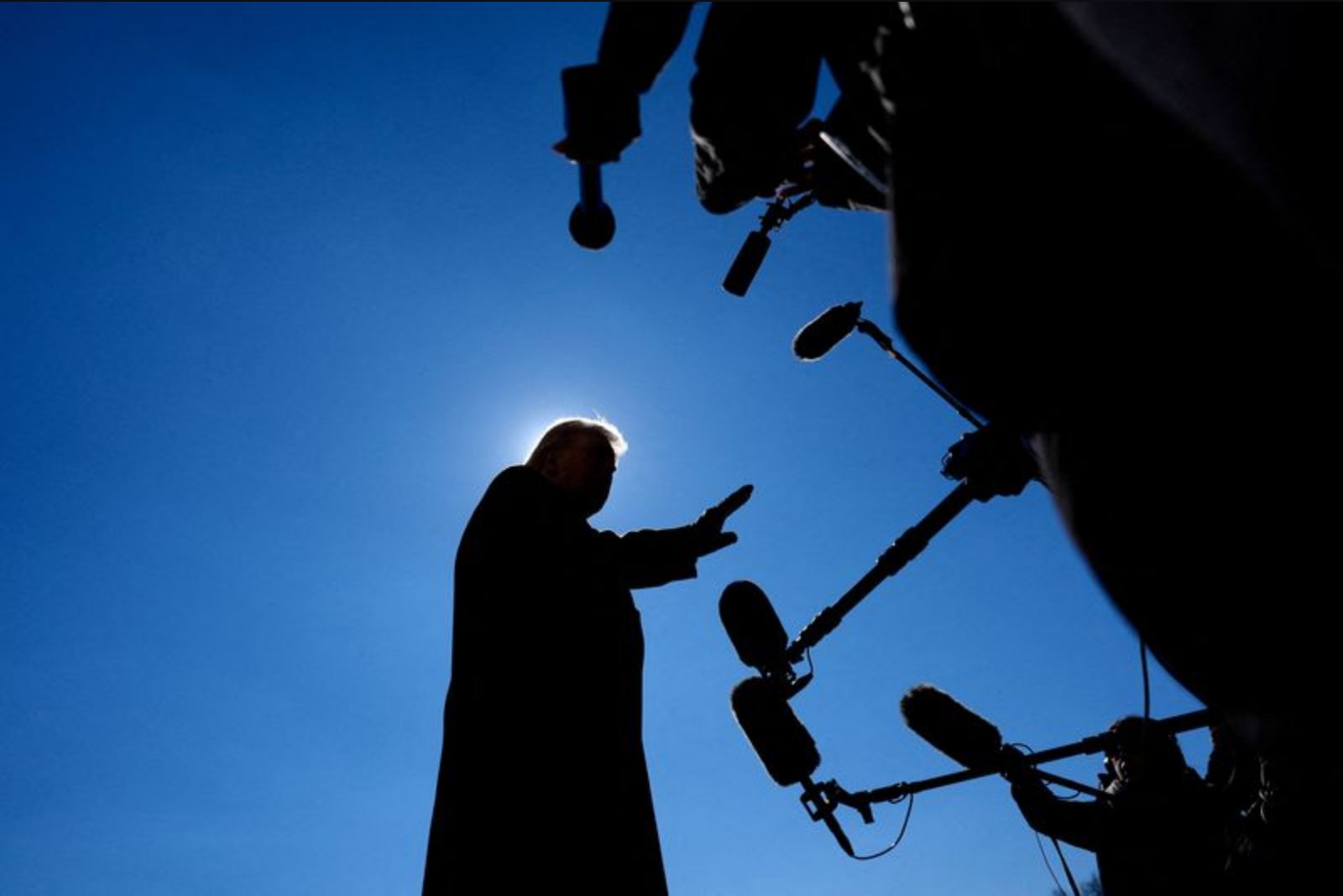
NEW YORK, March 18 - President Donald Trump and close supporters have been sharply criticizing news organizations over their coverage of the ongoing war with Iran, framing recent reporting as unfair and, in some cases, dangerous to U.S. interests. The administration maintains the conflict is going well for the United States, but the war remains deeply unpopular at home and has contributed to instability across the Middle East.
Public opinion polls reflect limited support for recent military action. According to a March 1 Reuters/Ipsos poll, only one in four Americans approves of February strikes carried out by the United States and Israel on Iran. Roughly half of respondents - including about one in four Republicans - said President Trump is too willing to use military force. At least 13 U.S. service members have died in the conflict.
Criticism of media reporting intensified last week after a high-profile exchange at a Pentagon news briefing. Defense Secretary Pete Hegseth called out CNN by name and dismissed a source-based report as "patently ridiculous" for claiming the administration had underestimated risks to oil shipments transiting the Strait of Hormuz. Hegseth also commented on the pending change in ownership at CNN and said the sooner David Ellison takes over the network the better. Ellison, chairman and chief executive of Paramount Skydance, is acquiring CNN’s parent company and is the son of Oracle co-founder and Trump ally Larry Ellison.
The White House followed up by emailing an accusation that CNN had been "lying" to undercut what it described as the military operation’s "crushing success." CNN Chairman and Chief Executive Mark Thompson responded in a statement: "We stand by our journalism."
Regulatory voices and social posts added fuel to the dispute. U.S. Federal Communications Commission Chairman Brendan Carr posted on X that broadcasters airing "fake news" now have a chance to "correct course before their license renewals come up." His post included a screenshot of a Truth Social message from the president asserting that "Lowlife 'Papers' and Media actually want us to lose the War." It is a political fact that the FCC has not revoked a broadcast television station license in more than 40 years, and any attempt by the administration to remove licenses because of reporting would likely face legal challenges grounded in the First Amendment.
On Sunday evening, the president posted on Truth Social accusing unspecified "fake news media" of collaborating with Iran to distribute AI-generated images depicting a burning U.S. aircraft carrier and suggested those outlets should be charged with treason. Iranian state media had falsely claimed its military struck the carrier; several Western news organizations instead published accounts debunking the videos as fabricated. The president's reference to treason - a crime that under U.S. law carries a maximum penalty of death - marked a notable escalation in language directed against the news media.
Longstanding rhetorical attacks on the press are part of the broader context. The president has repeatedly used labels such as "fake news" and "the enemy of the American people" for outlets he regards as hostile, and he has aimed personal insults at individual journalists, employing terms like "piggy" and "sleazebag."
Senior administration and allied voices have defended the approach and questioned mainstream reporting. Treasury Secretary Scott Bessent told CNBC that mainstream media coverage of the war reflected "a dislike for President Trump." The White House spokeswoman Olivia Wales said in a statement: "President Trump is right. Many in the media are working overtime to discredit President Trump, his Administration, and the United States military while carrying water for a regime that has killed Americans for nearly 50 years. This is a complete disgrace."
Press freedom advocates and legal experts have expressed alarm at the tone of official rhetoric. Jameel Jaffer, executive director of the Knight First Amendment Institute at Columbia University, described the president's recent comments as an intensification of a "long-running effort to bring news organizations into closer alignment with his own political and ideological agenda." Jaffer added: "President Trump is free to criticize news coverage he thinks is inaccurate or unfair, but the First Amendment gives news organizations the right to decide for themselves what to report, and how to report it. This is constitutional bedrock, if anything is."
Observers on the political right noted the administration's actions appear to have had some impact on corporate behavior in media and related dealmaking. Republican consultant Jeanette Hoffman pointed to Paramount's choice to pay $16 million to settle a lawsuit filed by President Trump alleging that CBS News deceptively edited an interview with former Vice President Kamala Harris during the 2024 campaign. Hoffman suggested companies negotiating mergers or regulatory approvals may be sensitive to government pressure, especially when Federal Communications Commission scrutiny of transactions is involved. "A lot of these companies are vulnerable to government threats when mergers and pending deals are on the line with the FCC - as in the case of CNN - so you may see some rethink their coverage and reporting strategies," she said.
Other Republican strategists offered more tempered views. Jason Roe, who has criticized the president at times, said he does not necessarily endorse the president's tactics but acknowledged there may be a rationale behind complaints that the media has downplayed U.S. military successes. Roe suggested that if the war is resolved quickly and seen as successful overall, the current salvoes at the press might end up being viewed as another episode in the president's pattern of rhetorical excess, and likely would not leave a lasting mark.
Press advocates continue to warn that heightened threats to journalists and outlets during wartime can chill reporting, curtail investigative work, and undermine public access to independent information. Those freedoms are rooted in constitutional protections that provide robust safeguards for news organizations' editorial judgments.
Summary
President Trump and several allies have escalated public attacks on news outlets for their reporting on the Iran war, calling coverage inaccurate or harmful to U.S. interests. Officials singled out specific networks, social posts urged regulatory scrutiny, and the president accused media of collaborating with Iran to spread fabricated images. Press freedom advocates and legal experts warned the rhetoric could chill journalism, while some political operatives and consultants noted potential pressure on media companies involved in high-profile mergers and settlements.
Key points
- Administration and allied officials have publicly accused news organizations of undermining the U.S. military operation and spreading falsehoods about the Iran war.
- Regulatory commentary and presidential social posts have raised the prospect of increased scrutiny toward broadcasters, though the FCC has not revoked a broadcast license in over 40 years.
- Corporate and political pressure related to mergers, settlements, and FCC approvals may influence media companies' behavior and editorial decision-making.
Risks and uncertainties
- Potential chilling effect on wartime journalism - heightened rhetoric and regulatory signals could discourage aggressive reporting, affecting media sector coverage and public access to independent information.
- Legal and regulatory uncertainty - attempts to use licensing or regulatory leverage against outlets would likely prompt First Amendment court challenges, creating legal risks and market uncertainty for broadcasters.
- Corporate vulnerability during mergers and settlements - media companies negotiating high-stakes deals or facing litigation may alter reporting strategies under perceived governmental pressure, influencing consolidation and media market dynamics.
Note: This article reports statements and facts presented by public officials, media executives, and political figures regarding criticism of news coverage and related events. It does not add facts beyond these statements and reported developments.