
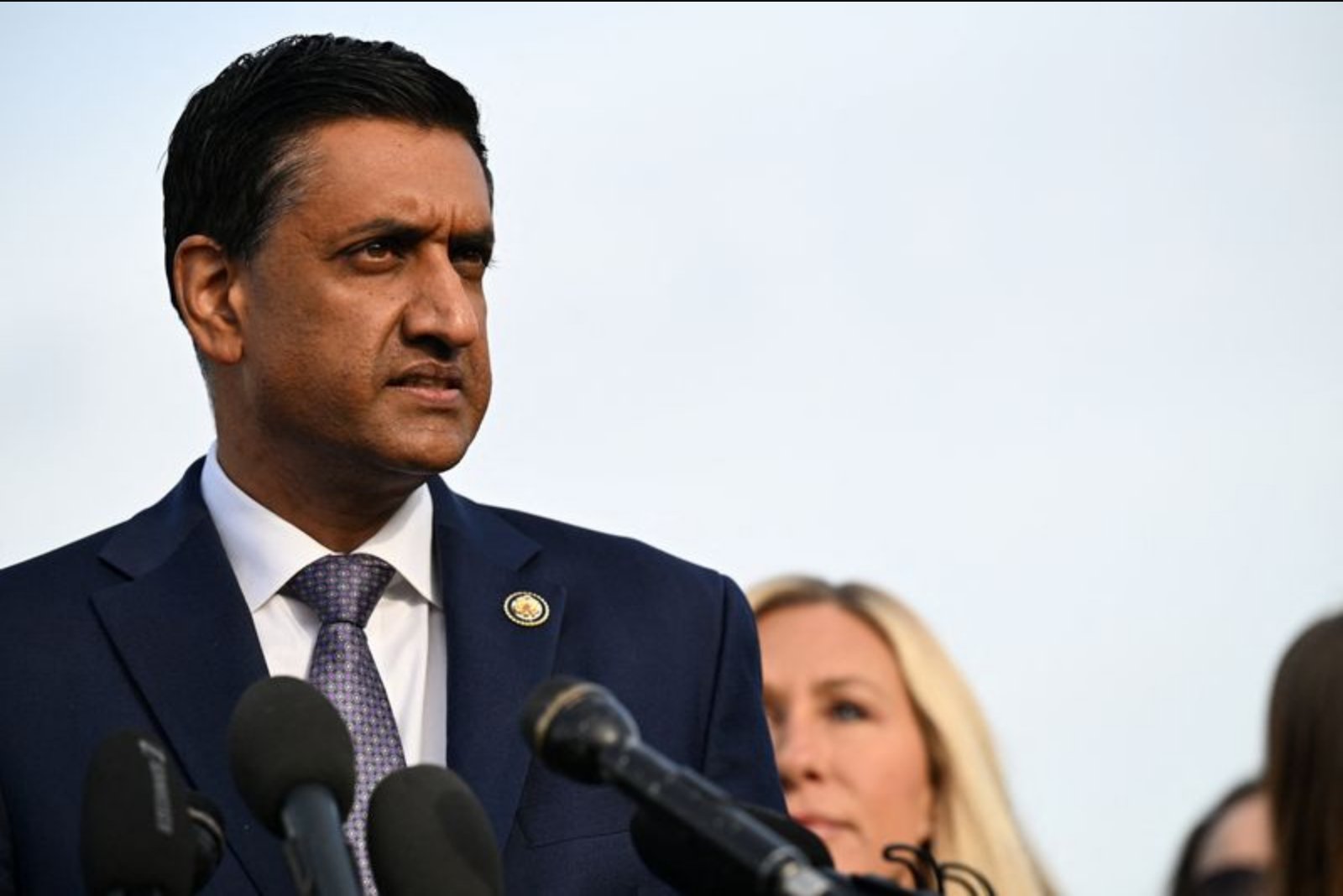
Ro Khanna, the California Democrat who recently became the ranking member of the U.S. House Select Committee on the strategic competition with China, indicated on Monday that he would be receptive to permitting exports of older-generation Nvidia chips to China, marking a change from the stance taken by his immediate predecessor.
Khanna, who assumed the role earlier this year, stopped short of fully endorsing President Donald Trump’s decision to allow shipments of Nvidia’s H200 artificial intelligence accelerator to China, but said he was comfortable with sales of chips that are several years behind the current state of the art.
"We certainly shouldn’t be sending them Rubins. We shouldn’t be sending them Blackwells," Khanna told reporters after his first hearing with the committee. "But after we have a two-year, three-year advantage, then I’m fine to make sure that our chips are being used in refrigerators and dishwashers and that that is something that we’re selling."
The H200, which was released in 2024, is part of Nvidia’s "Hopper" family of accelerators. That generation preceded the company’s current "Blackwell" chips and the next-generation "Rubin" family that is expected to arrive later this year, according to Khanna's remarks at the hearing.
Khanna’s predecessor, Illinois Democrat Raja Krishnamoorthi, co-sponsored legislation last year that would have barred such sales, and the Republican chair of the committee has publicly criticized the administration’s decision to permit shipments of the H200 to China. The Republican chair of the committee did not provide comment when a spokesman was contacted.
Khanna also emphasized distinctions between his alignment with the administration on certain chip-export questions and his disagreement with its broader Taiwan policy. He characterized recent developments at the hearing as evidence of a shift among Democrats on the committee.
"What we saw in the hearing is a shift of Democrats. It’s not just our members criticizing the China Communist Party. It’s our members criticizing the Trump administration’s policies," Khanna said. "Trump’s policies have not been clear, they have not been consistent, and they are undermining security of Taiwan."
Requests for comment sent to Nvidia were not immediately returned. A spokesman for John Moolenaar, the Michigan Republican who chairs the committee, also did not immediately respond to a request for comment.
Khanna’s comments reflect a nuanced approach to high-performance computing exports: drawing a firm line against the most advanced architectures while permitting a timed transfer of older-generation chips that, in his view, could be redirected toward consumer and lower-end industrial uses after a multi-year lead is established.
Context and implications
As ranking member, Khanna’s position signals a potential softening in Democratic resistance to certain chip exports compared with his predecessor’s posture, even as partisan disagreement persists over the proper balance between trade and national security. His remarks underscore an emphasis on maintaining a clear technological advantage for a defined period before relaxing export constraints for older hardware.