
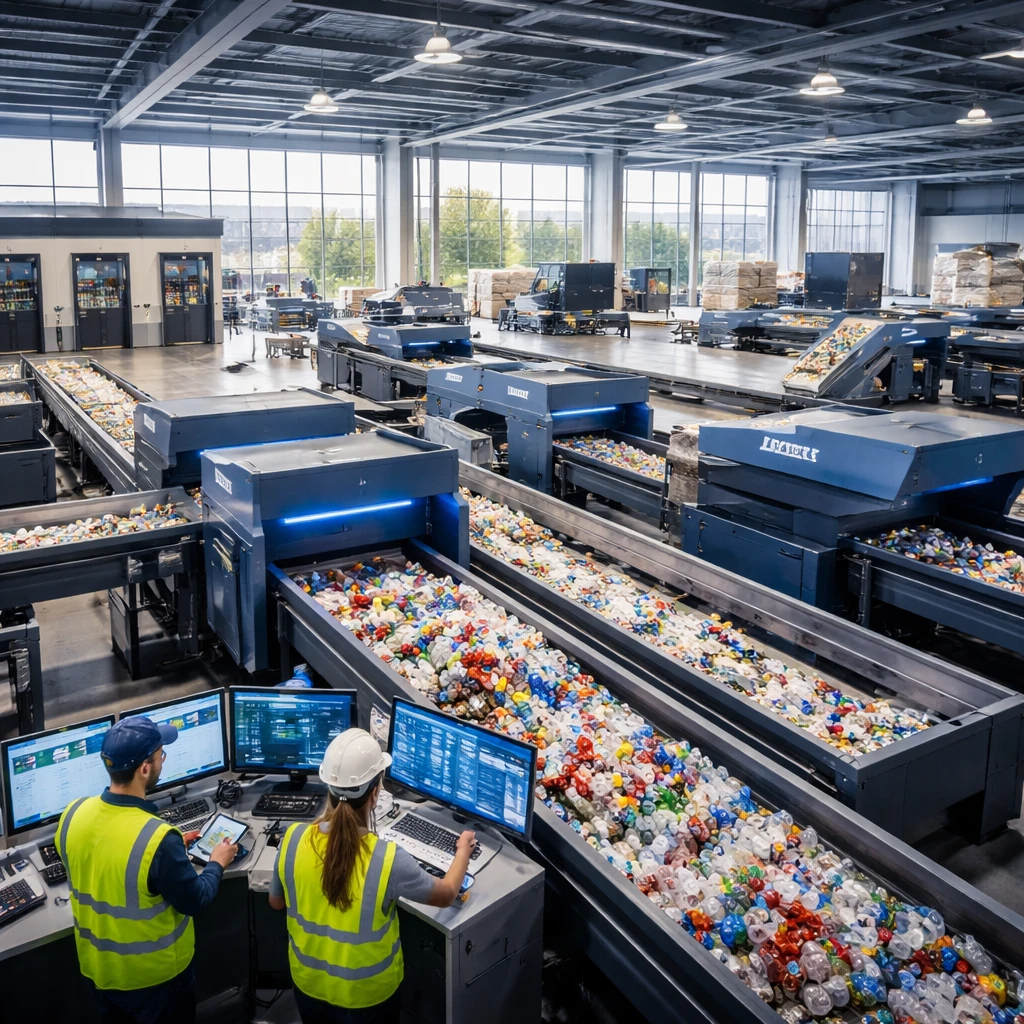
Tomra Systems ASA is placing strategic emphasis on forthcoming European deposit return schemes, the expansion of service-based revenue streams and improved sorting technology driven by artificial intelligence as the principal channels to restore its Recycling division after a pronounced downturn, the company said.
The Recycling unit recorded a notable margin compression in 2025, with profitability falling to 11% from levels above 20% in prior years. Management attributed the weakness to a combination of low plastic prices, an influx of inexpensive imports from Asia and trade-related uncertainty, which led customers in Europe and North America to postpone orders. For the year, Recycling revenue declined by 18%.
In response to the setback, Tomra has instituted a cost reduction programme valued at €16 million that will affect around 175 positions, with the company expecting the full savings to materialize by 2027. The firm noted that the recent decline follows a period of robust growth - recycling revenues had expanded at an average rate of 19% per year between 2020 and 2023 - and management remains focused on medium-term recovery targets.
Tomra is targeting double-digit annual growth for Recycling through the cycle to 2030, a goal it says is supported by a growing pipeline of deposit return regulation across key markets. The United Kingdom’s deposit return scheme is scheduled to begin operations in November 2027, and major retailers have already started issuing tenders. Wales has placed its own deposit regulations before the Senedd on February 12, aiming to align with the same implementation date, subject to a parliamentary vote.
The company highlighted the European Union’s Packaging and Packaging Waste Regulation as particularly significant. That regulation establishes a 2029 deadline requiring all EU member states to have functioning deposit schemes for plastic bottles and metal containers. Tomra flagged that the rule places countries such as France, Italy and other large western European markets on a legally binding timetable for the first time.
"The regulatory momentum we’re seeing provides strong long-term visibility," the company said, while also cautioning that implementation timelines can be affected by political or macroeconomic developments. In the near term, Tomra reported that Recycling order intake fell 20% year-on-year in the fourth quarter, according to its February earnings update.
Beyond regulation, Tomra is reshaping its revenue base. More than 60% of revenues in the Collection division now derive from services rather than equipment, a shift management expects to deepen across Tomra’s three divisions. That services tilt is presented as a stabilizing influence as orders in capital equipment swing with commodity prices and trade patterns.
Tomra’s Food division provided a counterpoint to the Recycling weakness. In 2025, Food delivered record profitability, with EBITA margins reaching 13% against a stated target range of 10-11%. On the international deployment front, Tomra has been selected as one of three operators for Southeast Asia’s first deposit scheme in Singapore, a development the company says could open a new regional market.
Management described the Singapore role as a chance to validate the deposit return model outside Europe. "Singapore provides an opportunity to demonstrate how the model can work globally," the company noted, adding that the experience will be valuable as other Asian markets evaluate similar schemes.
Tomra continues to position its expanded services business and AI-enhanced sorting technology as complementary drivers to regulatory demand, while carrying out cost actions to protect margins. The firm’s medium-term objective is to return the Recycling unit to sustained growth as new deposit schemes come online and service revenues increase.
Contextual note: An external equity-screening tool referenced in the company’s commentary evaluates stocks including TOM with a systematic, metrics-driven approach. That tool has highlighted past winners such as Super Micro Computer and AppLovin in its historical results, and it is used as one lens for investors assessing whether TOM features in model strategies.