
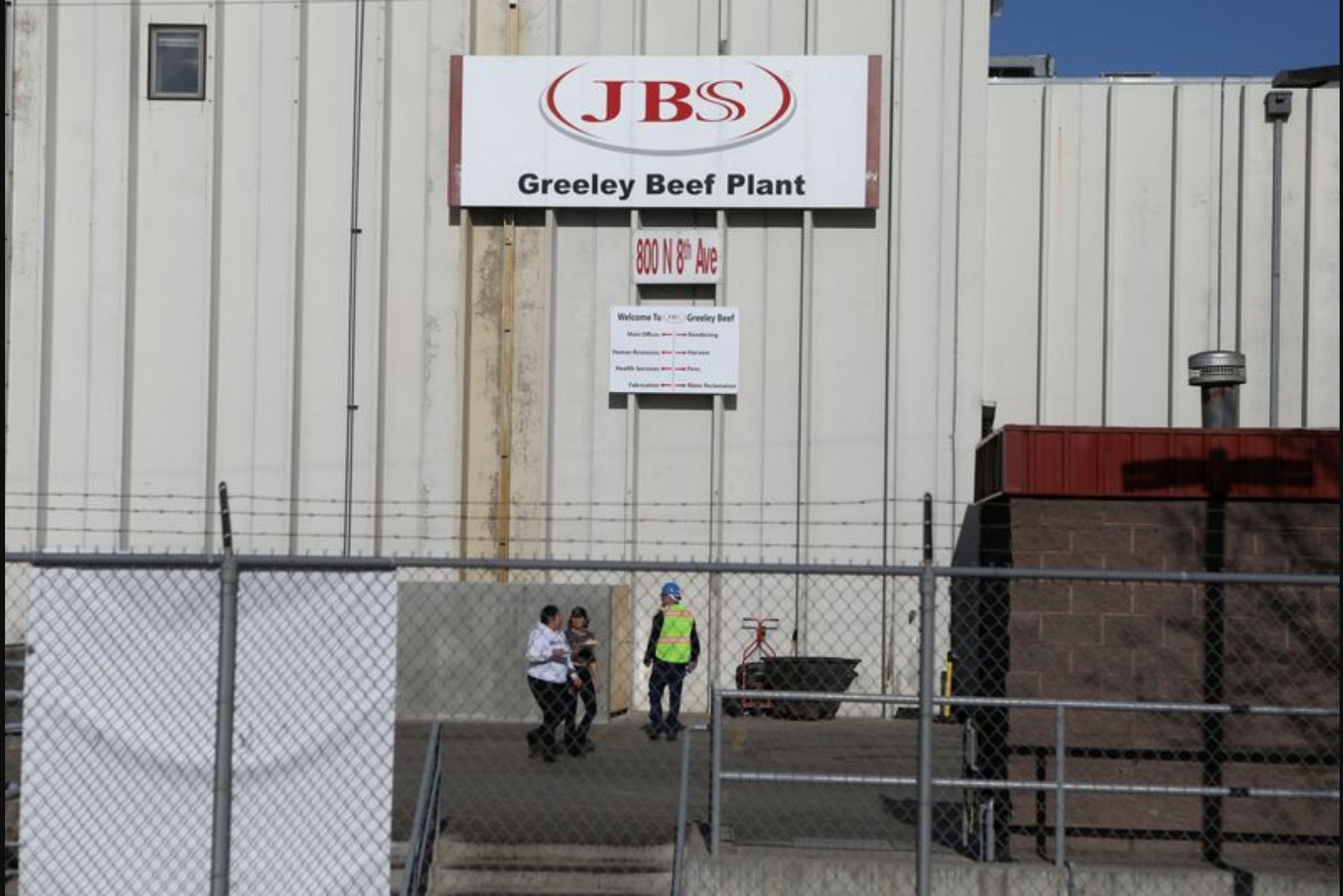
Approximately 3,800 employees at JBS's beef processing complex in Greeley, Colorado, intend to strike starting on March 16, the United Food and Commercial Workers Local 7 union announced on Monday. The planned work stoppage threatens to significantly curtail output at one of the largest beef plants in the United States as consumers contend with record-high beef prices.
The dispute highlights tensions between a predominantly immigrant workforce and the world’s largest meatpacker. Union leadership said the stand-off has already prompted ranchers to redirect cattle to other processing sites.
Beef prices in the U.S. have set records this year as the nation's herd has fallen to a 75-year low. That dynamics means meatpackers such as JBS have profited from higher retail prices while also facing historic costs for the cattle they purchase to slaughter. JBS reported third-quarter profit of $581 million in November, down from $693 million a year earlier.
Kim Cordova, president of UFCW Local 7, faulted JBS for failing to deliver pay increases to match rising consumer costs and for charging workers to replace protective equipment used on the job. "While customers are paying more than they ever have, none of that is trickling down to the frontline worker that’s actually doing all the heavy work," Cordova said. She added that workers have sought wages that keep pace with inflation and wanted the company to stop charging them for replacing protective equipment they wear to do their jobs safely.
Cordova also accused JBS of engaging in unfair labor practices and of not negotiating in good faith on a new contract during the past eight months.
JBS responded that it complies with labor laws and has sought to reach a fair agreement, noting the company charges employees for protective equipment that is lost or maliciously damaged. "We stand by the offer we presented," JBS said. "It is strong, fair, and consistent with the historic national contract reached in 2025." Last year, unionized meatpacking workers at multiple plants ratified a first-ever national contract with JBS, though Cordova said some Greeley employees already received particular benefits from that pact, including sick leave.
In reaction to the looming strike, JBS said it is adjusting cattle deliveries and processing schedules at Greeley while shifting production to other facilities to meet customer needs. The company did not slaughter cattle at the Greeley plant on Monday.
Cattle feeders reported that JBS canceled slaughtering in Greeley for the entire week, and one feeder said he was redirecting livestock to a JBS facility in Cactus, Texas.
Market observers noted ample slaughtering capacity relative to finished cattle ready for processing. "We’ve got way more kill space than finished cattle ready to slaughter," said Corbitt Wall, a livestock market analyst for DVAuction. Ranchers, he added, will "just move them somewhere else."
The situation follows broader industry capacity shifts after rival meatpacker Tyson Foods closed a large beef plant in Nebraska earlier this year.