
Stock Markets July 7, 2026 07:38 AM

Teva Advances Anti-IL-15 Antibody TEV-’408 to Phase 2b for Vitiligo After Encouraging Phase 1b Readout

Company to initiate randomized Phase 2b in Q4 2026 following open-label data showing facial and total-body pigmentation improvements and an acceptable tolerability profile

By Sofia Navarro
Share
Twitter Reddit Facebook LinkedIn
TEVA

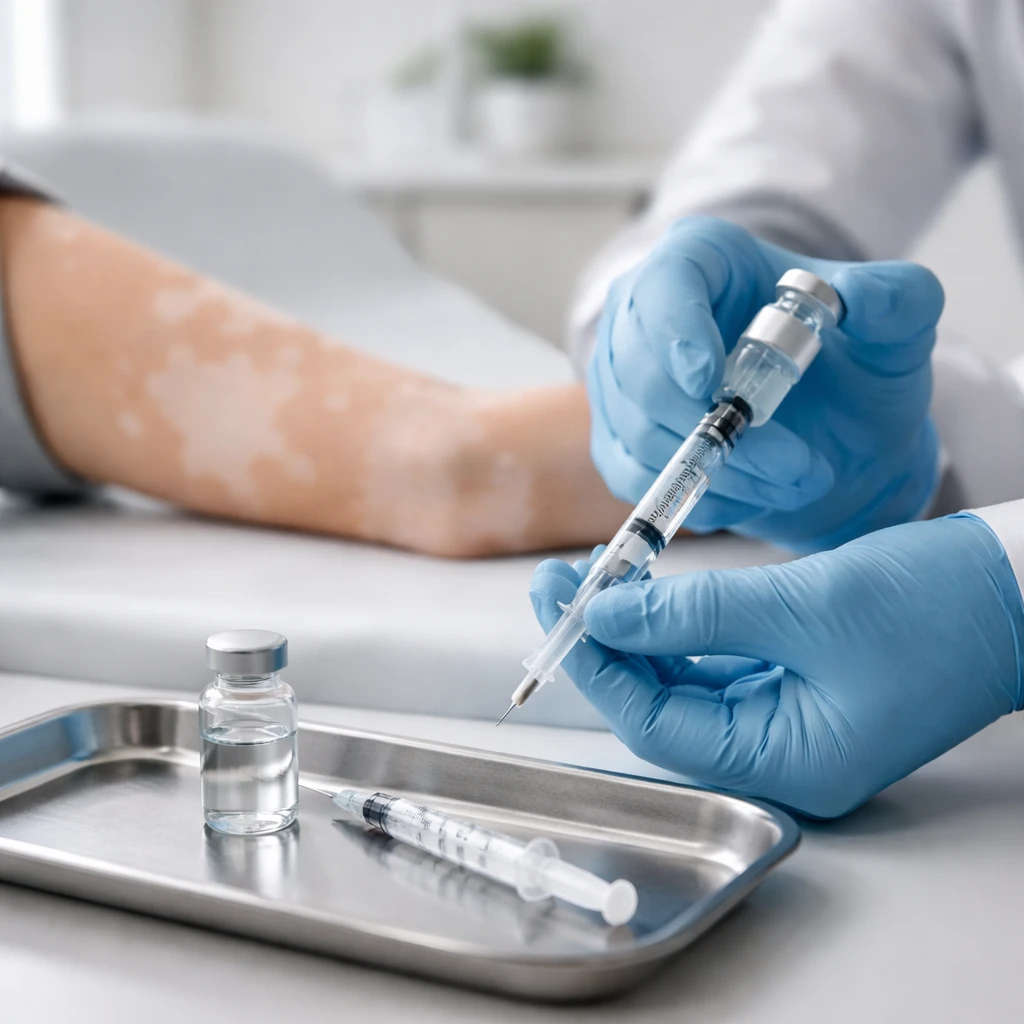
Teva Pharmaceutical Industries said it will move its investigational anti-interleukin-15 monoclonal antibody, TEV-’408, into a Phase 2b study for vitiligo in the fourth quarter of 2026. The decision follows results from an open-label Phase 1b trial in adults with active or stable non-segmental vitiligo that reported measurable gains in pigmentation, a tolerable safety profile with no safety signals to date, and a high proportion of participants presenting with more extensive disease at baseline.

Teva Advances Anti-IL-15 Antibody TEV-’408 to Phase 2b for Vitiligo After Encouraging Phase 1b Readout
TEVA
Summarize with
ChatGPT Perplexity Claude Grok Gemini

Key Points

  • Teva will initiate a Phase 2b study of TEV-’408 for vitiligo in Q4 2026 after encouraging Phase 1b data.
  • Phase 1b open-label results showed facial improvement in nearly 75% of patients at week 24 and objective F-VASI50 and F-VASI75 responses of 42% and 21%, respectively; total-body improvement was reported by 55% with 7% reaching T-VASI50.
  • Sectors impacted include pharmaceutical development, biotech investors, and the broader healthcare sector focused on dermatology and autoimmune disease therapies.

Teva Pharmaceutical Industries announced plans to launch a Phase 2b study of its investigational therapy TEV-’408 for the treatment of vitiligo in the fourth quarter of 2026. The move follows positive findings from an ongoing Phase 1b open-label study in adults with active or stable non-segmental vitiligo.

The Phase 1b trial reported improvements in skin pigmentation among enrolled patients and did not identify any safety signals up to the time of reporting. TEV-’408 is an anti-interleukin-15 monoclonal antibody developed for quarterly subcutaneous administration.

At study entry, two-thirds of participants - 66% - had vitiligo affecting more than 10% of their body surface area, indicating a substantial proportion of patients with more extensive involvement in this cohort.

Clinical outcomes at week 24 showed notable responses on facial and total-body measures. Nearly 75% of patients reported an improvement in facial vitiligo, and about half of those respondents characterized their improvement as "much" or "very much" better. Objective measures echoed patient reports: 42% of participants achieved F-VASI50 (50% or greater improvement in facial Vitiligo Area Scoring Index) and 21% met the F-VASI75 threshold.

Assessing total body involvement, 55% of patients reported some improvement in overall vitiligo, while 7% reached T-VASI50 (50% or greater improvement in total-body VASI).

Richard Francis, Teva's President and Chief Executive Officer, commented that TEV-’408 "exemplifies the type of innovative, Teva-discovered program we are prioritizing as we continue to advance and strengthen our immunology pipeline."

TEV-’408 targets IL-15, which the company describes as a key driver in vitiligo biology. The drug candidate is designed for quarterly subcutaneous dosing, a regimen the company says underpins the program’s development plan.

Vitiligo is a chronic autoimmune condition characterized by loss of skin pigmentation. Treatment choices remain limited, especially for patients with more extensive disease who may be candidates for systemic therapy.

Teva scheduled an investor call and webcast at 8:00 a.m. ET to discuss the Phase 1b data and the rationale for advancing TEV-’408 into a Phase 2b study.


Context and next steps

With Phase 2b planned for late 2026, Teva will move the program into a larger, controlled study to further evaluate efficacy and safety. The Phase 1b open-label results provided initial signals of clinical activity and an acceptable tolerability profile, supporting progression into the next stage of development.

Risks

  • The Phase 1b data were generated in an open-label study, which can limit the strength of efficacy conclusions compared with randomized, controlled trials - this impacts clinical development and biotech investment risk.
  • Although no safety signals have been observed to date, longer-term safety and tolerability remain to be established in larger, controlled studies, posing clinical and regulatory uncertainty for the pharmaceutical sector.
  • A sizable portion of trial participants had more extensive disease at baseline (66% with >10% body surface area affected), and it remains to be seen whether the treatment’s efficacy will be consistent across varying disease severities, which affects prescribing and market uptake considerations in healthcare.

More from Stock Markets

Barclays Highlights Four Mining Picks as Copper Dynamics Bolster Outlook Jul 7, 2026 Insider Moves: Major Purchases and Pre-Arranged Sales Mark Monday Filings Jul 7, 2026 Plug Power Shares Rise After Landing 50-MW Electrolyzer Contract for Australia Hydrogen Hub Jul 7, 2026 Amazon Seeks at Least $25 Billion via U.S. Dollar Bond Offering to Finance AI Build-Out Jul 7, 2026 NATO to Stand Up Pooled A400M Airlift and Add A330 MRTT Tanker, Rutte Says Jul 7, 2026