
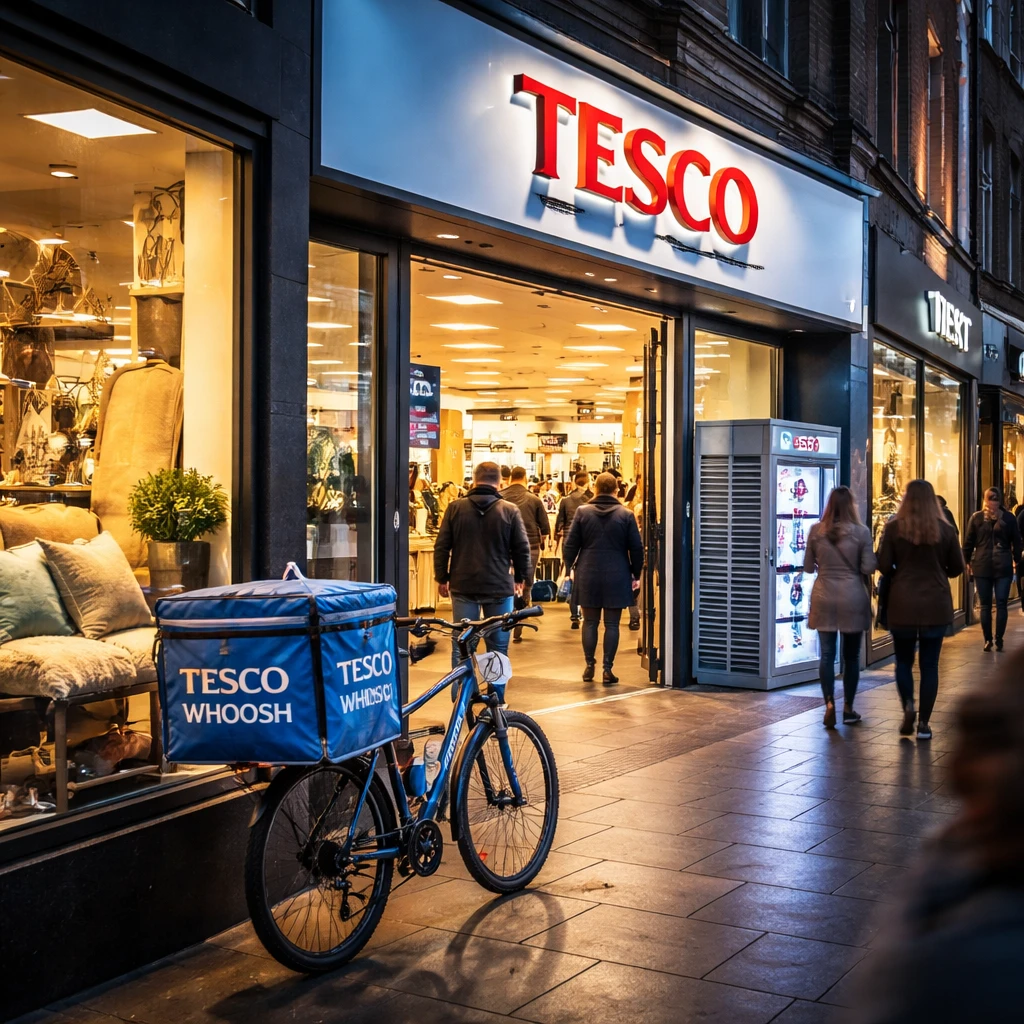
UK retail stocks are showing notable resilience in the face of macroeconomic pressure, according to analysis from WarrenAI. Three names stand out within the sector for different reasons: Tesco for its digital acceleration and market-share momentum, Dunelm for its current value attributes following a share-price correction, and Next for its defensive earnings profile.
Tesco: scale and digital adoption
Tesco is highlighted as the sector leader on the strength of a rapid digital rollout and measurable customer uptake. Its Whoosh rapid-delivery service has recorded a 47% year-on-year sales increase and has attracted more than 250,000 new customers in under five months. Those results are framed as evidence that the service is a competitive strength rather than a cost pressure.
Concurrently, Tesco has nudged its UK grocery market share to 28.7%, a 20 basis point improvement. The retailer still notes the longer-term goal of returning to the 30% share it last held in 2013. Online sales are also an important component of Tesco’s performance, reported as growing 11.2% and reaching 70% of UK households, which the analysis interprets as expanded household penetration and scale in the British grocery market.
Dunelm: value after a correction
Dunelm is presented as a value opportunity after a roughly 20% share-price decline that prompted Jefferies to upgrade the stock to a 'buy' rating. While Q2 revenue growth slowed to 1.6%, the retailer achieved 3.8% revenue growth for FY25. Valuation metrics cited include trading at approximately 11 times FY27 earnings, close to 30% below its historical average. A price target of 1,075p implies around 16% upside from current levels, and profit growth forecasts of 2% for FY26 and 5% for FY27 are noted as supporting steadier returns.
Next: earnings visibility and defensive qualities
Next is singled out for its earnings visibility in uncertain conditions, with RBC naming the company as a top European retail pick. The company’s pricing sits at its smallest discount to the sector average since Spring 2024, a signal in the analysis that Next has managed margin pressures and demand shifts effectively. Those factors combine to portray Next as a defensively oriented option for investors seeking stability within the retail space.
Different strengths within the same sector
WarrenAI’s selection underscores how retailers can succeed through differing strategic routes: rapid digital adoption and household reach at Tesco, an attractive valuation and predictable profit trajectory at Dunelm, and steady earnings visibility alongside disciplined pricing at Next. Each case highlights distinct levers - digital product adoption and scale for Tesco, valuation and steady profit growth for Dunelm, and operational resilience for Next - that investors may weigh when assessing exposure to UK retail.
Disclosure: The analysis referenced is credited to WarrenAI as the originating evaluator of the three retailers mentioned.