
Summary - European equities fell as technology names weakened after France's Dassault Systèmes reported lower-than-expected quarterly revenues, renewing investor anxiety about potential disruption from emerging artificial intelligence models on traditional business lines.
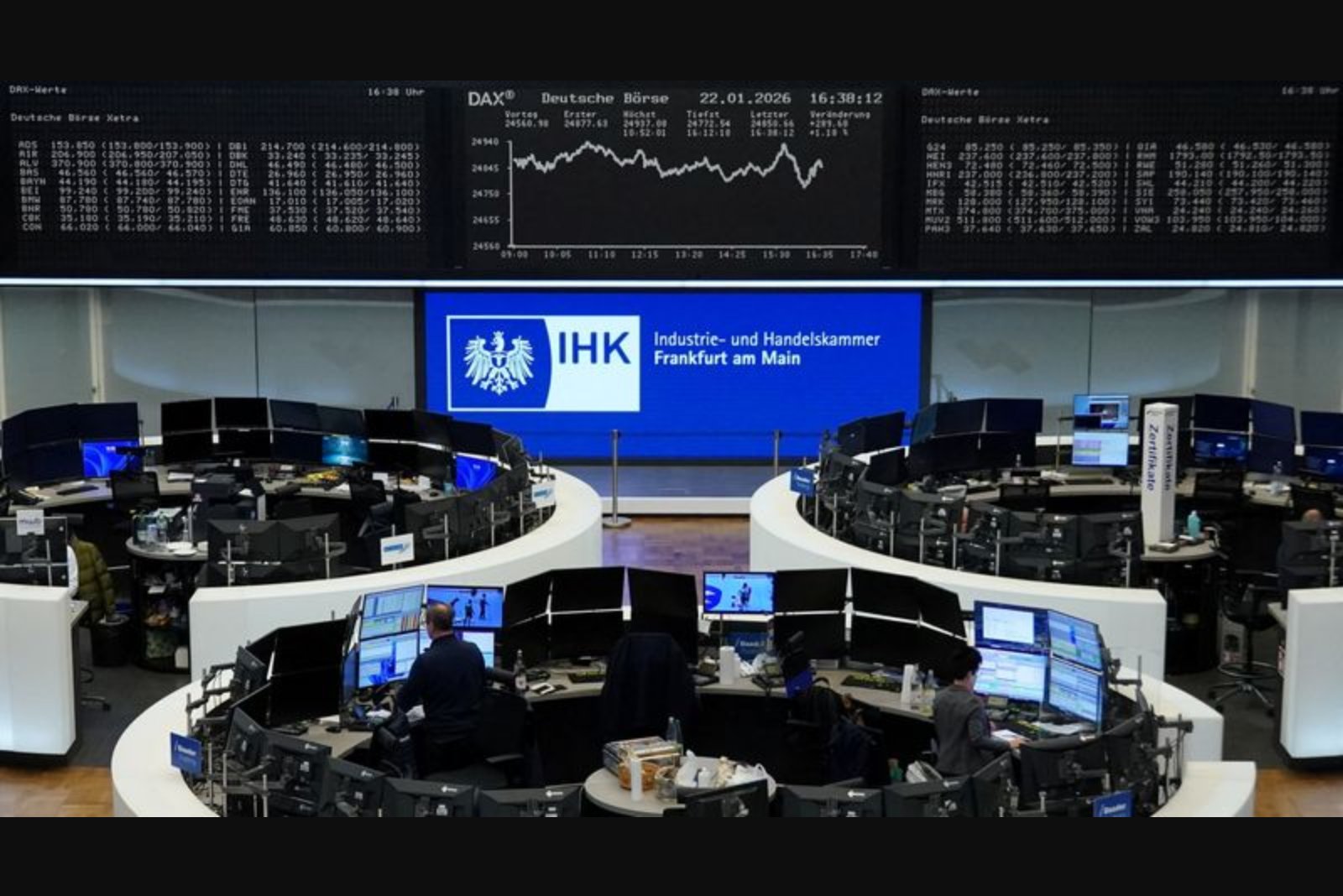
The pan-European STOXX 600 index eased 0.2% to 619.66 points by 0820 GMT, with France's CAC 40 registering the largest drop among major regional benchmarks at -0.3%. Technology stocks were the primary drag on the market, with the sector down about 2% and leading losses across sectors.
Software group Dassault Systèmes saw its shares plunge nearly 20% following an initial trading halt after the company released quarterly results. The company reported fourth-quarter revenue growth of just 1% at constant currency, reaching 1.68 billion euros ($2.00 billion) - a figure the company described as coming in at the lower end of its guidance. Dassault had already been among the stocks affected by last week's wave of AI-disruption concerns.
Investor unease extended beyond pure software names. Insurance stocks have also been under pressure this week after the introduction of the Insurify ChatGPT tool, a development that preceded broker Barclays' decision to downgrade the European insurance sector to 'Underweight'. The insurance sector index (SXIP) has fallen nearly 2% over the week.
Not all areas of the market were weak. Hardware and industrial names drew investor interest, exemplified by Siemens Energy, which climbed 5.2% after the company said its net profit nearly tripled in the first three months of its fiscal year. Exchange and data services also outperformed: London Stock Exchange Group rose 2.7% following a report that activist hedge fund Elliott Management had built a significant stake in the company.
Among consumer and beverages, Heineken advanced 4.4% after announcing plans to cut up to 6,000 jobs from its global workforce. Currency conversion noted in market reports put $1 at 0.8393 euros.
Market context and flow - The recent moves show investor rotation within Europe as participants reassess exposure to software and other sectors that may face disruption from new AI capabilities, while seeking shelter in companies with clearer near-term earnings improvements or significant strategic changes.
Bottom line - Weak results from a major software vendor and ongoing AI-related concerns contributed to a soft tone across European markets, with differentiated performance among hardware, exchanges and consumer groups.