
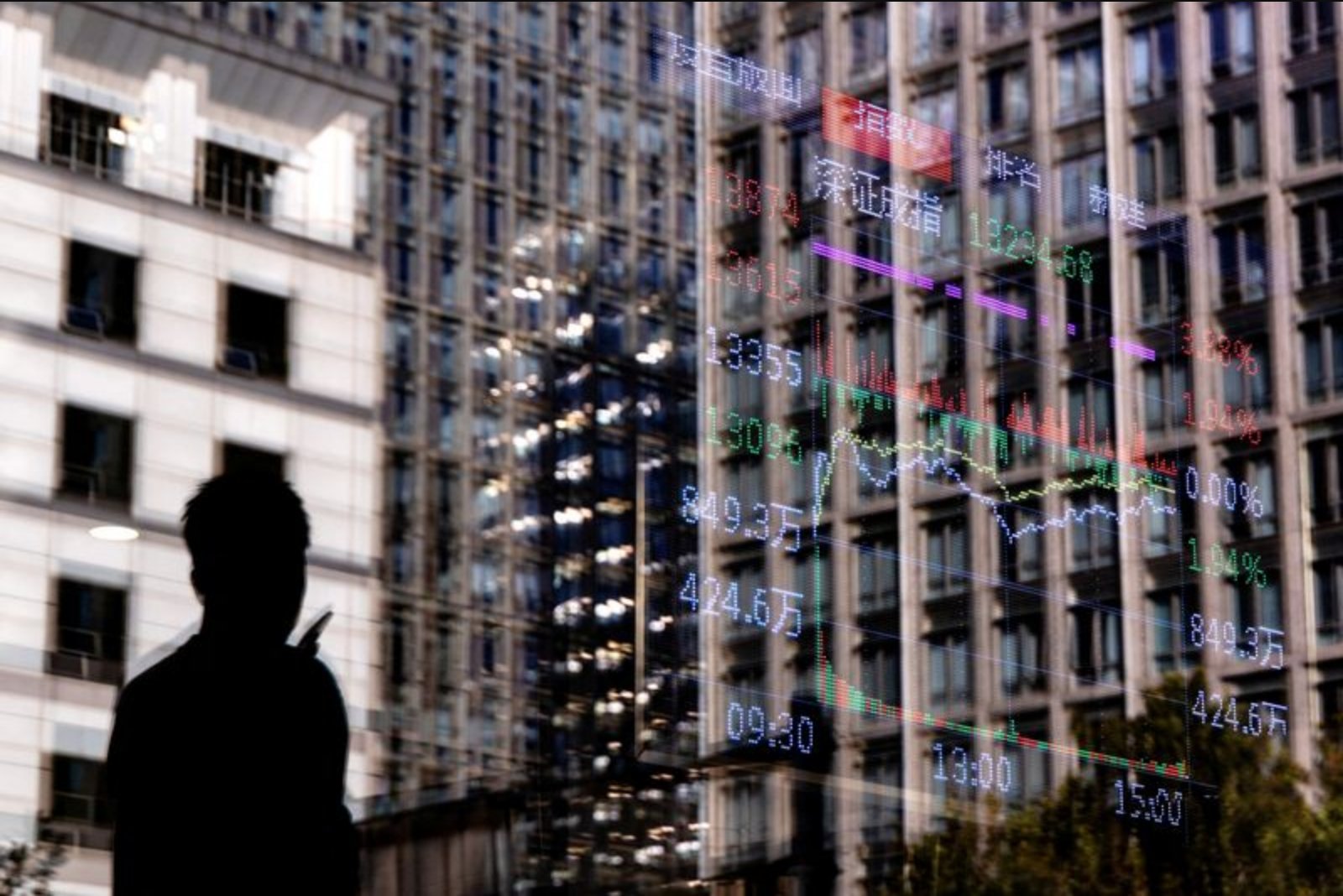
Asian equity indexes rose on Thursday, buoyed by momentum from technology-heavy gains in the United States, even as lingering geopolitical friction between the U.S. and Iran kept energy markets firm and sustained demand for safe-haven assets such as gold. Market activity in the region was muted as Hong Kong, mainland China and Taiwan observed Lunar New Year holidays.
MSCI’s broadest index of Asia-Pacific shares outside Japan climbed 0.5%, and Japan’s Nikkei added 0.85%, with technology names leading the Japanese benchmark higher. South Korea’s Kospi rallied roughly 3% to reach a record high, reflecting a strong uplift in sentiment for semiconductor and related tech stocks.
Traders cited fresh corporate news from the chip sector as a catalyst for the move. Nvidia disclosed a multiyear agreement to supply Meta Platforms with millions of its current and future artificial intelligence chips, a development that contributed to tech heavyweight advances on Wall Street and helped lift futures in Asia. Nasdaq futures were up 0.05% and S&P 500 futures inched 0.03% higher, while EUROSTOXX 50 futures were down 0.15%.
"We needed some good news. I think there has been a general feeling of malaise in the tech sector," said Tony Sycamore, a market analyst at IG, referring to earlier steep losses this month. He added that Nvidia had been a central force in the recent rally into the end of 2025 and that the company’s announcement could help set up tech stocks for a stronger run into Nvidia’s earnings next week.
Geopolitical developments continued to shape commodity prices. Oil held onto gains after a sharp advance in the previous session as markets priced in the possibility of supply disruption amid concerns about a confrontation between the U.S. and Iran. Brent crude futures eased slightly to $70.31 a barrel after jumping 4.35% on the prior trading day, and U.S. crude was last at $65.10, retaining most of Wednesday’s 4.6% gain.
Sycamore noted an intensified military build-up over the preceding 24 hours but cautioned that the moves could be part of diplomatic pressure tactics rather than a signal of an imminent attack. "I think this is just designed to put more pressure on Iran to come back with more reasonable objectives from these talks," he said.
Gold also continued to attract bids amid the heightened geopolitical risk and steadied at $4,963.99 an ounce, reflecting ongoing safe-haven demand.
Currency markets were influenced by both the Fed minutes and incoming U.S. economic data. The U.S. dollar held onto gains after the Federal Reserve’s January meeting minutes indicated that several policymakers remained open to further rate increases should inflation prove persistent. Against the dollar, sterling slipped toward a near one-month low at $1.3488. The yen was trading near the 155 per dollar mark and was last reported at 154.80.
"From our perspective, the (Fed) minutes support our view that rate cuts are off the table for the foreseeable future," said Charlie Ripley, senior investment strategist at Allianz Investment Management. "While some market participants are looking at inflation in the rear view mirror, the Fed is still signaling the safety warning that 'objects in the mirror are closer than they appear'. Policymakers specifically noted disinflation could be on a slower path."
The euro remained under pressure below $1.18 and was last quoted at $1.1791, influenced by reports that European Central Bank President Christine Lagarde plans to leave her post early. The New Zealand dollar was trading up 0.11% at $0.5972 after having fallen 1.4% in the prior session when the Reserve Bank of New Zealand dispelled expectations of a hawkish pivot at its policy meeting.
With major Asian markets thinly traded due to holiday closures, traders noted that liquidity conditions could amplify price moves in either direction as market participants await further corporate earnings, central bank signals and developments in the Middle East. For now, technology sector optimism, also tied to chip-supply news, provided the main lift to regional equities while oil and gold remained sensitive to geopolitical headlines and policy uncertainty.
Market snapshot:
- MSCI Asia-Pacific ex-Japan: +0.5%
- Nikkei: +0.85%
- Kospi: +~3%, record high
- Brent crude: $70.31 a barrel
- U.S. crude: $65.10 a barrel
- Gold: $4,963.99 an ounce
- Nasdaq futures: +0.05%; S&P 500 futures: +0.03%; EUROSTOXX 50 futures: -0.15%
- Sterling: $1.3488; Euro: $1.1791; Yen: 154.80 per dollar; NZD: $0.5972