
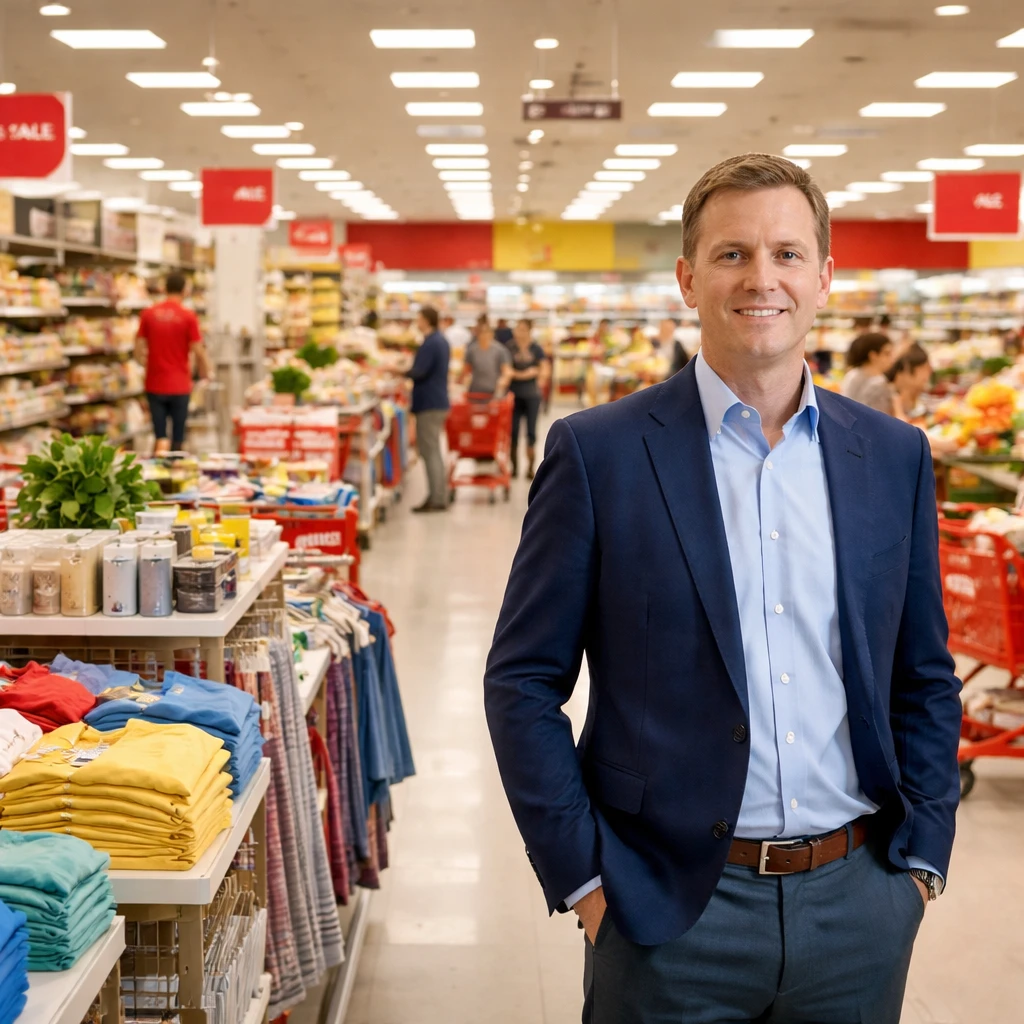
In his opening play as chief executive, Michael Fiddelke has initiated a broad price reduction campaign, cutting costs on over 3,000 products across apparel, home goods and everyday essentials by 5% to 20%. The move, unveiled in a Wednesday announcement, reprises a tactic used repeatedly by his predecessor and is intended to accelerate traffic and sales as Target seeks to halt multi-quarter declines.
The price cuts recall a pattern of discounting Target pursued between 2017 and 2024, often timed with holidays or strategic resets, a pattern that produced only episodic gains. After Target trimmed prices on roughly 5,000 items in 2024, same-store sales briefly returned to growth, but that momentum faded as the retailer’s heavy exposure to discretionary categories met consumers trimming spending to essentials.
Analysts reacted cautiously. "The price cuts are a step in the right direction, but they alone are not enough to win back customers. The winning playbook is broader than simply lowering prices," said CFRA analyst Arun Sundaram.
The current pricing action arrives amid a broader campaign by Fiddelke to persuade investors that a heavier capital footprint this year will produce better returns. At his first investor day on March 3 he outlined a slate of initiatives designed to reverse three years of sales declines, and that package of spending is now becoming concrete.
Fiddelke has outlined a $6 billion budget for the year, a figure intended to fund product assortment changes, faster restocking, speedier delivery and greater use of artificial intelligence across Target’s network of about 2,000 stores. Of that total, the company plans $5 billion in capital expenditures, a roughly one-third increase from the prior year. Within that capex envelope, $1 billion is allocated to inventory velocity, store openings and remodels.
Groceries are a focal point, with more than $1 billion committed to expand fresh offerings and to reconfigure store space to dedicate more room to perishable items. Target will also reassign some locations to act as fulfillment-centric hubs while others prioritize in-store shoppers, a departure from the company’s earlier approach of using most stores as small fulfillment centers.
Fiddelke has also announced $1 billion in additional operating expenses. "Target’s new chapter is all about fueling growth, and we’ll do so by playing our own game and making big changes to delight our guests," he said last week. The CEO has projected quarter-on-quarter sales growth for every quarter this year and offered a formal outlook that includes an adjusted operating income margin of 4.8% for 2026, 20 basis points above last year.
Investors reacted positively to the initial investor day, driving Target’s stock up roughly 6% on the announcement. Yet analysts and wealth advisers noted the pace and scale of the push. "Fiddelke’s pace is aggressive but realistic if store execution and supply chain stay disciplined," said Michael Ashley Schulman, a partner at Cerity Partners. "The challenge is to do this consistently across 2,000 stores. Retail turnarounds rarely get a second shot, and this is a big bet on consistency."
Target’s recent financial trajectory underscores the steepness of the task. Revenues have declined for five consecutive quarters, while operating income has fallen over the last three, even if the year-over-year rate of that decline has moderated. Shareholders have felt the pain: total returns have declined by more than 20% over the past five years, compared with gains of more than 200% at peers Walmart and Costco, according to the figures cited by the company.
Competition is a continuing headwind. The company faces price pressure from Walmart as well as discount chains such as Aldi and online players including Amazon, creating a retail environment where margins and customer loyalty are persistently contested. Target is also more leveraged than Walmart, leaving less of a financial buffer as it accelerates spending.
Gaining grocery share may prove difficult. Walmart already leads the groceries segment, a core battleground for mass-market retailers. Industry strategists caution that even with renewed emphasis on fresh and store layouts, any market-share gains are likely to be gradual.
Jay Woods, chief market strategist at Freedom Capital Markets, summarized the tension: "The question is not only can (Fiddelke) do it, but will investors have the patience to wait."
Target previously experimented with large-scale investments in stores under former CEO Brian Cornell. In 2017 Cornell authorized a $7 billion program to refresh stores that ultimately pressured margins. The company also exited its loss-making Canada operations in 2015, taking a significant writedown during the period of Cornell’s leadership.
While Fiddelke previously held both operating and finance roles at Target, the current plan represents a materially larger near-term outlay than recent years. Walmart projects an operating margin of up to 4.4% for the comparable 2026 period, with similar revenue growth expectations cited for that company. Target’s projected 4.8% adjusted operating margin for 2026 is therefore modestly higher in the company’s own outlook, but the retailer will be carrying more leverage.
Target did not respond to an email seeking comment.
The price reductions and the broader investment agenda together represent a two-pronged attempt to reverse a multi-year sales slide: immediate demand stimulation via markdowns and a sustained operational overhaul through elevated capital and expense commitments. Whether the combination can restore consistent growth will hinge on execution across merchandising, supply chain and store operations - areas the company has already signaled it will prioritize with the 2024-2026 spending program.
As Fiddelke moves forward, investors and market participants will be watching whether the temporary lift from price cuts can be extended by the deeper structural changes he has proposed, and whether Target can compete more effectively on price and assortment against entrenched rivals in the grocery and discount channels.