
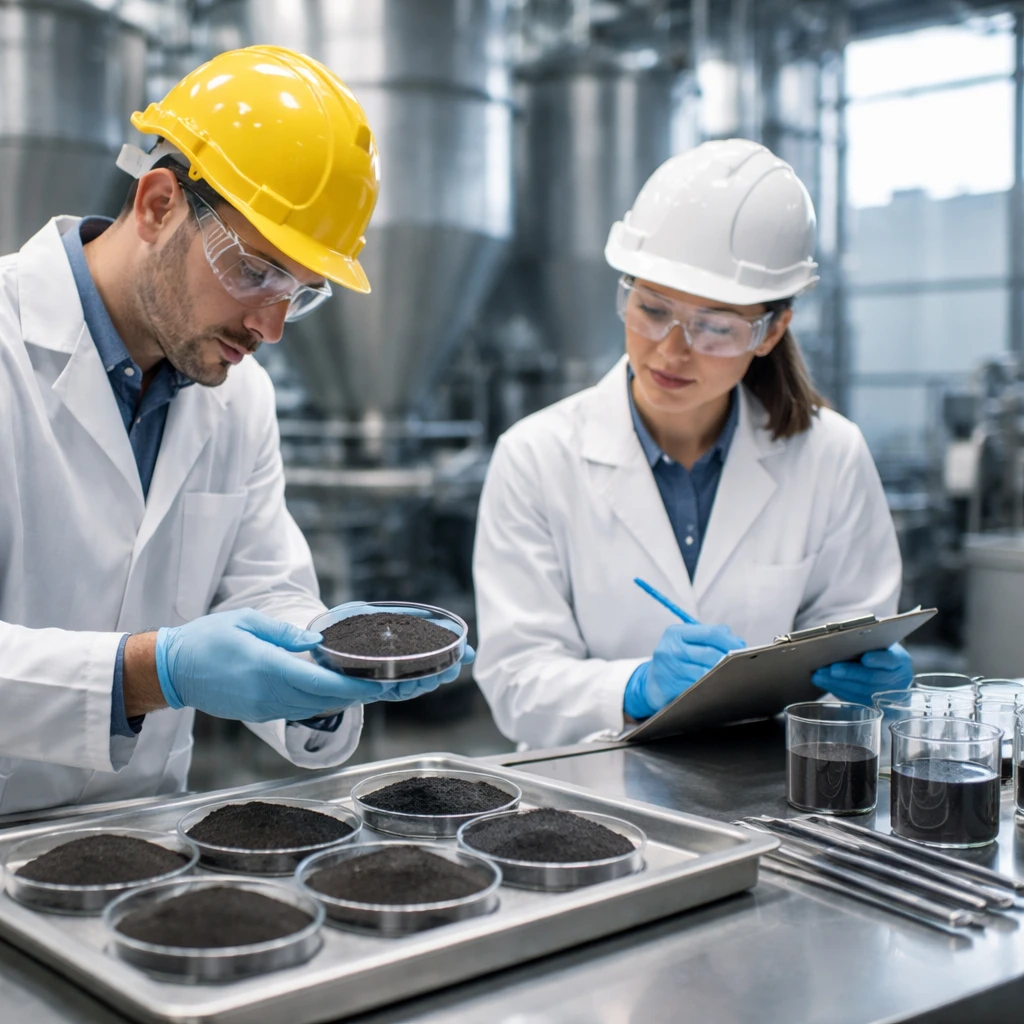
Syrah Resources and Tesla have reached an agreement to lengthen the period available to resolve a dispute tied to their graphite supply arrangement. The disagreement revolves around qualification of natural graphite active anode material - AAM - manufactured at Syrah’s Vidalia, Louisiana plant, material that is destined for use in electric vehicle battery production.
Earlier, Tesla issued a notice asserting Syrah had not satisfied an obligation to provide AAM samples from the Vidalia operation that met the contract's conformity requirements. Tesla characterized that alleged failure as a default under the offtake agreement.
Under the original schedule, Syrah had until March 16, 2026 to "cure" the alleged nonconformance. The parties have now extended that cure deadline to June 1, 2026. The extension, Syrah said, will permit further collaboration between the companies as they work through the outstanding qualification requirements.
Syrah has publicly stated it does not accept that it is in default under the offtake arrangement. Nonetheless, the company said it supports the timeline extension because it creates room for continued joint effort to address Tesla’s concerns about the Vidalia-produced anode material.
Tesla retains contractual authority to terminate the supply agreement if final qualification of the Vidalia AAM is not achieved by the newly established deadline. Any amendment extending the cure period is subject to approval by the U.S. Department of Energy, the companies noted.
Context and implications
Both parties are using the additional time to work on qualification steps rather than immediately escalating to termination. The outcome will determine whether material from the Vidalia facility meets Tesla’s conformity requirements for use in EV battery cells, and whether the offtake agreement remains in force under the revised timeline.
Beyond the immediate contractual dispute, the situation highlights the role of qualification processes in downstream battery supply chains and the contractual levers - including cure periods and termination rights - that buyers and suppliers rely on when qualification is not complete by scheduled dates.
Key points
- Syrah and Tesla have extended the cure deadline for an alleged default on graphite AAM qualification from March 16, 2026 to June 1, 2026.
- The dispute concerns conforming sample requirements for natural graphite active anode material produced at Syrah’s Vidalia, Louisiana facility.
- Tesla can terminate the supply agreement if final qualification is not obtained by the revised deadline, with the extension contingent on U.S. Department of Energy approval.
Risks and uncertainties
- Termination risk - If final qualification is not achieved by June 1, 2026, Tesla retains the right to terminate the offtake arrangement, affecting downstream battery material supply.
- Regulatory dependency - The amendment extending the cure deadline requires approval from the U.S. Department of Energy, introducing an external approval step into the timeline.
- Qualification outcome - The final qualification decision for Vidalia-produced AAM remains unresolved and will determine whether material can be supplied under the existing agreement.