
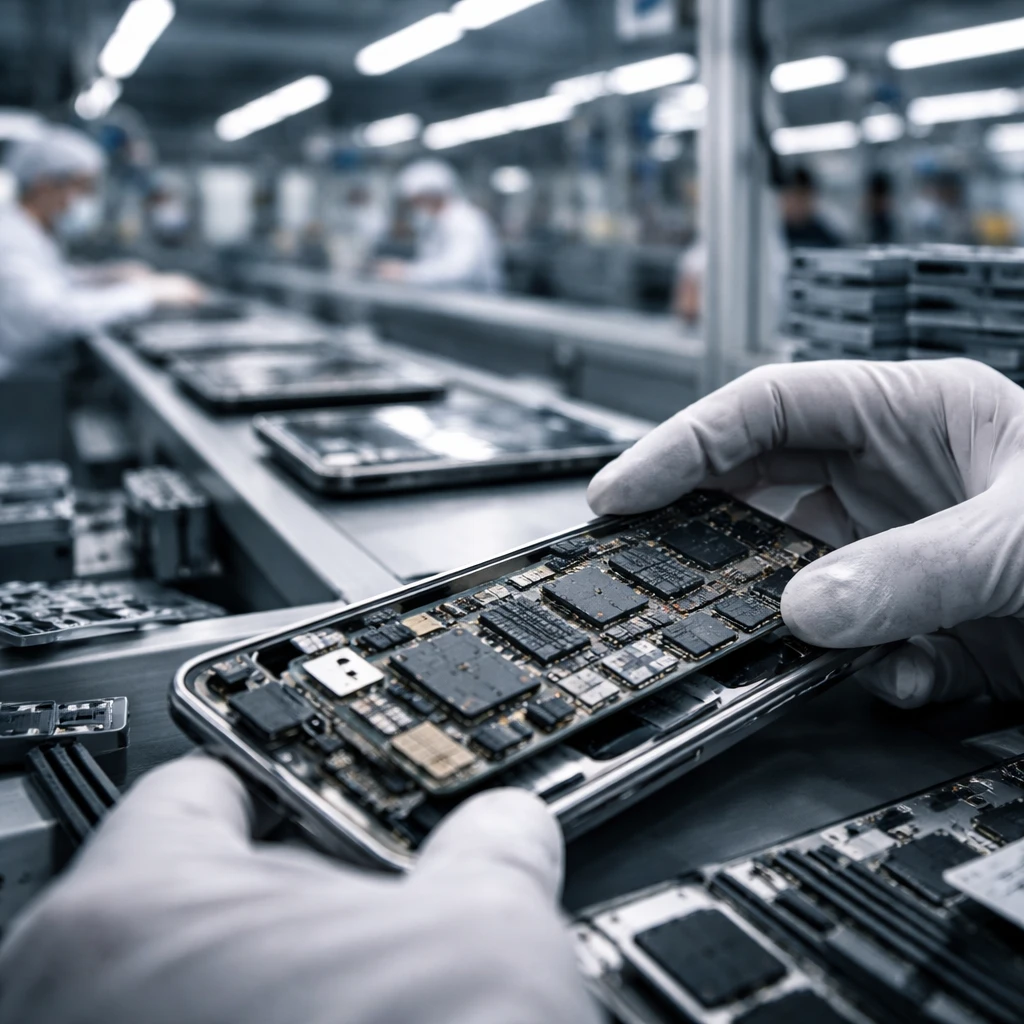
Apple's latest quarterly results showed the company reaping the benefits of a healthy iPhone refresh, but analysts say a rapid climb in memory prices poses a growing challenge for margins and pricing later in the product cycle.
Management reported revenue of $143.8 billion in the fiscal first quarter, a result roughly 4% above both Bernstein's and consensus expectations. Gross margin came in at 48.2%, outperforming consensus by 83 basis points, helping produce earnings per share of $2.85.
Looking to the near term, Apple guided for continued momentum into the fiscal second quarter, forecasting revenue growth of 13-16% year over year and a gross margin range of 48-49%.
Still, Bernstein analyst Mark Newman cautions that the input-cost environment for smartphones is changing quickly. His note highlights dramatic moves in contract memory pricing tracked by Bernstein: since the second quarter of 2025, average mobile DRAM contract prices have risen 237%, while NAND contract prices are up by about 70%.
Applying those memory-price increases to the iPhone bill of materials, Bernstein's work suggests roughly a 15% increase in iPhone cost of goods sold. That magnitude, the analyst argues, implies that a like-for-like iPhone 18 would have to be at least 15% more expensive to fully offset the higher component costs.
In practice, Newman expects Apple to absorb part of the pressure through higher retail pricing, but he also anticipates a downward shift in mix as some consumers trade down in response to higher prices. After accounting for that mix effect, Bernstein models a net average selling price increase of around 12%, which would translate to approximately 150 basis points of iPhone-level margin erosion.
Importantly, the analyst does not expect the full impact to show up immediately. Long-term supplier contracts and staggered cost pass-through mean the worst of the margin pressure is likely to appear in the first full quarter following the iPhone 18 launch rather than instantly.
From a modeling standpoint, higher average selling prices boost revenue even as unit growth assumptions are trimmed to reflect modest demand elasticity. Bernstein now projects fiscal 2026 revenue of $471 billion with a gross margin of 48.2%.
Despite the margin headwinds at the iPhone level, Bernstein's forecast nudges EPS estimates slightly higher: $8.72 for fiscal 2026 and $10.35 for fiscal 2027.
Investors remain attentive to margin risk stemming from memory inflation, but Newman also flagged that the near-term earnings impact should be relatively muted. He emphasised that the forthcoming Apple Intelligence release will be a more significant narrative for investors.
Reflecting the balance of stronger revenue and margin pressure, Bernstein maintained an Outperform rating on the stock and increased its price target to $340 from $325.
Detailed implications for unit economics
From a unit-economics standpoint, a roughly 15% increase in iPhone COGS materially alters per-unit margin unless offset by price. Bernstein's scenario assumes Apple passes most, but not all, of that cost through to consumers, which preserves top-line growth but compresses per-unit margin due to mix shifts. The timing of the pressure - delayed into the first full quarter after the next iPhone launch - gives Apple limited runway to manage pricing and promotions before the effect becomes fully tangible.