
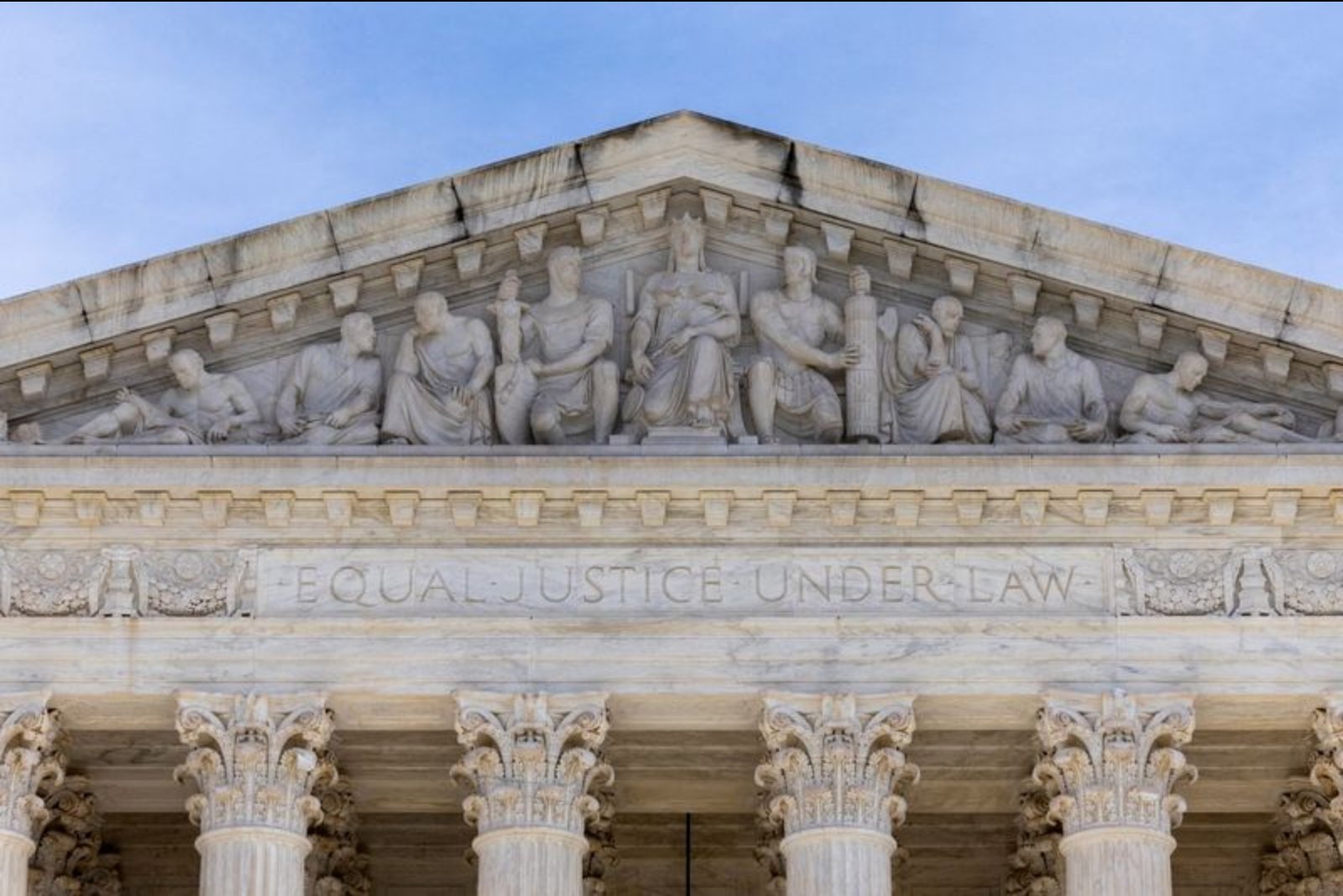
Since President Donald Trump returned to the White House in January 2025, the U.S. Supreme Court has been asked to resolve multiple high-profile disputes over the scope of executive authority and the reach of federal law. The litigation spans trade policy, the independence of regulatory and monetary institutions, immigration enforcement, the treatment of transgender people in federal programs, and broad changes to the federal workforce and agency structures. The court's decisions and interim stays have at times enabled the administration to continue disputed actions and at other times preserved lower-court restraints while legal challenges work their way through the system.
This article reviews the principal cases that have reached the high court, summarizing the facts and procedural posture in each matter without expanding beyond the material submitted in the record. The portrait that emerges is one of sustained judicial engagement with an array of presidential directives and administrative moves covering economic, social and national security policy areas.
Tariffs and the International Emergency Economic Powers Act
On February 20, the justices struck down an extensive package of tariffs the president had imposed under a statute designed for national emergencies. In a 6-3 decision, the Supreme Court affirmed a lower court ruling that the president exceeded his authority by invoking the International Emergency Economic Powers Act, commonly abbreviated as IEEPA, to justify sweeping tariff measures. The court concluded that the IEEPA did not grant the president the power he asserted to enact such tariffs and emphasized that the Constitution assigns the power to levy taxes and tariffs to Congress rather than the president.
The decision directly curtailed a central economic policy of the administration. Those tariffs had formed the backbone of a global trade confrontation initiated after the start of the president's second term and were cited as a factor that alienated trading partners, unsettled financial markets and contributed to broader global economic uncertainty.
Attempt to Remove a Federal Reserve Governor
The court indicated skepticism in a case involving the president's attempt to remove a Federal Reserve governor, a move that raised questions about the institutional independence of the central bank. During oral arguments on January 21, the justices appeared unlikely to grant the administration's request to lift a lower court injunction that prevents the immediate firing of Fed Governor Lisa Cook while her challenge to the removal proceeds.
The Federal Reserve's enabling legislation contains provisions intended to protect the Fed from political interference by permitting a president to remove governors only "for cause." That statutory language does not define "for cause" nor does it detail a removal process. The president moved to remove Governor Cook in August, alleging mortgage fraud she denies; Governor Cook, who was appointed by the prior administration, has described the accusations as a pretext aimed at removing her over differences in monetary policy. The court's handling of the matter has major implications for how insulated the Fed remains from political pressure. A decision in the case is expected by the end of June.
Deployment of National Guard Troops to the Chicago Area
On December 23, 2025, the Supreme Court declined to permit the deployment of National Guard troops to the Chicago metropolitan area, leaving in place an order issued by a federal district judge that blocked the deployment. The deployment was part of a broader pattern in which the president expanded domestic use of military forces in Democratic-led jurisdictions; critics contend such actions amount to punishment of political adversaries and an effort to suppress dissent. Illinois officials and local leaders sued to block the dispatch of hundreds of National Guard troops, and the Justice Department had asked the high court to allow the deployment while litigation continued. For the time being, the district court's order barring the deployment remains effective.
Federal Trade Commission Membership Removal
The court's conservative majority signaled during arguments on December 8, 2025, that it is inclined to uphold the legality of the president's removal of a Democratic Federal Trade Commission member, Rebecca Slaughter, and to endorse broader presidential authority over independent agencies. The administration appealed a lower-court judgment that had found the president exceeded his authority when he sought to dismiss Slaughter in March prior to the expiration of her term. The conservative justices appeared receptive to the argument that tenure protections Congress provided to heads of independent agencies unlawfully curtailed presidential power under the Constitution.
While the litigation proceeds, the Supreme Court allowed the removal to stand. A full decision in the appeal is expected by the end of June.
Copyright Office Leadership
In late November 2025, the court delayed judgment on a dispute over whether the president may remove the government's chief copyright official, leaving the official, Shira Perlmutter, in her post while her court challenge proceeds. The high court declined to immediately lift a lower-court ruling that blocked the president's firing of Perlmutter as U.S. register of copyrights and director of the U.S. Copyright Office, thereby preserving the status quo for the time being as the legal contest continues.
Birthright Citizenship Directive
The Supreme Court will hear arguments on April 1 regarding the legality of a presidential directive that sought to curtail birthright citizenship in the United States. A lower court had enjoined the executive order that directed federal agencies not to recognize the citizenship of children born in the United States if neither parent is a U.S. citizen or a lawful permanent resident. That court ruled the directive violated the 14th Amendment of the Constitution and a federal statute that codifies birthright citizenship rights in a class-action lawsuit brought on behalf of parents and children whose citizenship would be affected by the policy.
At an earlier stage in the dispute, on June 27, 2025, the Supreme Court limited the power of trial judges to issue nationwide injunctions hindering presidential policies, a development that altered the procedural posture of subsequent litigation over executive directives.
Immigration Raids and Racial Profiling Claims
On September 8, 2025, the high court allowed federal agents to proceed with immigration enforcement raids in Southern California that targeted individuals for deportation, despite allegations that agents relied on race, ethnicity or language as grounds for stops or detentions. The court granted a Justice Department request to stay a district judge's order that had temporarily barred agents from stopping or detaining people without "reasonable suspicion" of unlawful presence on the basis of race, ethnicity, or the fact that they spoke Spanish or English with an accent.
The district judge, Maame Frimpong, had found on July 11, 2025, that the administration's tactics likely violated the Fourth Amendment's protection against unreasonable searches and seizures, a finding the high court did not immediately endorse as it allowed the raids to proceed while litigation continues.
Temporary Protected Status for Venezuelan Migrants
On October 3, 2025, the Supreme Court again allowed the administration to pause the protections afforded to hundreds of thousands of Venezuelan migrants under Temporary Protected Status, or TPS. The court put on hold a lower-court ruling by U.S. District Judge Edward Chen that had found the Homeland Security Secretary lacked authority to terminate the TPS designation that had been issued under the prior administration. While litigation continues, the administration's request to suspend Judge Chen's order was granted.
TPS is a humanitarian designation in U.S. immigration law that shields nationals of certain countries affected by war, natural disaster or other extraordinary conditions from deportation and provides eligibility for work authorization. The stay effectively preserves the administration's ability to proceed with ending TPS for Venezuelan nationals until the courts reach a final resolution.
Revocation of Immigration Parole
On May 30, 2025, the Supreme Court permitted the administration to revoke an immigration "parole" program that had granted temporary lawful status to hundreds of thousands of migrants from Venezuela, Cuba, Haiti and Nicaragua. The high court placed on hold a district judge's order that had halted the administration's termination of parole for roughly 532,000 migrants, allowing the government to proceed with ending the program while a legal challenge moves through the courts.
Under U.S. law, immigration parole provides temporary permission to enter or remain in the United States for "urgent humanitarian reasons or significant public benefit," and it allows recipients to live and work in the country. The court's action potentially exposed many of those previously paroled to rapid removal as the litigation plays out.
Deportations Under the Alien Enemies Act
On May 16, 2025, the Supreme Court left in place a block on the administration's plans to deport Venezuelan nationals under a 1798 statute historically invoked during wartime. The court found the administration's use of the Alien Enemies Act problematic because of concerns that it sought to remove migrants without adequate procedural protections. The court's temporary halt followed an April 19, 2025 order that paused the deportations of dozens of migrants held at a detention facility in Texas.
Earlier, on April 7, 2025, the court imposed limits on how deportations under the Alien Enemies Act may occur, while the broader legality of applying that law to the current situation continues to be contested. The administration has alleged that the affected Venezuelans were members of a criminal gang known as Tren de Aragua; that allegation figures in the government's justification for using the wartime-era statute.
Deportations to Third Countries
On June 23, 2025, the Supreme Court allowed the administration to resume deporting migrants to third countries without requiring that individuals be given a meaningful opportunity to demonstrate the risk of harm they might face in the receiving country. The court granted the government a stay of a judicial order that had required U.S. authorities to afford migrants subject to deportation to third countries a meaningful chance to show they could be at risk of torture or other severe harm if removed to that destination.
Judge Brian Murphy of the U.S. District Court in Boston had found that the administration's policy likely violated constitutional due process protections. The high court's action on July 3, 2025, also lifted limits that Judge Murphy had imposed to protect eight men whom the administration sought to send to South Sudan in connection with its third-country deportation policy.
Wrongfully Deported Salvadoran Migrant
On April 10, 2025, the Supreme Court directed the administration to assist in returning a Salvadoran man who had been deported in error to El Salvador. The court declined the Justice Department's request to overturn an April 4 district court order by Judge Paula Xinis that required the government to "facilitate and effectuate" the return of Kilmar Abrego, a Maryland resident whose wife and young child are U.S. citizens.
On June 6, the U.S. Attorney General announced that Abrego had been flown back to the United States and would face criminal charges for transporting illegal immigrants. Abrego entered a not guilty plea to those charges.
Transgender Military Policy
On May 6, 2025, the Supreme Court allowed the administration to implement a policy banning transgender individuals from serving in the U.S. military. The court granted the Justice Department's request to lift a nationwide district court injunction that had prevented the armed forces from enforcing the ban, thereby permitting the military to discharge current transgender service members and to reject transgender applicants while litigation continues. The district court judge, Benjamin Settle, had found the ban likely violated the Constitution's guarantee of equal protection.
Passport Gender Designation Policy
On November 6, 2025, the court allowed the administration to bar passport applicants from listing a sex designation that reflects their gender identity, instead requiring applicants' passport sex designations to align with the sex assigned at birth. The Supreme Court granted the Justice Department's request to stay a judge's order that had blocked that policy, leaving the rule in effect while a class action challenging the requirement proceeds through the courts. Judge Julia Kobick had previously concluded that the policy likely violated equal protection principles.
Large-Scale Federal Layoffs
On July 8, 2025, the justices enabled the administration to carry forward plans for broad workforce reductions across numerous federal agencies. At the administration's request, the Supreme Court lifted a May 22, 2025, district court injunction by Judge Susan Illston that had stopped large-scale federal "reductions in force" while litigation proceeds. The planned cuts encompassed workforce actions at the Departments of Agriculture, Commerce, Health and Human Services, State, Treasury and Veterans Affairs, among more than a dozen other agencies. Judge Illston had concluded that the president had exceeded his authority in ordering the mass dismissals.
Consumer Product Safety Commission Removals
On July 23, 2025, the court allowed the president to remove three Democratic commissioners from the Consumer Product Safety Commission - Mary Boyle, Alexander Hoehn-Saric and Richard Trumka Jr. - lifting a district court order that had blocked their dismissal while legal challenges proceed. The action strengthens presidential control over an agency Congress originally structured to be independent of executive removal decisions.
Labor Board Officials
On May 22, 2025, the Supreme Court permitted the president to keep two Democratic members of federal labor boards from resuming their positions while challenges to their removal are litigated. The court temporarily stayed orders from two separate judges that had protected Cathy Harris from being removed as a member of the Merit Systems Protection Board and Gwynne Wilcox from being removed from the National Labor Relations Board before their statutory terms ended. Both board members had been appointed by the prior administration.
Reinstatement of Fired Federal Employees
On April 8, 2025, the Supreme Court stayed a lower-court injunction that had required the administration to reinstate thousands of probationary federal employees who had been dismissed. The high court put on hold a March 13 district judge's order that applied to probationary hires at the Departments of Defense, Veterans Affairs, Agriculture, Energy, Interior and Treasury, allowing the administration to maintain the firings while legal challenges proceed.
Foreign Aid and Congress's Appropriations Power
On September 26, 2025, the justices permitted the administration to withhold approximately $4 billion in foreign aid that Congress had authorized for the current fiscal year. The decision allowed the president to proceed with cutting funding as part of an "America First" policy approach, even as the Constitution vests the power of the purse in Congress.
In a related matter on March 5, 2025, the Supreme Court declined to permit the administration to withhold payments to foreign aid organizations for work they had already performed for the government. That decision kept intact obligations to pay for completed services while the administration moved to curtail American humanitarian programs overseas.
Education Department Reorganization
On July 14, 2025, the justices allowed the administration to move forward with plans to dismantle the Department of Education and to transfer key functions to other federal agencies. The Supreme Court lifted a district court order that had reinstated nearly 1,400 department employees affected by mass layoffs and had blocked the transfer of core responsibilities. Litigation challenging the reorganization continues.
Cuts to Medical Research and Teacher Training Grants
On August 21, 2025, the court permitted the administration to proceed with broad reductions to grant programs at the National Institutes of Health that fund research related to racial minorities and LGBT populations, consistent with the president's policy to curtail diversity, equity and inclusion initiatives and matters related to transgender identity. Similarly, on April 4, 2025, the justices allowed the administration to implement substantial cuts to teacher training grants as part of those same policy priorities.
Access to Social Security Administration Data
On June 6, 2025, the Supreme Court authorized a federal entity called the Department of Government Efficiency to gain broad access to personal records held within Social Security Administration data systems. The department is a central actor in the administration's efforts to reduce the federal workforce, and the court's permission expanded its ability to consult sensitive personal information as part of staffing and efficiency initiatives.
DOGE Transparency Order
Also on June 6, 2025, the court extended a stay that prevents judicial orders from requiring an entity identified as DOGE to provide records to a government watchdog advocacy organization that had sought detailed information about DOGE's operations. The extension followed an initial temporary pause issued on May 23, 2025, and preserved DOGE's confidentiality while the dispute continues.
Overall Legal Landscape
The set of decisions and temporary stays reflects a pattern in which the Supreme Court has alternately limited and enabled executive actions across a broad policy spectrum. The justices have engaged with constitutional separation-of-powers questions, the statutory protections for officials in independent agencies, the boundaries of immigration enforcement, and the president's authority to reorganize or shrink segments of the federal workforce and agency structure.
Several of the court's rulings have immediate practical effects while others preserve contested policies only temporarily as the litigation proceeds. In many instances, the court has allowed the administration to implement policies during appeals by granting stays of lower-court orders; in other matters, the high court has enforced limits by affirming or maintaining injunctions blocking implementation.
Procedural Notes and Pending Rulings
A number of cases remain unresolved before the court, with full opinions expected by the end of June in some matters involving the removal of agency officials. Other important disputes, such as the case addressing the president's directive on birthright citizenship, are scheduled for oral argument in the months ahead. Where the court has issued stays rather than final merits rulings, the underlying legal controversies continue to be litigated in the lower courts and may return to the high court for definitive pronouncements.
Implications
The rulings carry implications for multiple sectors. The decision striking down tariff authority under IEEPA directly affects international trade and financial markets by removing a statutory basis for the president's tariff program. Actions permitting cuts to federal grants and workforce reductions have consequences for education, medical research and federal program delivery. The court's immigration-related decisions affect enforcement operations, humanitarian protections and the status of hundreds of thousands of migrants. Decisions on the removal of agency officials and the bounds of presidential authority reach across the federal regulatory state and touch industries and stakeholders that interact with independent agencies.
At the same time, many cases are procedurally paused or remain under review, producing a partial and evolving legal landscape rather than a single, settled posture. As litigation continues, the practical effect of some policies will be determined by whether the court issues final rulings that uphold stays, vacate injunctions, or adopt limitations on executive power.
Conclusion
The Supreme Court's docket since January 2025 reflects an intense judicial focus on a wide-ranging agenda advanced by the president and his administration. From economic policy and central bank independence to immigration enforcement, federal workforce restructuring, and regulatory governance, the high court has been a central arbiter of the reach and limits of executive action. The series of rulings, stays and pending arguments documented here outlines the contours of ongoing constitutional and statutory disputes that will continue to shape U.S. policy across economic and social spheres as litigation proceeds.