
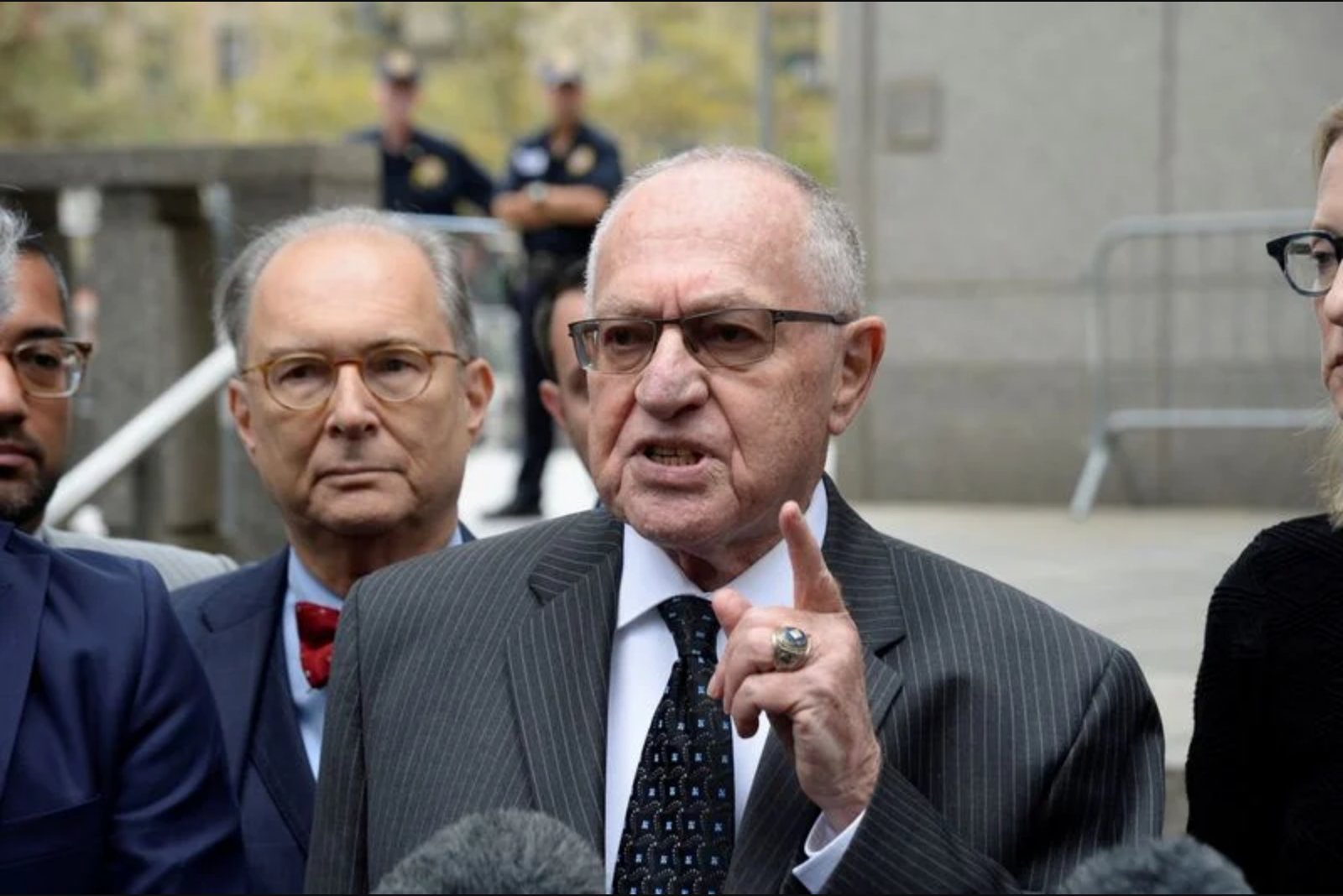
The U.S. Supreme Court on Monday declined to take up an appeal from prominent attorney Alan Dershowitz seeking to revive a defamation lawsuit against CNN over the cable news network's coverage of his remarks during President Donald Trump’s first Senate impeachment trial in 2020.
The high court's decision leaves in place an earlier dismissal by a federal judge in Fort Lauderdale, Florida, and an appellate ruling from the 11th U.S. Circuit Court of Appeals in Atlanta, both of which found that Dershowitz had failed to show that CNN acted with "actual malice." CNN is owned by Warner Bros Discovery.
In his petition to the justices, Dershowitz urged the court to move away from the defamation protections the Supreme Court established in its landmark 1964 ruling in New York Times v. Sullivan. That line of precedent requires a public figure bringing a libel claim to prove the defendant published a false statement with knowledge of its falsity or with reckless disregard for whether it was false - the so-called actual malice standard.
Dershowitz argued in his filings that the Sullivan framework has become what he described as "an impregnable fortress that protects media irresponsibility while denying public figures any remedy for egregious misrepresentations." He asked the justices to reconsider or roll back the protections that have made it difficult for public figures to prevail in defamation suits.
The underlying dispute arose from CNN's reporting of Dershowitz’s presentation to the Senate during the impeachment trial following the House's passage of articles accusing President Trump of abuse of power and obstruction of Congress. Dershowitz, who served on Trump’s defense team during that 2020 trial, had set out a broad interpretation of presidential authority that drew surprise from some Democrats.
CNN reported that Dershowitz said during the trial, "if a president does something which he believes will help him get elected in the public interest, that cannot be the kind of quid pro quo that results in an impeachment." In his lawsuit, Dershowitz contended that the network repeatedly broadcast that clip in a way that made it appear as if his remarks represented his entire view, and that the presentation created the impression that he was "a constitutional scholar and intellectual who had lost his mind." The Latin phrase quid pro quo conveys the concept of a favor exchanged for a favor.
CNN, in its filings opposing Dershowitz’s petition, defended the legal precedent it relied upon and warned that weakening or overturning Sullivan could undermine a broad array of cases. The network also said it had aired Dershowitz’s full remarks and had interviewed him on air twice after he complained about its coverage.
Following the trial and the coverage, a federal judge in Fort Lauderdale ruled for CNN in 2023. That decision was affirmed by the 11th U.S. Circuit Court of Appeals in 2025, which concluded that Dershowitz had not presented evidence that reporters or commentators at CNN acted with the degree of knowledge or recklessness required to meet the actual malice standard.
The Supreme Court’s refusal to hear the case preserves the status quo on the law governing defamation claims by public figures. Two conservative justices, Clarence Thomas and Neil Gorsuch, have previously signaled interest in revisiting the Sullivan precedent. In prior cases, including a denial in 2021 that produced dissents from both justices, they argued the court should reevaluate its defamation precedents in light of a shifting media environment and concerns about disinformation. The justices again declined in 2025 to take up an appeal from casino executive Steve Wynn that also sought to challenge Sullivan.
Dershowitz is a high-profile trial lawyer with a long list of notable clients. His legal career has included representation of figures such as Jeffrey Epstein, O.J. Simpson, Jim Bakker, Mike Tyson and Julian Assange. He also authored a 2018 book opposing President Trump’s impeachment.
The Senate acquitted President Trump in the 2020 impeachment trial, and later acquitted him again in his second impeachment trial the following year. The initial impeachment arose from efforts by Trump to pressure Ukraine to announce an investigation into his Democratic opponent Joe Biden, who later defeated Trump in the 2020 presidential election.
Legal posture and immediate result: The Supreme Court’s denial leaves intact the lower courts’ findings that Dershowitz failed to show CNN acted with actual malice, and maintains the central role of the Sullivan standard in defamation law involving public figures.