
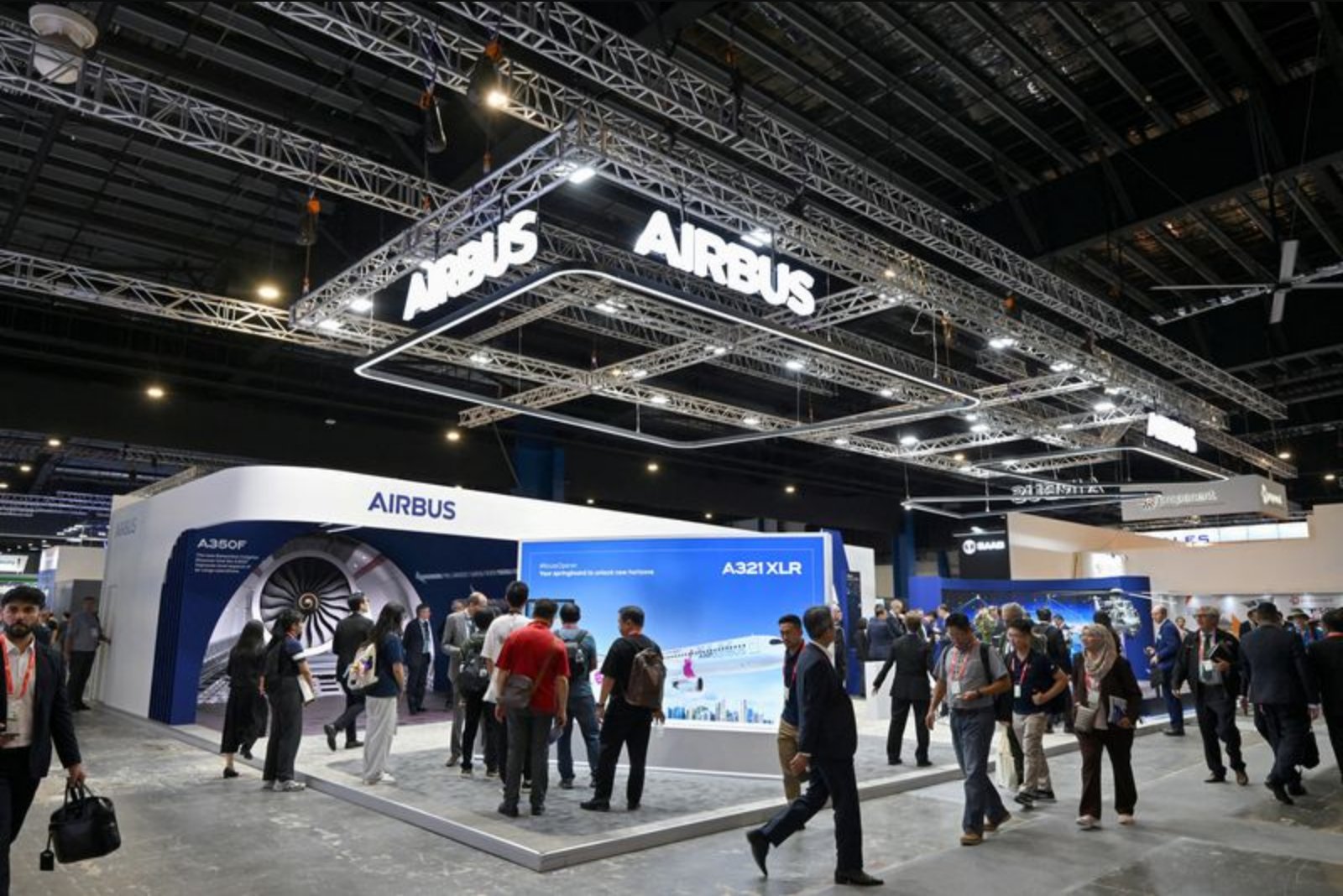
Years after the acute phase of the pandemic, the aviation sector continues to contend with deep supply-chain disruptions that industry executives and suppliers say have been intensified by record levels of passenger travel and geopolitical tensions. The combined effect has left airlines operating older jets for longer periods, pushed up costs and stretched timelines for critical engine and airframe parts.
Executives at the Singapore Airshow said some deliveries from Airbus and Boeing are being deferred because engine producers and other parts suppliers are attempting to balance surging demand for new aircraft with maintenance needs for existing fleets. That dynamic has prompted carriers to keep older, less fuel-efficient aircraft in service well beyond normal replacement schedules.
Jeffrey Lam, the chief operating officer and president of commercial aerospace at ST Engineering, described persistent delays and bottlenecks as having become the "new norm" and said, "We are afraid that this new norm will stay, which is completely unacceptable." ST Engineering is the world’s largest airframe maintenance and repair services provider, and Lam made his remarks on the sidelines of this week’s Singapore Airshow.
The knock-on effects of parts scarcity and longer lead times are being felt across carriers. Leslie Thng, CEO of Singapore Airlines’ low-cost unit Scoot, told a panel at the event that shortages are adding to costs. "We also proactively, for example, secure more spare engines at our own expense to make sure that if there are engine issues, the impact on us can be mitigated," he said.
Global passenger demand has surged: data from the International Air Transport Association show global air passenger traffic in 2025 was at a record high, about 9.3% above its pre-pandemic level in 2019, and the organization forecasts growth of a further 4.9% this year. To meet that demand, airlines have been retaining older aircraft in service for roughly two years longer than the long-term average, a practice IATA said increased fuel, maintenance, engine leasing and inventory costs by an estimated $11 billion in 2025.
Willie Walsh, IATA’s Director General, commented to Reuters on the scale of those added costs: "It’s very frustrating, and when you see this massive additional cost being borne by airlines, you know it really is time for these key suppliers to get their act together and improve this situation."
Engine makers say they have ramped up production but are still overwhelmed by demand. Gael Meheust, CEO of CFM International, said during a panel that the company had increased output since the pandemic but that demand had been "incredible." He added, "That’s the paradox in which we are. It’s not that the supply chain...cannot deliver on the ramp-up, it’s just that the demand is at a level that we have never imagined." CFM, the joint venture between GE Aerospace and Safran, increased production by 25% in 2025 and Meheust said output is expected to rise further by at least 10% each year.
Suppliers such as ST Engineering, which manufactures engine nacelles - the outer housings of jet engines - are struggling to keep pace. The firm said nacelles take about six weeks to produce, but total lead times for components and material orders now stretch up to a year, compared with about nine months before post-pandemic disruptions and rising demand. Efforts to place early orders to build inventories are not fully solving the problem. "Some of the shortage is worldwide, so you actually can’t even buy them early if you want," Lam said.
Geopolitical developments have compounded supply issues for engine manufacturers by limiting access to certain materials. Paul Wingfield, an account manager at Future Metals, a Berkshire Hathaway subsidiary, said Russia’s war in Ukraine cut off access to Russian exports that previously supplied about half of the global titanium market. That disruption has contributed to much longer lead times for crucial materials.
Current lead times for titanium and nickel tubing are about 50 to 60 weeks, Wingfield said, a reduction from 60 to 70 weeks a year ago but still far from the pre-pandemic norm of roughly 20 weeks. "The mills can’t make enough to catch up because they stopped producing for four years," he said. "What happens when everybody ramps up again is there’s a lack of material in the market, so the mills are playing catch-up."
The combined pressures - stronger-than-expected demand, protracted parts lead times and material shortages tied to geopolitical events - are creating a persistent drag on the industry. Airlines and maintenance providers are adjusting by investing in spare parts and extending the operational lives of older aircraft, steps that are reducing near-term delivery pressures but increasing costs and operational complexity for carriers.
Executives and suppliers at the Singapore Airshow characterized the situation as one in which industry participants must cope with sustained disruption rather than expect a near-term return to pre-pandemic supply dynamics. The interviewees said the prevailing conditions are raising costs across fuel, maintenance and leasing, and placing added strain on engine and airframe component manufacturers attempting to expand production amid unprecedented demand.
Contextual note: The reporting reflects comments made at the Singapore Airshow and data cited from industry participants and the International Air Transport Association. Details on production increases, lead times and cost estimates were provided directly by the quoted officials and industry bodies.