
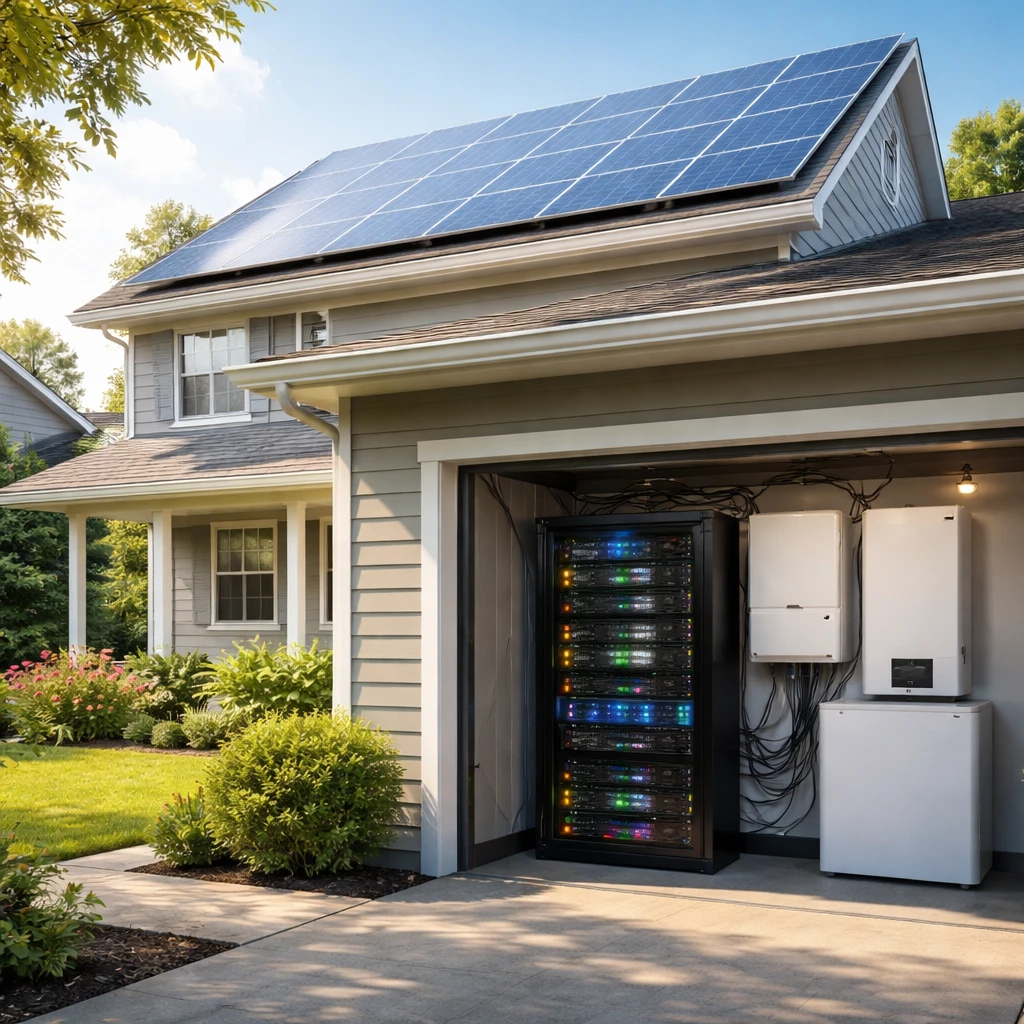
Sunrun Inc. is running a pilot that would let homeowners with rooftop solar systems earn material payments by supplying electricity to distributed computing loads, Chief Executive Officer Mary Powell said.
Speaking on Bloomberg TV, Powell said the company has been engaging prospective technology customers to utilize the "mini data-center capabilities" of residential solar-plus-storage systems. Sunrun publicized a distributed AI compute program last week as part of the initiative.
As the largest U.S. residential solar installer, with more than 1 million customers on its platform, Sunrun is exploring new revenue pathways tied to a rising demand for data-center processing and the electricity required to run it. The company is positioning the program as an option for customers who want to put their onsite generation to work beyond offsetting household consumption.
"Another way to use that energy, if they choose, and to get compensated for it," Powell said of the offering.
Powell provided a potential compensation range for participating customers, saying the payments "could range from a couple hundred dollars to more than that in a month." The comments left key elements of the business case unresolved; Powell did not disclose detailed economics or contract terms for the pilot.
Market reaction was negative in intraday trading, with Sunrun shares down 2.4% as of 1:04 pm ET. The company did not provide further financial projections tied to the pilot, and discussions with technology partners are ongoing.
The pilot is framed as an optional value stream for customers who choose to make their rooftop-generated electricity available to compute workloads rather than using that energy exclusively for in-home consumption or exporting to the grid. Sunrun's materials describe this as tapping distributed computing potential at the edge of the power system.
At this stage, important questions remain about how revenue will be shared with customers, the scale of compute workloads that can be hosted on residential systems, and the operational impacts on households. Sunrun's larger installed base gives it reach to test the concept, but the company has not yet released definitive parameters mapping customer payments to system performance or compute demand.
Bottom line: Sunrun is piloting a program to pay residential solar customers for hosting distributed compute workloads, and the company is in active talks with potential technology partners. The program could deliver payments of several hundred dollars per month to participating customers, but financial details and operational specifics remain unclear.