
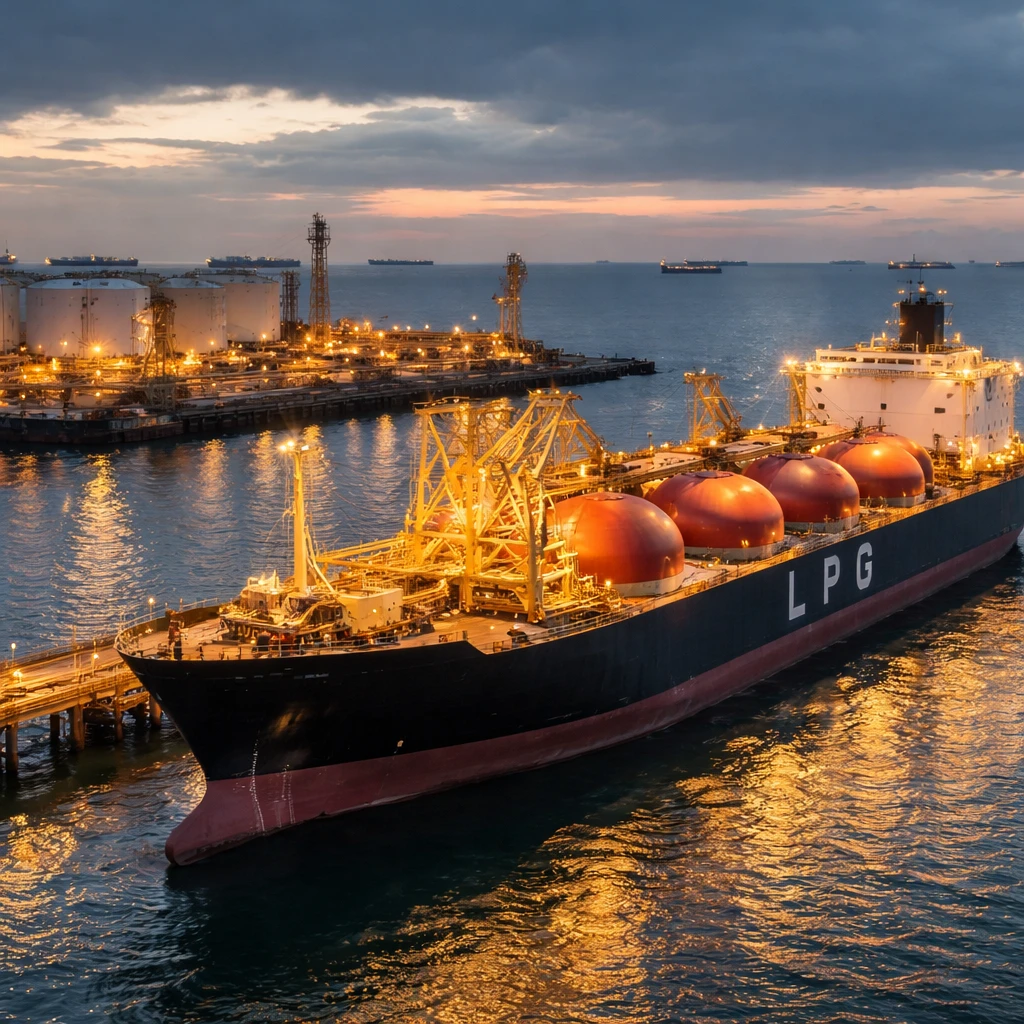
Jefferies says ongoing disruption in the Strait of Hormuz is constraining prompt liquefied petroleum gas (LPG) availability by effectively leaving roughly 1.5 million barrels per day of Middle East LPG stranded.
The firm notes this loss of near-term Middle East supply is supporting demand for cargoes sourced from the U.S. Gulf Coast. That shift in physical flows is propping up immediate interest in U.S. exports of LPG.
However, Jefferies highlights structural limits that restrict how much U.S. midstream companies can benefit from the situation. The analyst group points out that export capacity is predominantly tied up under contracts and is not readily expandable to lift export volumes. In addition, LPG is typically produced as a byproduct of other hydrocarbon processing, and existing export facilities are already operating at maximum throughput.
Those two constraints - contracted export capacity and byproduct-driven supply tied to plants working at full utilization - mean U.S. midstream operators have limited scope to boost shipments even as demand for USGC cargoes increases.
Looking beyond the current dislocation, Jefferies' bottom-up analysis signals a different risk profile later in the decade. The firm sees a risk that, once the present market disruptions subside, the global LPG market could move toward oversupply by the end of the decade.
That projection suggests the present tightening is at least partly transitory, driven by logistics and flow disruptions centered on the Strait of Hormuz, rather than permanent shifts in production fundamentals.
Takeaway - The immediate impact of the Hormuz disruption is to tighten prompt LPG balances and lend support to U.S. Gulf Coast cargoes, but physical and contractual limits on export capacity cap how much midstream firms can expand shipments. Over the longer term, Jefferies' detailed analysis warns of a potential swing toward global oversupply by the decade's end once the current dislocations fade.