
Stifel has kept a Buy recommendation on Tesla, maintaining a $508 price target while emphasizing improved profitability metrics and potential demand support tied to higher gasoline costs.
Analyst Stephen Gengaro noted that Tesla reported a fourth-quarter 2025 gross profit of $5.01 billion, surpassing Stifel’s prior forecast of $4.04 billion. Gengaro pointed out that Tesla’s margins reached 20.1% in the quarter, marking a two-year high despite the company absorbing more than $500 million in tariffs and experiencing reduced fixed cost absorption.
The research note underlined the company’s advances on Full Self-Driving (FSD) and Robotaxi initiatives, which Stifel considers central to long-term value creation. Tesla now counts nearly 1.1 million paid FSD customers worldwide. Gengaro also noted that as future net additions transition to subscription-based access, Tesla will face a short-term margin headwind but could ultimately generate high-margin recurring revenue.
On the macro front, Stifel flagged that persistent geopolitical conflict in Iran could keep gasoline prices elevated, which the firm views as a potential tailwind for electric vehicle demand. The analysis ties higher fuel costs to an improvement in EV sales dynamics under that scenario.
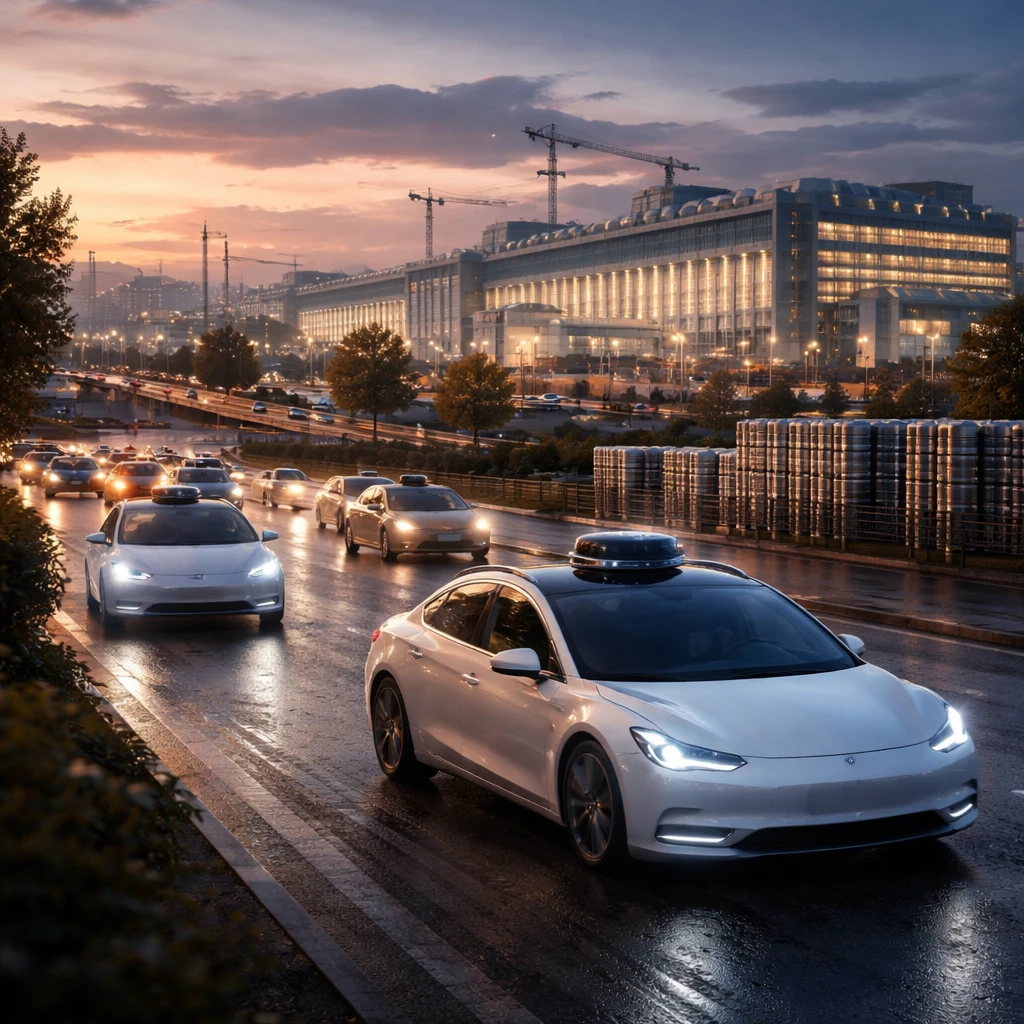
Tesla’s Robotaxi offering is already in operation in the San Francisco Bay Area and Austin. Company plans call for expansion of the service to Dallas, Houston, Phoenix, Miami, Orlando, Tampa, and Las Vegas during the first half of 2026.
Capital expenditures for 2026 are projected to exceed $20 billion. Stifel says that spending is earmarked for six factories and related projects, including a lithium refinery, an LFP battery plant, a Cybercab line, the Semi facility, a new Mega factory and an Optimus factory. The analyst also expects the 2026 capex program to extend Tesla’s AI compute infrastructure and to support growth in the fleet of Robotaxi and Optimus units.
Reflecting these operational and investment dynamics, Stifel raised its EBITDA forecasts for Tesla to $16.7 billion for 2026 and $21.9 billion for 2027. The firm preserved a bullish stance both on Tesla’s prospects and on the broader electric vehicle market.
Contextual summary - Stifel’s assessment centers on better-than-expected quarterly profitability, strategic progress on software-driven mobility services, a sizable capex plan for 2026, and potential macro tailwinds from higher gasoline prices if geopolitical tensions persist.