
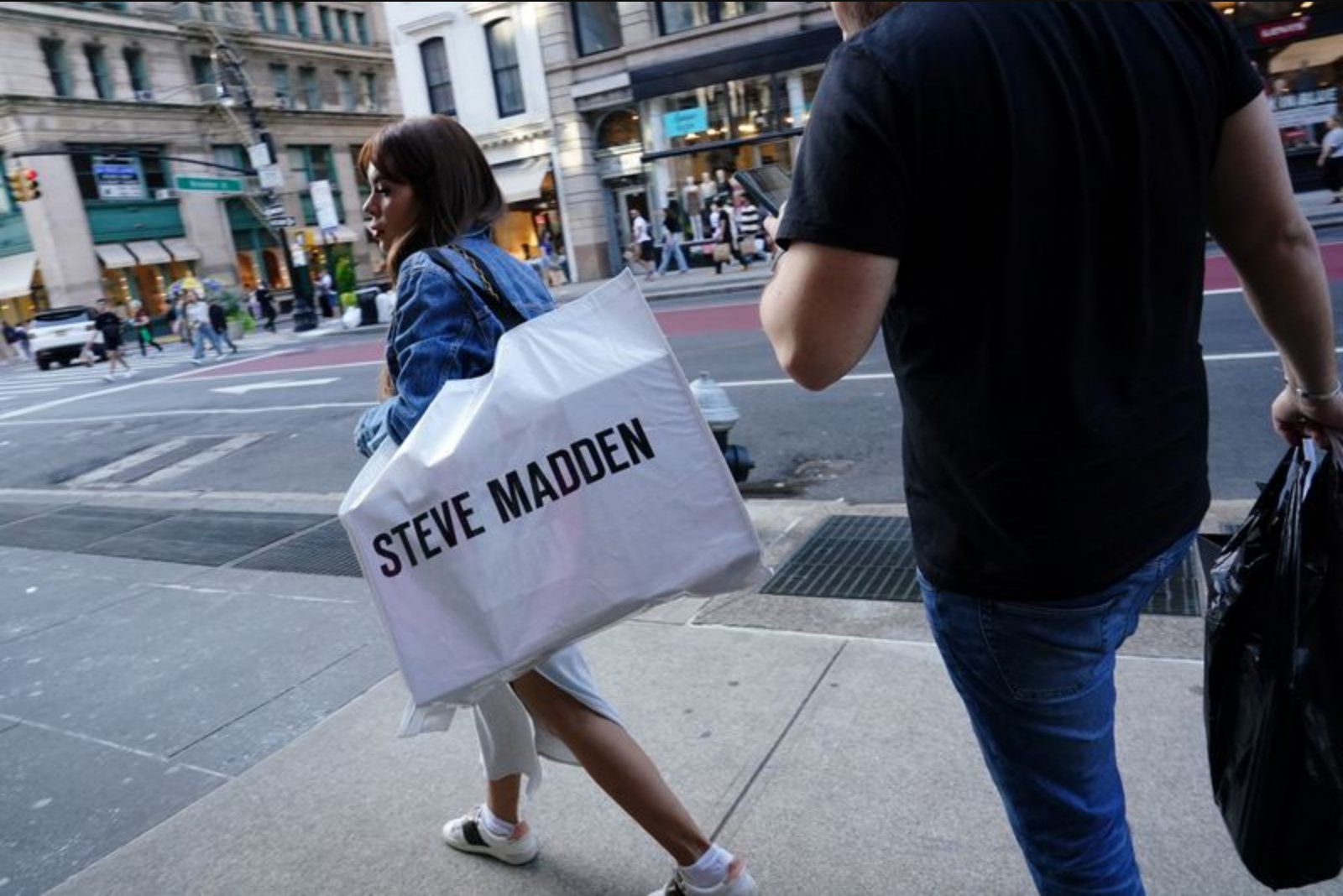
Steven Madden on Wednesday chose not to issue a 2026 earnings forecast, attributing the decision to recent uncertainty around U.S. tariff policy. The announcement marks a visible sign of disruption for consumer goods producers as they await further clarity following a high-profile judicial decision and subsequent administrative action.
In a recent ruling, the Supreme Court struck down broad tariffs that had been imposed under a law intended for national emergencies. After that decision, the United States implemented a temporary 10% global import tariff on Tuesday. A White House official said the administration was pursuing an increase of that temporary levy to 15%.
Company executives said the changing tariff landscape has made it difficult to offer reliable forward guidance. Analysts at Telsey Advisory Group summarized the situation by saying the limited visibility was understandable given the fluidity of the U.S. tariff environment and uncertainty over where rates will ultimately settle.
Steven Madden did provide a revenue outlook even as it withheld profit guidance. The company forecasted revenue to rise between 9% and 11% for the full year. The projected increase compares with an 11% revenue gain in 2025. Analysts had been expecting a 10.5% revenue increase, according to data compiled by LSEG.
Shares of Steven Madden were down about 2% in early trading on Wednesday following the guidance update.
The business has already been adjusting its production footprint in response to tariff developments. The company shifted significant manufacturing out of China in April and May of last year after punitive 145% tariffs were imposed on imports from China. That move led some retailers to pare back orders and put pressure on the company’s gross margin in the third quarter.
Current sourcing now stands at roughly 40% of products coming from China, a figure company management said is up slightly from about 30% observed in the fall of 2025. Management also noted that in 2024 the company sourced more than 70% of its products from China. To reduce concentration risk, Steven Madden has diversified production into countries including Cambodia, Vietnam, Mexico and Brazil.
The company had previously withheld its fiscal 2025 annual forecast in July of last year. For the fourth quarter, Steven Madden reported revenue of $753.7 million, slightly below consensus estimates of $753.9 million.
A separate, third-party AI stock research product cited in reporting evaluates SHOO among thousands of companies using an automated model that analyzes more than 100 financial metrics. That product described itself as using AI to screen for stocks with favorable risk-reward profiles and referenced past winners such as Super Micro Computer and AppLovin, with reported gains of +185% and +157% respectively. The product also offers to show whether SHOO appears in any of its strategies or whether other opportunities in the same sector look more attractive.
The combination of judicial, administrative and market reactions has left consumer goods manufacturers and retailers watching tariff developments closely, with Steven Madden’s pause on profit guidance underlining the immediate effect of policy uncertainty on corporate planning and forecasting.