
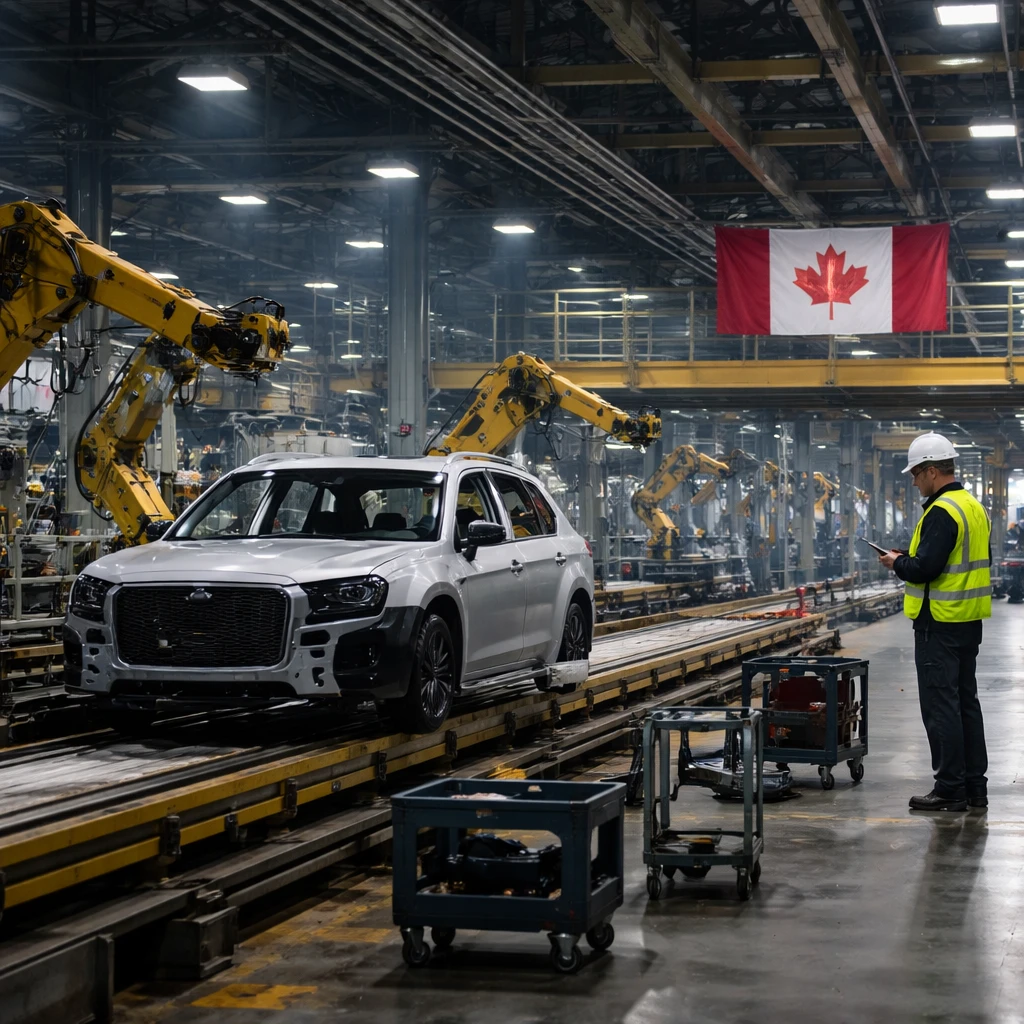
Stellantis NV is continuing negotiations with the Canadian government and the union for a path forward at its closed assembly facility in Brampton, Ontario, the automaker's Canadian chief executive said during an interview at the Canadian International AutoShow in Toronto.
Trevor Longley, CEO of Stellantis Canada, told BNN Bloomberg TV that the company is working to "find a sustainable option for Brampton" after production of the Jeep Compass SUV was moved to the United States.
"The reality is that we want to build cars in Brampton. We’ve been making cars in Canada for 100 years and we want to continue making cars in Canada for the next 100," Longley said. He added that Stellantis is acting "proactively with our government and partners" and is engaging Unifor, the union representing workers at the Brampton plant, to pursue solutions related to tariffs that have been imposed.
Company officials previously announced that production would be transferred from Brampton to Illinois as part of a $13 billion investment program intended to strengthen Stellantis's operations in the United States and to avoid tariffs. That decision had direct consequences for the Brampton workforce, affecting about 3,000 Canadian employees at the plant.
Longley said more concrete details are needed before the company can fully evaluate options, but stated that "anything that protects Canadian industry and Canadian auto production, I think is a positive move." He also observed that for many years importing vehicles into Canada has been more cost-effective than manufacturing them domestically, while reiterating Stellantis's intention to maintain its investment in the country well into the future.
The discussions with Ottawa and Unifor center on finding a commercially viable and sustainable outcome for the idle facility while addressing the tariff environment that influenced the plant relocation. Stellantis has framed the Illinois production move as part of a broader investment strategy in its U.S. footprint tied to tariff avoidance.
At this stage, the company says it is in dialogue with government and union stakeholders and is assessing available options. No new operational decisions or timelines were announced in the interview, and Longley emphasized that additional specifics will be required before the company can make further determinations.
Summary
Stellantis Canada is in active talks with the federal government and Unifor about the future of the closed Brampton plant following the transfer of Jeep Compass production to Illinois under a $13 billion U.S. investment plan that affected 3,000 workers. The company says it seeks solutions to tariff issues and wants to continue manufacturing vehicles in Canada.
Key points
- Stellantis is negotiating with the Canadian government and Unifor to find a sustainable future for the Brampton plant; this affects the automotive and labor sectors.
- The Jeep Compass production was moved to Illinois as part of a $13 billion investment plan aimed at strengthening U.S. operations and avoiding tariffs; this has implications for cross-border manufacturing and trade policy.
- Approximately 3,000 Canadian workers were impacted by the plant closure, highlighting labor market and regional economic effects.
Risks and uncertainties
- Tariff-related challenges remain unresolved and are a central focus of ongoing talks, posing uncertainty for the auto trade and manufacturing sectors.
- Insufficient detail about potential plans for the Brampton facility limits the ability to evaluate outcomes for workers and local supply chains.
- The longer-term cost dynamic that makes importing vehicles into Canada more economical than domestic production may constrain options for reviving manufacturing at the plant.
This article reflects statements made by Stellantis Canada leadership during the referenced interview and does not include additional developments beyond those comments.