
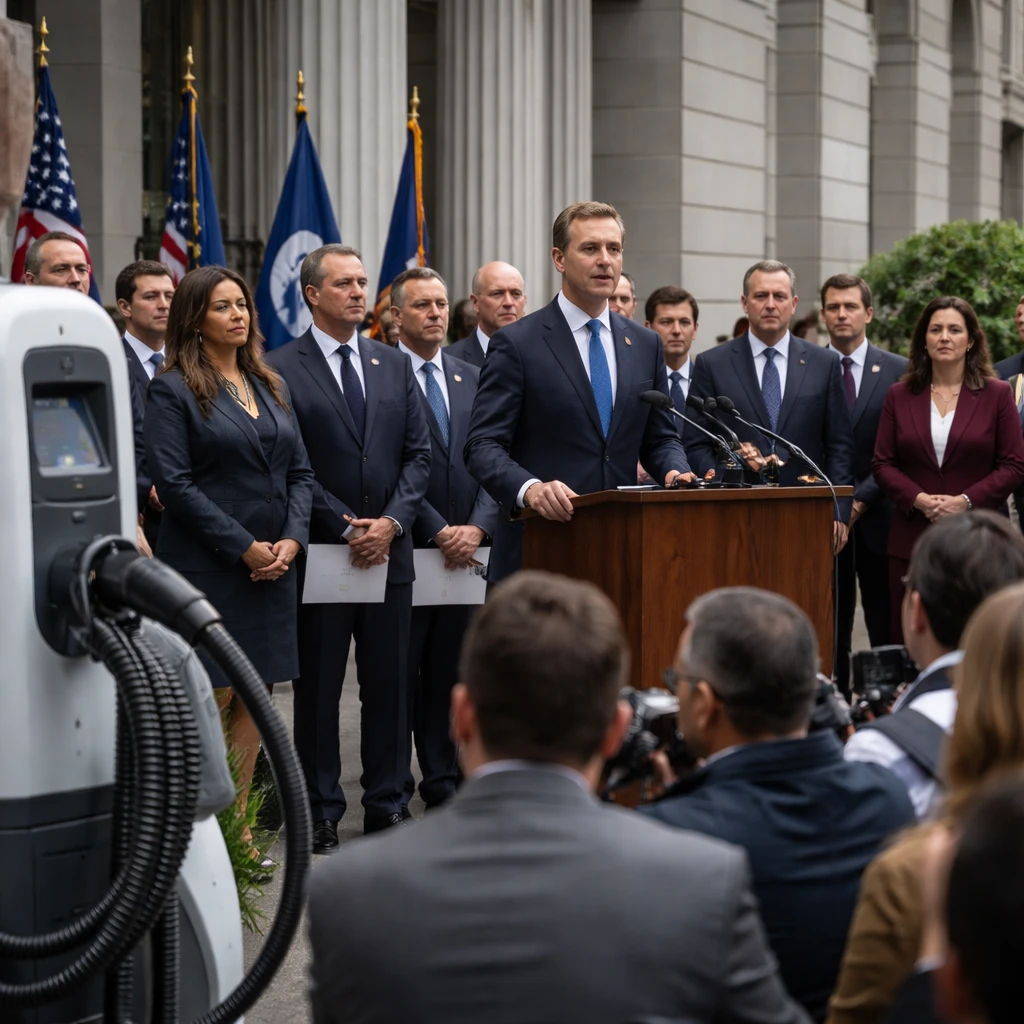
WASHINGTON - A coalition of 20 state attorneys general warned on March 16 that a proposed U.S. Transportation Department rule intended to increase domestic content in federally funded electric vehicle chargers would, in practice, render the $5 billion federal program unusable.
In a letter sent Monday, the attorneys general - representing states including California, Colorado, Arizona, New York, Virginia, Illinois and Michigan - said the administration's plan to raise so-called "Buy America" requirements from 55% to 100% would be unworkable for manufacturers and would thwart the objective set by Congress to expand public EV charging nationwide.
The letter states the proposed 100% domestic-content threshold would be "impossible for manufacturers to achieve, frustrate congressional intent, and impair the public interest by slowing or halting federally funded EV charger deployment nationwide." The group argued that the requirement would undercut the very program it is meant to support.
USDOT and the White House did not immediately respond to a request for comment.
The statement from the states comes after a January decision by U.S. District Judge Tana Lin, who ruled that the administration unlawfully suspended funding that had been awarded to support the expansion of electric vehicle charger infrastructure. That ruling was a legal victory for the same 20 Democratic-led states that had sued over the earlier suspension of funds.
The attorneys general, who were joined in their criticism by Kentucky Governor Andy Beshear, characterized the USDOT proposal on EV charger content as part of a continuing effort to carry out the president's directive to halt funding that Congress had mandated for EV infrastructure. While the states signaled support for applying Buy America rules in principle, they said the agency proposal is not feasible under current market conditions.
Specifically, the letter notes three constraints: there are currently no 100% domestically produced chargers available for purchase; demand is not sufficient to justify immediate investment in fully domestic production; and some critical charger components are not manufactured in the United States. Those factors, the states said, mean the proposed rule would prevent the practical use of the $5 billion program.
The legal dispute traces back to the suspension of the National Electric Vehicle Infrastructure Formula Program, which was created under the infrastructure law enacted by Congress in 2021. The states filed suit after USDOT suspended the program's funding.
USDOT's proposed change to the Buy America content standard would take effect immediately once the rule is finalized, the states said. Environmental advocates weighed in as well: the Sierra Club described the rule as another bad-faith attempt by the administration to effectively kill the program and said it would prevent the funds from being used.
The Trump administration has pursued multiple policy moves favoring gas-powered vehicles and has taken steps to reduce EV incentives for both automakers and consumers, the attorneys general noted. Separately, a funding bill enacted by Congress in January redirected $879 million that had been approved under President Biden for the EV charging network to other infrastructure priorities.
The states maintain that while Buy America goals are legitimate, the USDOT proposal as written would impede implementation of the congressionally authorized $5 billion program and introduce immediate legal and practical obstacles to expanding EV charging infrastructure across the country.