
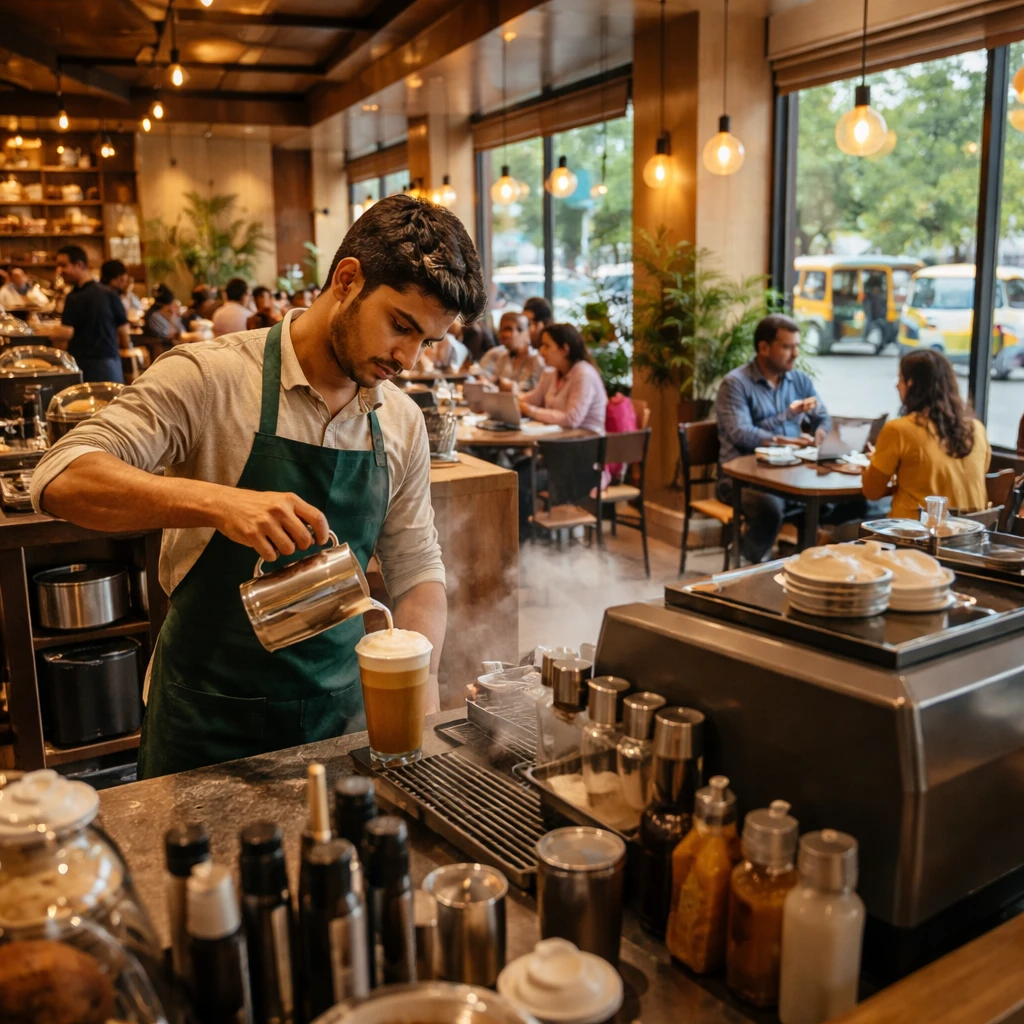
Starbucks Corp.'s India venture is pushing ahead with an expanded store network and fresh product experiments despite reporting rising losses, according to statements from the unit's leadership. The company is introducing items such as protein foam coffee as part of an effort to broaden its appeal in India, the world's most populous market.
The operation, which is the country’s largest coffee chain by number of locations, is operating under an equal joint venture between Starbucks and the Tata Group. Tata Starbucks Pvt.'s chief executive officer, Sushant Dash, said the business will prioritize investment-led growth over immediate profitability as it scales its footprint.
Dash described India as a strategic priority for the global chain, placing the market among Starbucks’ top five worldwide. He added that the unit has returned to cash-positive operations, but he did not provide a specific timeline for when the division might become profitable on a sustained basis.
Company executives are increasing commitment to India at a time when domestic conditions are challenging. Tata Starbucks is expanding while facing intense competition from local rivals and a wider slowdown in consumption demand. The push into India forms part of Starbucks’ broader strategy to seek growth outside its saturated home market.
At the same time, the parent company is adjusting its global footprint. Starbucks has been streamlining operations in the United States and is dealing with consumer boycotts in the Middle East. In a separate move last year, the company reduced its exposure in China by selling a 60% stake in its business there.
Operational focus
The statements from Tata Starbucks signal a deliberate trade-off: prioritizing expansion and product innovation over near-term margin recovery. The business is leveraging new menu concepts and increased store density to pursue longer-term market share gain in India.
Financial posture
While the India unit is reporting widening losses overall, management reports a return to cash-positive status. Leadership has not committed to a timetable for translating current cash generation into formal profitability, reflecting ongoing investment and market uncertainties.
Context for investors and industry observers
- The unit is an equal joint venture between Starbucks and the Tata Group.
- Management emphasizes expansion and innovation, such as protein foam coffee, to build presence in India.
- Global movements include US operational streamlining, Middle East consumer boycotts, and a sale of a 60% stake in the China business last year.