
Overview
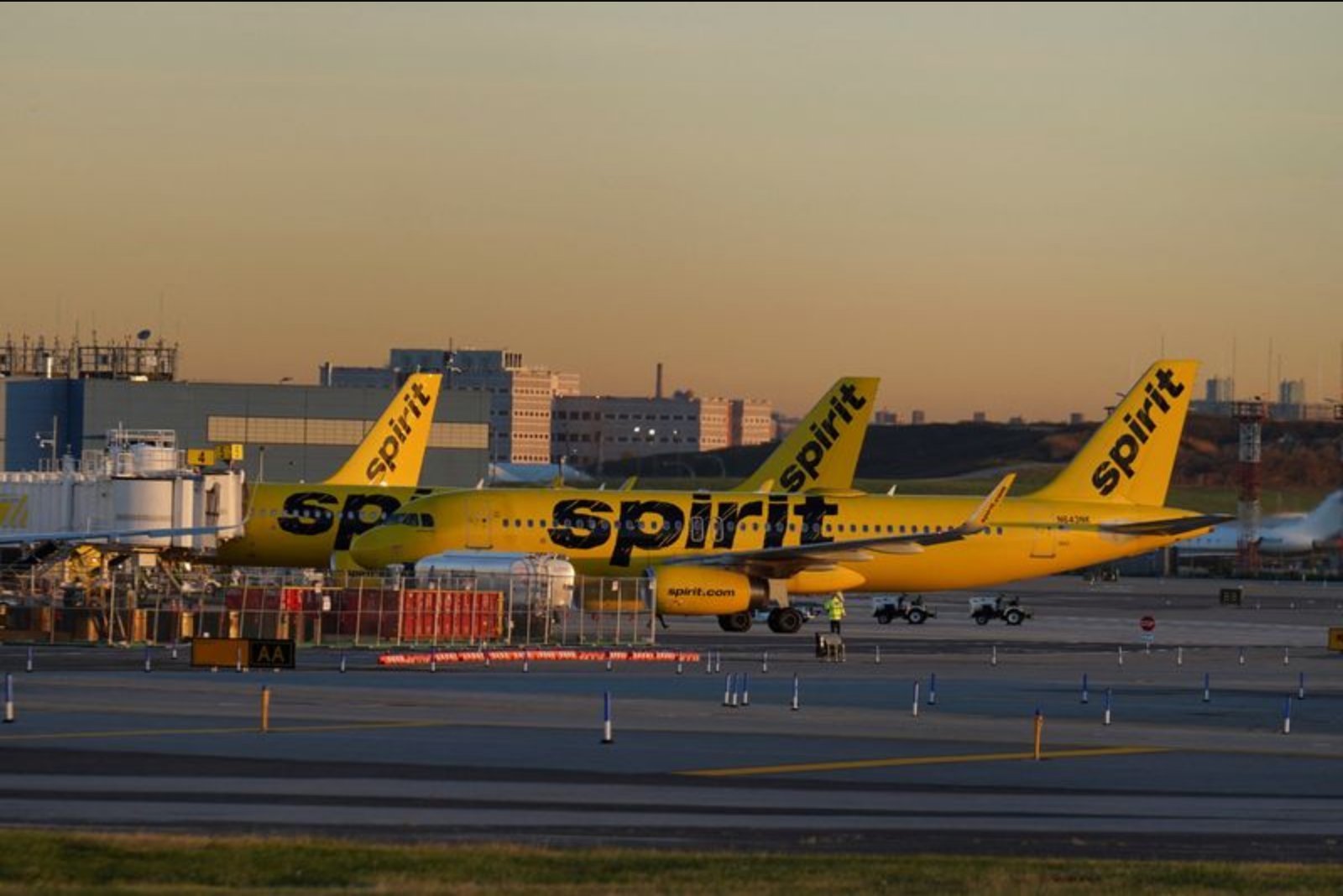
Spirit Aviation Holdings, the parent company of Spirit Airlines, told the bankruptcy court on Friday that it intends to reduce its operating fleet to roughly one-third of its size prior to the recent Chapter 11 filing, according to a court filing. The low-cost carrier has been marketing aircraft and seeking prospective buyers as it progresses with a broad restructuring intended to reduce expenses and stabilize its balance sheet after two bankruptcy filings within a year.
Fleet reductions to date and planned cuts
The carrier entered Chapter 11 in August with 214 aircraft on its books. In October, Spirit took steps to remove about 100 aircraft from its network through lease rejections and retirements. More recently, the airline has moved to auction roughly 20 additional planes from the 114 it currently operates, after a U.S. bankruptcy judge approved that auction process earlier this week. The announcement made on Friday represents a continued push to shrink the fleet further.
In its filing, Spirit said it plans to reduce the fleet to between 76 and 80 aircraft by the third quarter of 2026, with the remaining fleet to consist mainly of Airbus A320 and A321ceo models.
Financial and restructuring terms
Under the proposed restructuring, the company expects its combined debt and lease obligations to fall to about $2.0 billion, down from $7.4 billion prior to the Chapter 11 filing. Spirit filed a restructuring support agreement and a proposed plan of reorganization with the U.S. Bankruptcy Court for the Southern District of New York as it pursues confirmation and emergence from Chapter 11.
Comments from management
“We are pleased to achieve another milestone that reflects the confidence our lenders and noteholders have in our future, with our plan better positioning Spirit to continue delivering value to American consumers,” said Dave Davis, president and chief executive officer, in a statement.
Court process and bidding
At a hearing on Wednesday, U.S. Bankruptcy Judge Sean Lane approved bidding procedures for the auction of additional aircraft, naming CSDS Asset Management as a stalking-horse bidder and setting a floor price of about $530 million. The court allowed other potential buyers to submit higher offers through April 20 under that timetable.
Negotiations and fuel-price uncertainty
During the hearing, Spirit’s lawyer, Marshall Huebner of Davis Polk & Wardwell, said that exit negotiations have taken longer than expected in part because volatility in fuel prices tied to the war involving Iran has made fuel costs difficult to forecast. That unpredictability has prompted creditors to question Spirit’s assumptions about future liquidity and cash flow.
Judge Lane acknowledged those concerns, noting the particular sensitivity of airlines to swings in fuel costs resulting from global events. “Global uncertainty regarding fuel is just a fact of life for any airline,” Lane said.
Spirit is aiming to secure confirmation of its Chapter 11 plan by the end of May or possibly June, Huebner said during the proceedings.
Operational focus and product plans
As part of the restructured business, Spirit said it will concentrate on its strongest routes and markets, identifying Fort Lauderdale, Orlando, Detroit and the New York City area as core points of focus. The carrier also indicated plans to add aircraft in the 2027-2030 period tied to profitable growth opportunities.
On the product side, Spirit plans to expand its Spirit First and Premium Economy offerings and to continue rolling out premium economy seating across the fleet.
Market note
Questions about the investment case for the carrier’s securities have surfaced in market commentary; the filing and ongoing auction process are part of the broader effort to address those questions through a consensual restructuring.