
Stock Markets February 8, 2026

SpaceX Reorients Strategy Toward a 'Self-Growing' Lunar City, Musk Says

Elon Musk signals a nearer-term focus on the Moon, while reaffirming plans for Mars development further down the road

By Derek Hwang TSLA
SpaceX Reorients Strategy Toward a 'Self-Growing' Lunar City, Musk Says
TSLA

SpaceX CEO Elon Musk said the company has pivoted to prioritize building a 'self-growing' city on the Moon, a goal he said could be reached in under 10 years. Musk contrasted the lunar timetable with a longer 20+ year horizon for Mars, while also saying work on a Mars city will begin in five to seven years. His remarks come as SpaceX readies a planned public offering and recent corporate moves including an acquisition of xAI and proposals to build data centres in space.

Key Points

  • Elon Musk said SpaceX has shifted its immediate focus to constructing a "self-growing" city on the Moon, which he believes could be achieved in less than 10 years - impacting aerospace and space infrastructure sectors.
  • Musk contrasted the lunar timeline with Mars, estimating Mars development would take 20+ years and that active work on a Mars city would begin in five to seven years - relevant to long-term planetary ambitions and related supply-chain planning.
  • SpaceX is preparing for an IPO this year that could raise $50 billion and place a $1.5 trillion valuation on the company, while also announcing the acquisition of xAI and plans to pursue space-based data centres - matters with implications for capital markets, AI, and data infrastructure.

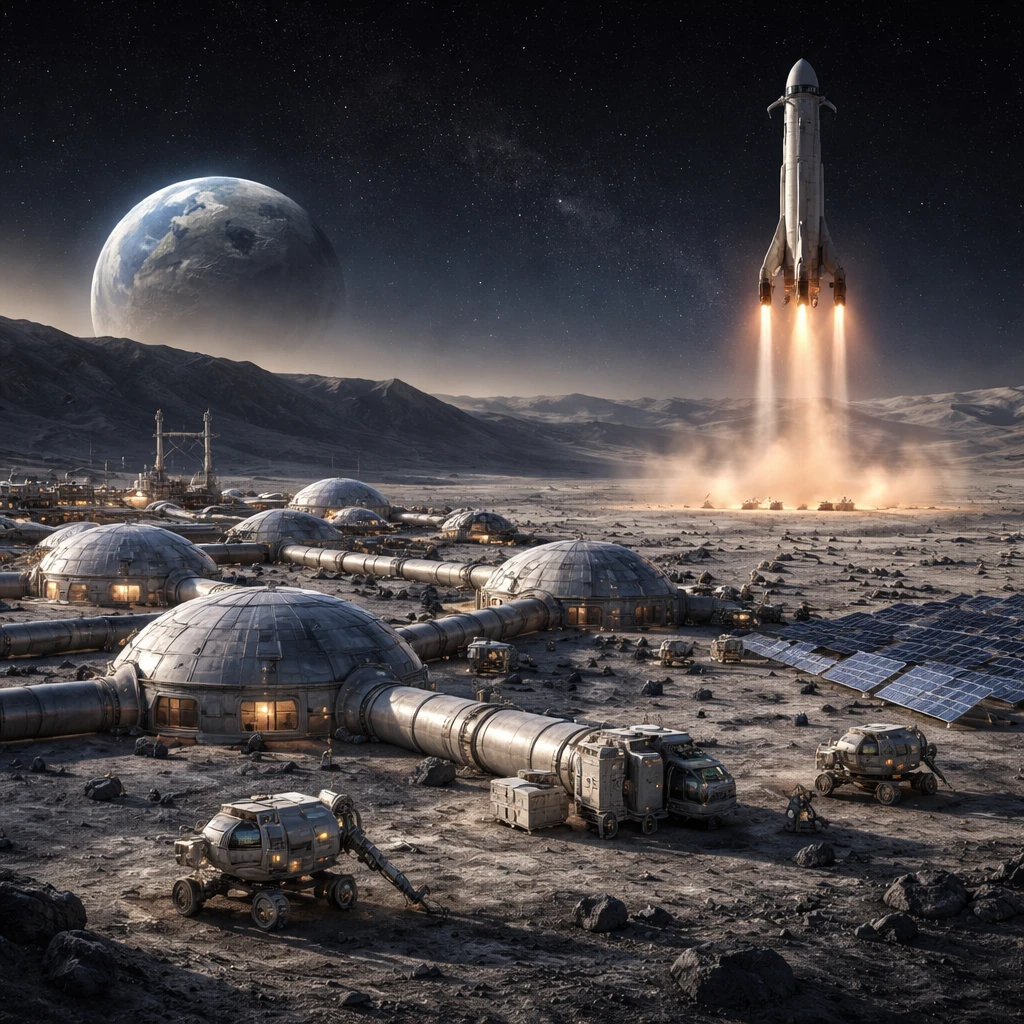
SpaceX has shifted its immediate strategic emphasis toward establishing a "self-growing" settlement on the Moon, according to CEO Elon Musk, who said the effort could be realized in less than 10 years.

In a post on X on Sunday, Musk described the lunar city as a nearer-term priority for SpaceX, noting that travel times to the Moon are relatively shorter and therefore make it a more attractive short-term objective than Mars. In his post he wrote: "SpaceX has already shifted focus to building a self-growing city on the Moon, as we can potentially achieve that in less than 10 years, whereas Mars would take 20+ years."

Musk added that SpaceX will nonetheless continue to aim for a human settlement on Mars, saying the company will "strive to build a Mars city" and that work on that endeavour will begin in five to seven years.

Those comments arrive as SpaceX prepares for a public listing this year. The company has said the offering could raise $50 billion and value the firm at $1.5 trillion, which would make it the largest public offering in history if those figures are realized.

SpaceX, one of the largest private space contractors globally, has also announced corporate moves outside pure launch activity. The company said it will acquire Elon Musk's artificial intelligence venture xAI and has plans to pursue the construction of data centres in space.

Musk has long promoted Mars as a major objective for SpaceX. He reiterated ambitions for Mars in prior statements, including that he planned an unmanned mission to the red planet by the end of 2026. The company, however, has provided limited concrete updates on progress toward that specific Mars timeline.


Context and implications

The shift Musk describes places a nearer-term operational focus on lunar development while keeping Mars on SpaceX's multi-decade roadmap. The company is simultaneously moving toward a potential public offering and expanding into AI and space-based data infrastructure, according to the statements cited above.

Promotional note appearing in prior coverage: The original reporting referenced a valuation tool question for TSLA investors. That promotional element is not material to the strategic statements from Musk and SpaceX but was present in prior coverage.

Risks

  • Timelines for Mars remain uncertain - the company has provided few concrete updates on achieving Musk's previously stated Mars milestones, which could affect investor and industry expectations in aerospace and defence.
  • Execution risk around new initiatives - acquisition of xAI and attempts to build data centres in space introduce operational and technological uncertainties for SpaceX as it expands beyond launch services, relevant to technology and infrastructure markets.
  • Market and IPO risk - the planned public offering, with cited figures of $50 billion raised and a $1.5 trillion valuation, faces the usual uncertainties of public-market reception and valuation, which could impact broader equity markets and space-sector financing.

More from Stock Markets

Lendlease posts first-half loss as revaluations, impairments weigh on results Feb 23, 2026 Australian shares retreat as IT, healthcare and A-REITs weigh on S&P/ASX 200 Feb 23, 2026 Asian Markets Muted as U.S. Tariff Moves Keep Investors Cautious Feb 22, 2026 Regis Healthcare Shares Jump After Solid First-Half Results Feb 22, 2026 Samsung Shares Surge to Record on Report It Could Be Nvidia's Exclusive HBM4 Supplier Feb 22, 2026