
S&P Global Ratings revised its outlook on Wendy’s Co. (NASDAQ:WEN) to negative from stable while keeping the company’s issuer credit rating at B+.
The rating agency now anticipates Wendy’s adjusted leverage to reach about 6.3x in 2025 and to weaken further to about 6.8x in 2026.
S&P said the outlook change reflects 2025 results falling short of its prior expectations and its updated forecast for 2026. The agency projects flat to low-single-digit declines in revenue next year, attributing the deterioration to announced restaurant closures, an expected low-single-digit same-restaurant sales decline and increased investment in corporate costs.
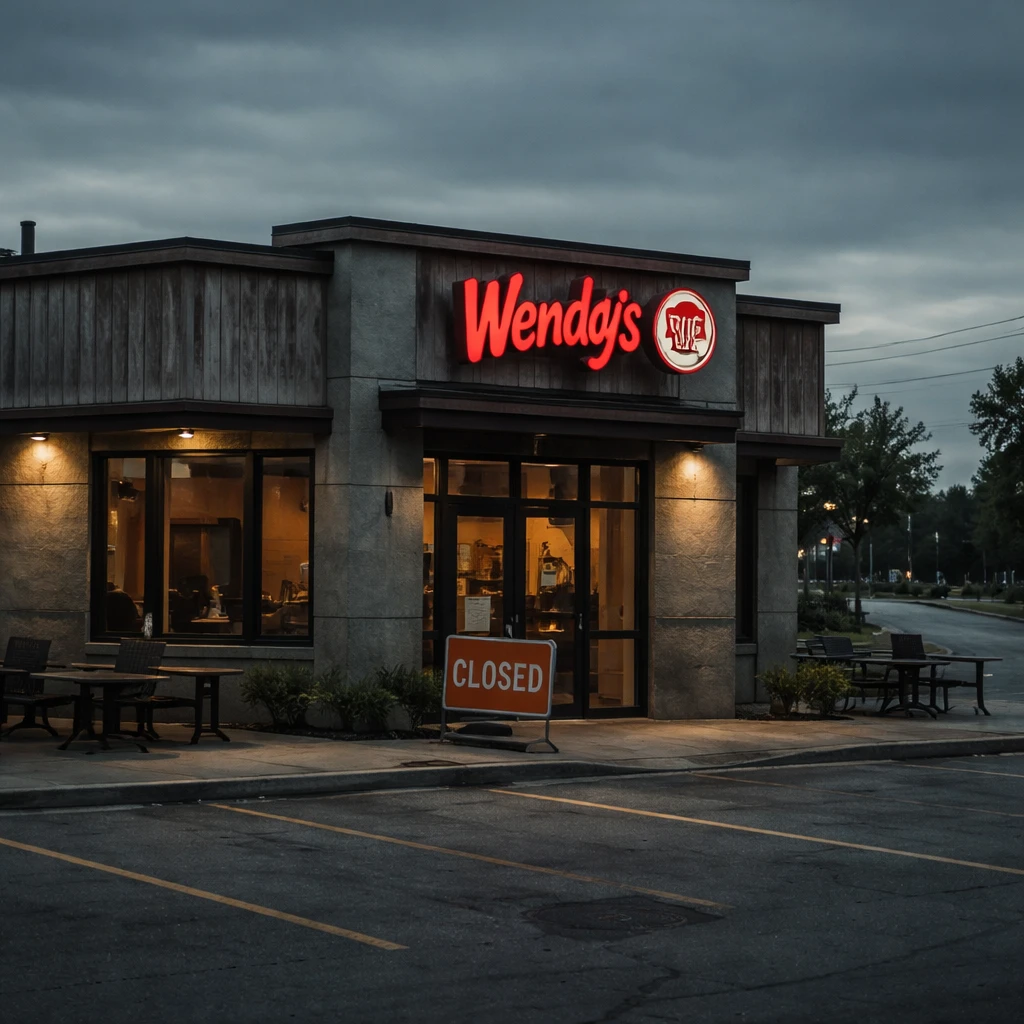
As part of a footprint rationalization, S&P expects restaurant closures in the first half of 2026 to total 5% to 6% of Wendy’s overall U.S. restaurant base. That tally includes 28 restaurants the company closed in the fourth quarter of 2025.
On profitability, the rating agency forecasts EBITDA margins to compress to the low- to mid-26% range in 2026, down from 28% in 2025. S&P attributes the margin contraction to higher general and administrative expenses and weaker restaurant-level margins at company-operated locations.
S&P noted that Wendy’s "Project Fresh" turnaround program has produced positive results at company-operated restaurants, which outperformed the broader franchise system by 410 basis points in the fourth quarter and by 310 basis points for 2025 as a whole. About 20% of franchisees have begun implementing operational improvements tied to the program, and S&P expects wider adoption across the franchise during the year, which the agency says should help stabilize guest traffic.
On cash flow, S&P projects free operating cash flow to fall to roughly $160 million in 2026 from $204 million in 2025, driven primarily by lower adjusted EBITDA. In the rating agency’s base case, Wendy’s will continue its annual dividend distribution of about $107 million but will suspend share repurchases until leverage recedes below its maximum target of 5x.
What this means
- Wendy’s retains a B+ issuer credit rating, but the outlook change signals increased credit risk if operating trends do not improve.
- Management faces pressure to stabilize sales and margins while managing a higher leverage profile and reduced free cash flow.
- Franchise adoption of Project Fresh initiatives will be an important factor in any stabilization of guest traffic.
Market and sector impact
- Restaurant operators and franchised quick-service chains may see implications from elevated closures and margin pressure within corporate-operated locations.
- Credit markets and investors tracking restaurant credits could view Wendy’s higher leverage and lower cash flow as a negative signal until remedial actions materialize.