
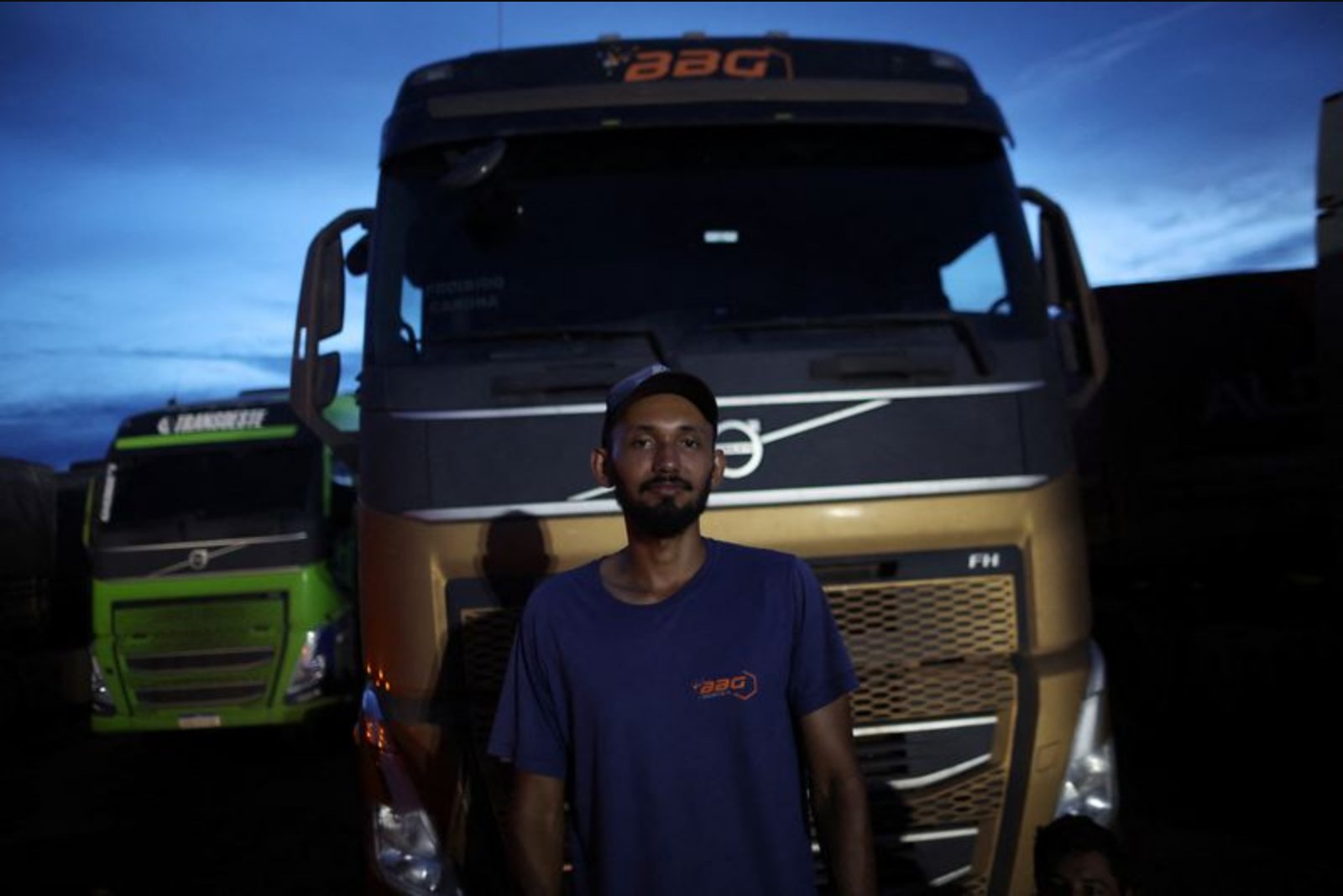
Truck drivers delivering soybeans to the Miritituba river terminal in the Amazon rainforest are encountering unusually long delays as the country moves a record soybean crop estimated at roughly 180 million metric tons. The logjam at one of the world’s major export hubs underscores persistent weaknesses in Brazil’s agricultural logistics network.
Miritituba serves as a key transshipment point where grain is loaded onto barges for onward movement to larger ports capable of loading ocean-going vessels. The terminal typically handles about 12 million metric tons of grains each year, including soy and corn. Operators at the river terminals include global traders Cargill and Bunge, along with Brazil’s Amaggi.
Drivers report extended queues and lengthy waits. "It’s a disgrace here in Miritituba," said trucker Jeferson Borges da Silva, who described waiting in a 30-km queue after driving 1,200 km from Mato Grosso. "We’ve been in line for two days already, this year was the worst yet." The crowding at yards that were not built for such volumes has created acute pressure on truckers and terminal staff.
Industry sources and drivers say the situation has been aggravated by recent protests. Indigenous activists occupied a Cargill transshipment facility in Santarem earlier this month to oppose government plans to dredge and expand shipping capacity through the Amazon basin. Those demonstrations prompted the government on Monday to revoke a decree that had facilitated such waterway expansion, injecting fresh uncertainty into efforts to upgrade northern shipping infrastructure.
Trucker Wellington Bressan suggested the protests intensified the backlog as drivers rushed to secure unloading slots. "Truckers live on commission, if they work, they make money. That’s why they did not want to wait before coming to Miritituba," he said.
Cargill temporarily halted operations at its Santarem terminal during the protests. In a statement the company said it is working to resume activity, thanked employees for their "resilience" and reiterated its commitment to transporting food "safely and reliably."
Logistics experts warn the revocation of the decree could hamper medium- and long-term efforts to strengthen the northern export corridor. Thiago Pera, a logistics specialist at the University of São Paulo, said the decision may slow initiatives to improve access and capacity by dredging the region’s rivers, which he said could enable larger vessels to move year-round and relieve pressure on trucking while lowering freight costs.
The current strain is notable given the reliance of Brazil’s farm shipments on road transport. Some 60% of the country’s agricultural exports depend on trucks, leaving the sector vulnerable when river and port facilities cannot absorb peak volumes.
Drivers and terminal workers say infrastructure shortfalls at Miritituba are an immediate constraint. "How are you going to fit 1,000 trucks in a yard that only holds 500, or 200?" asked trucker Sonia da Silva, describing the mismatch between truck arrivals and terminal capacity.
For some truckers, short-term behavior has compounded the bottleneck. Observers say drivers on commission may accelerate arrival to secure unloading slots, increasing congestion when terminal throughput cannot rise to match the influx.
Separately, promotional material referenced a Fair Value calculator offering a mix of 17 industry valuation models to assess whether BG is undervalued. That information was presented as a tool to evaluate the stock and find potential investment opportunities.
Bottom line: A record soybean crop, protest-driven interruptions and a revoked government decree together are worsening delays at Miritituba, placing strain on Brazil’s truck-dependent export chain and raising questions about the pace and feasibility of planned river and port capacity upgrades.