
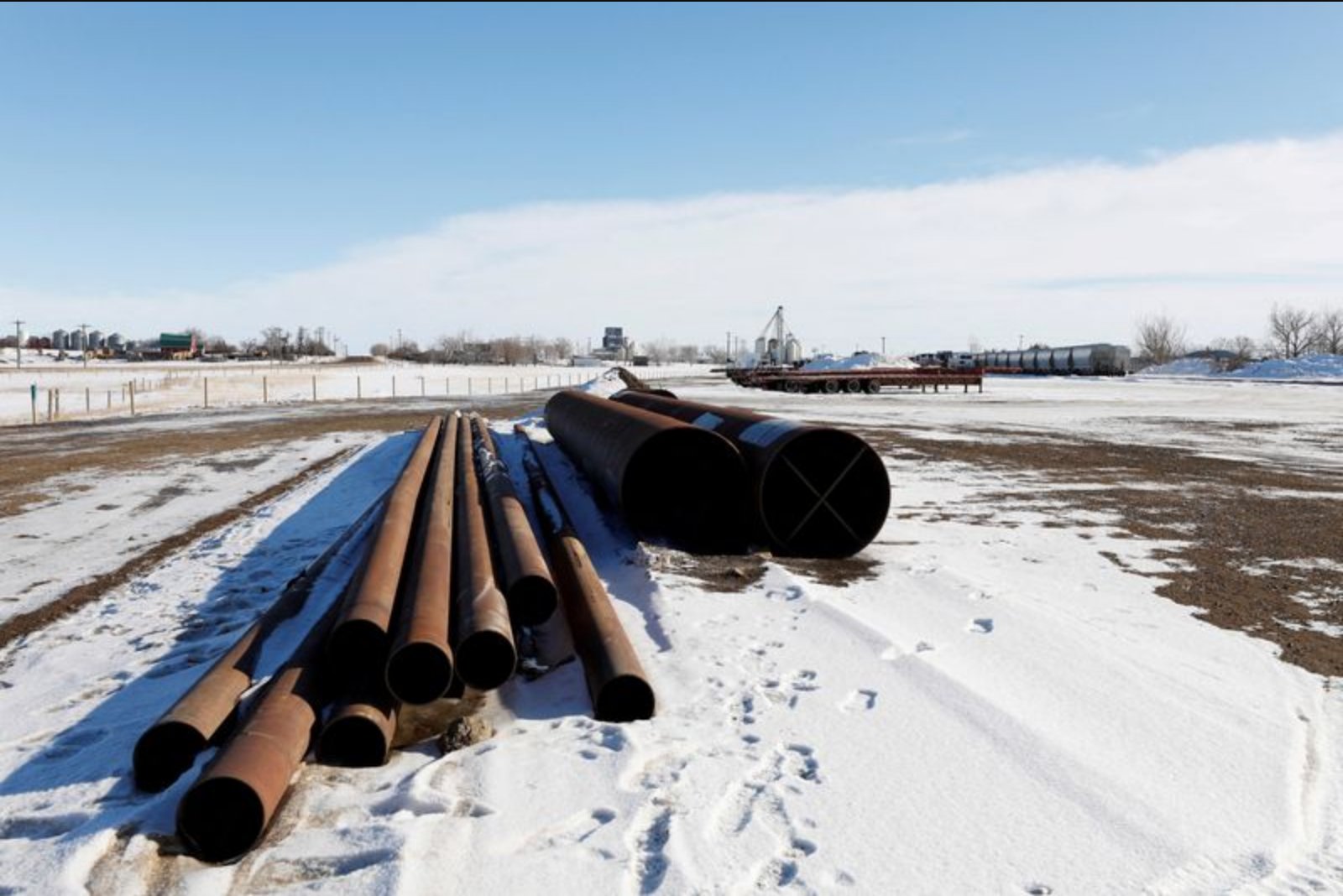
South Bow has proposed reviving sections of the halted Keystone XL oil pipeline in a bid that could boost Canada’s crude deliveries to U.S. refineries by more than 12% - but only if it obtains approval from U.S. President Donald Trump and secures further pipeline interconnections inside the United States.
The plan differs from the earlier Keystone XL project that was terminated by then-President Joe Biden in 2021 after prolonged Indigenous and environmental opposition. South Bow, created in 2024 by the former Keystone XL backer TC Energy to manage its oil pipeline assets, is evaluating the reuse of portions of line already installed in Alberta and says it has the requisite permits on the Canadian side.
Officials have raised the matter at high levels: Canadian Prime Minister Mark Carney reportedly discussed the pipeline’s potential revival with President Trump in October. The issue intersects with broader diplomatic and trade discussions, and could become a point of leverage in upcoming talks over the U.S.-Mexico-Canada (USMCA) agreement. Trump has repeatedly urged for lower fuel prices, and many U.S. refineries rely on roughly 4.4 million barrels per day of Canadian crude that moves south of the border.
South Bow’s proposed U.S. partner, Bridger Pipeline, has submitted an application to Montana regulators outlining the construction of a 645-mile (1,038-km) pipeline segment. That leg would be capable of moving up to 550,000 barrels per day and would start near the U.S.-Canada border in Phillips County, Montana, before terminating in Guernsey, Wyoming.
Analysts caution that Guernsey is not itself a refining center, which means additional pipeline links would be needed to reach major refining hubs such as Cushing, Oklahoma; Patoka, Illinois; and the U.S. Gulf Coast. One widely cited option is a new corridor of roughly 425 miles from Guernsey to Steele City, Nebraska, where it could tie into the existing Keystone mainline network, according to Matthew Lewis, founder of Plainview Energy Analytics. From Steele City, crude could travel through underused pipelines toward Cushing, Patoka and Wood River, Illinois.
Still, the question of who would assume the commercial and regulatory risk for a Guernsey-to-Steele City segment remains unsettled. Lewis noted that the most significant hurdles would likely be permitting and the prospect of environmental litigation, which could delay or block construction through protracted court battles.
South Bow confirmed its proposal could connect to downstream U.S. pipelines but declined further comment. Bridger Pipeline also declined to comment on the filings.
Bridger’s application indicates the Montana-to-Guernsey route would generally follow corridors where existing pipeline infrastructure is already present, a tactic that its planners say would ease the permitting process. On the Canadian side, approximately 150 kilometers of pipe originally laid for Keystone XL remains in place and has been idle since the earlier project was cancelled.
A White House spokesperson declined to comment on the South Bow-Bridger proposal. Analysts point out that a presidential permit would be required for any pipeline segment crossing the U.S.-Canada border, making the project contingent on executive-level approval.
Even with support from the current administration, analysts warn there is no certainty a future U.S. administration would maintain that position. Richard Masson, former CEO of the Alberta Petroleum Marketing Commission, observed that despite differences from the earlier Keystone XL plan, the proposal represents a large-scale pipeline expansion that is likely to evoke familiar opposition from environmental groups, landowners and Indigenous communities.
Masson added that many U.S. pipeline projects have either been cancelled outright or delayed by litigation. While the Trump administration has pursued regulatory rollbacks and faster permitting in some cases, a project that spans multiple years and possibly multiple administrations carries inherent political risk. "It brings up all the same issues. For those who wanted Keystone XL cancelled, this is all the same stuff," he said.
The South Bow-Bridger idea is being advanced amid parallel expansion efforts by other pipeline operators. The company developing the Trans Mountain pipeline from Alberta to Canada’s west coast is planning enhancements that could boost capacity by 360,000 barrels per day. Meanwhile, Enbridge has approved expansion projects for its Flanagan and Mainline systems that together will add 250,000 barrels per day of capacity for Canadian heavy oil moving to the U.S. Midwest and Gulf Coast.
Analysts at TD Securities say projects such as those by Enbridge and Trans Mountain are operationally simpler and more economical than the South Bow proposal. TD Securities analyst Aaron MacNeil also flagged investor concerns South Bow will need to answer about financing a new pipeline while protecting its dividend policy and avoiding unsustainable leverage.
The proposal therefore faces technical, financial and legal questions that will determine whether it can materially change the flow of Canadian crude to U.S. refineries. Its proponents emphasize existing Canadian permits and built segments, but the U.S. leg of the plan hinges on a presidential permit and new domestic linkages that have yet to be committed.
Summary - South Bow’s plan to reconstitute parts of the Keystone XL corridor could raise Canada-to-U.S. crude exports by over 12% if it obtains a presidential permit and completes additional U.S. pipeline connections. The plan builds on a Bridger Pipeline filing for a Montana-to-Guernsey line capable of 550,000 bpd, but further links to Steele City or other hubs would be needed and face permitting, litigation and financing challenges.
Key Points
- South Bow proposes reviving already-built Alberta pipe and has Canadian permits in place; U.S. approval from the president would be required for cross-border segments.
- Bridger has proposed a 645-mile Montana-to-Guernsey pipeline capable of 550,000 bpd; additional connections would be required to reach refining hubs like Cushing, Patoka and the U.S. Gulf Coast.
- Competing capacity increases from Trans Mountain and Enbridge provide alternative routes for Canadian crude; those projects are described as less complex and more economical by analysts.
Risks and Uncertainties
- Regulatory and legal risk - A presidential permit is needed for the border-crossing segment, and new pipeline legs would likely face environmental litigation and permitting delays; this affects the energy and infrastructure sectors.
- Financing risk - Questions remain about who will underwrite construction costs and whether South Bow can finance the project without jeopardizing dividends or taking excessive debt, impacting investors and capital markets tied to energy infrastructure.
- Political risk - Support from the current U.S. administration does not guarantee approval by a future administration, creating multi-year political uncertainty for project stakeholders and market participants reliant on stable crude flows.