
As oil markets react to the geopolitical fallout from the U.S.-Israeli war on Iran, airlines are contending with a sharper and more damaging trend beneath headline crude prices: jet fuel has risen at a considerably faster pace than crude oil, leaving many carriers partially or wholly exposed despite existing hedging programs.
Jet fuel typically tracks crude, but since the onset of the conflict jet fuel prices have doubled while crude has risen by about one-third. That divergence stems from an extraordinary expansion in refining margins, which has pressured carriers’ fuel bills and triggered a round of commercial responses including ticket price increases, fuel surcharges and reductions in capacity.
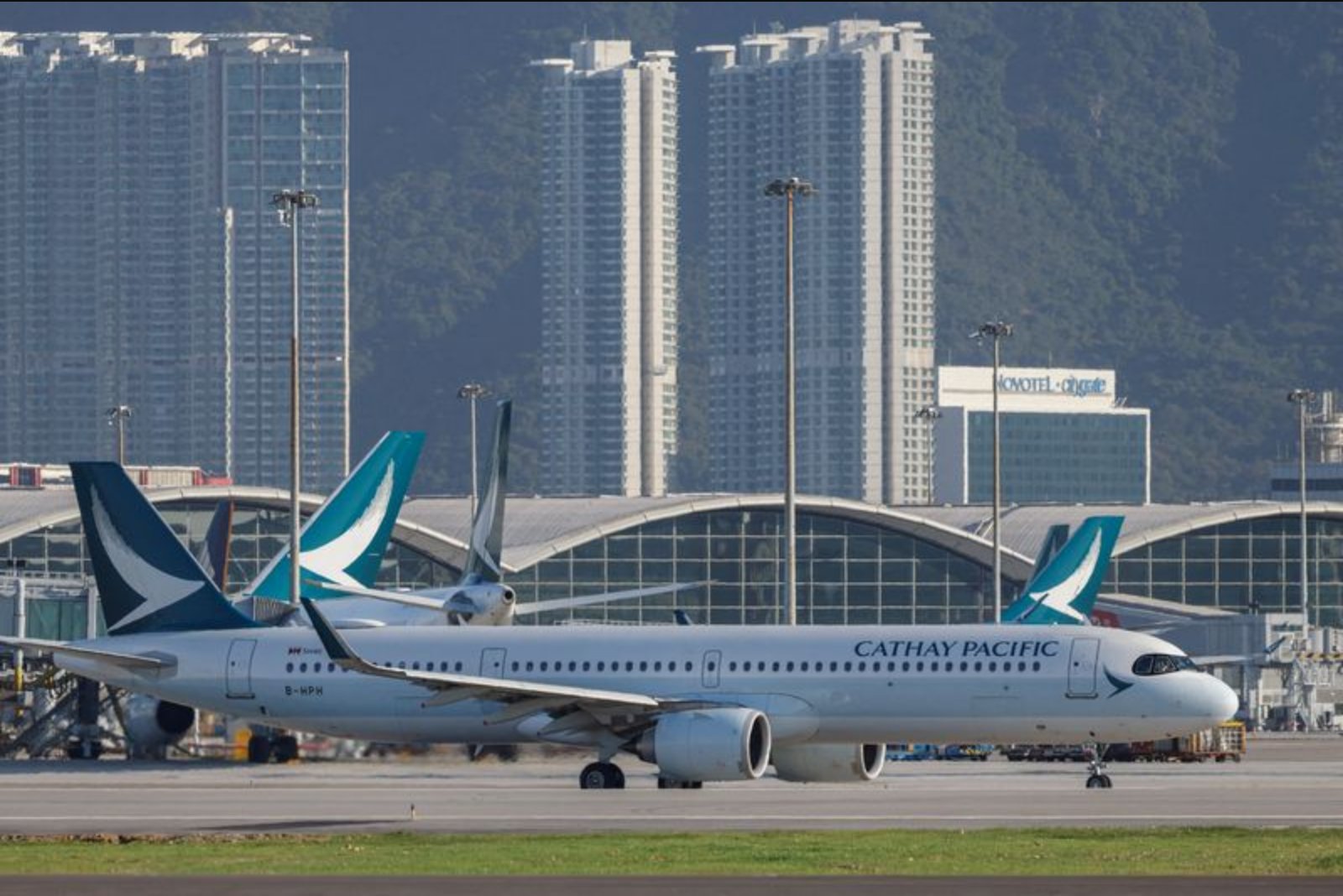
Cathay Pacific Airways’ Chief Financial Officer Rebecca Sharpe captured the disconnect after the carrier reported earnings in Hong Kong: "Our hedging is on crude oil rather than jet fuel. And therefore, while we do have some protection from that hedging, obviously, it’s not protecting against the jet fuel price in totality." She described the rise as "dramatic."
Hedging has historically been a standard tool for airlines to manage fuel cost volatility, but current market moves have illustrated its limits. Hedging frequently targets crude oil benchmarks rather than jet fuel itself, and the jet fuel market is both smaller and more expensive to hedge, according to Sharpe: "The market is very thin and it makes it very expensive."
Industry figures and analysts note a split between carriers that have hedged extensively and those that have not. Major U.S. and Chinese carriers reportedly hold no hedging contracts, leaving them fully exposed to the recent jump in jet fuel prices. Aviation expert Hans Joergen Elnaes warned that in past episodes of unrest, elevated fuel prices tended to persist for months.
Banks and research houses are quantifying the potential earnings impact. In Europe, where jet fuel hedges are more common, J.P. Morgan estimates that a sustained 10% rise in jet fuel prices could cut Wizz Air’s operating profit by as much as 31% in the current year. The same scenario would hit Air France KLM, Lufthansa, IAG (owner of British Airways) and Ryanair to varying degrees, with estimated hits in operating profit ranging from 3% to 10%.
Wizz Air has said the Middle East conflict could cost it 50 million euros and reported that it had hedged 83% of its jet fuel needs through March, dropping to 55% of coverage through March 2027. Its chief executive, Jozsef Varadi, told Reuters the company was "well protected and 'not naked'."
In Asia, the pressure is visible in unusual refining margin behavior. Before the conflict, jet fuel averaged about $21 a barrel above oil; margins spiked to as much as $144 on March 4 and were still around $65 as of Wednesday. Nathan Gee, head of Asia Pacific transportation research at Bank of America, said that rapid widening of refining margins was the area where "everyone is less protected."
A number of carriers have already moved to offset the pain through pricing or hedging posture. Air New Zealand and Qantas Airways - neither of which fly to the Middle East - reported they are more than 80% hedged against crude oil for the half-year ending in June and have nonetheless raised fares to protect margins.
Bank of America has modeled the sensitivity of Asian carriers' earnings to refining margins, estimating that 2026 net profits for the region's airlines could fall by an average of 6% for every $10 per barrel increase in refining margins that persists for 90 days, assuming no offsetting price increases by carriers.
Protection levels vary among Asian airlines. Many lack direct jet fuel hedges or have hedged only against Brent crude. Singapore Airlines and Virgin Australia are cited as exceptions with comparatively stronger protection against jet fuel price increases, while other carriers remain exposed.
Hedging itself is not a uniform safeguard. It can shelter airlines from sudden spikes in fuel costs but creates downside risk when prices retreat, potentially leaving carriers paying above-market rates on certain contracts such as swaps - a form of hedge that has proved costly to some carriers in prior cycles.
Analysts highlight a particular vulnerability for low-cost carriers that depend on price-sensitive travelers. "Traditionally, the history is low-cost carriers that carry the most price-sensitive customers. They’re the ones that get squeezed the most in this environment," said Bank of America’s Nathan Gee.
As airlines navigate the current spike in jet fuel costs, the narrowness of the jet fuel market and the cost of hedging it directly are complicating responses. Sharpe summed up the uncertain outlook succinctly: "Fuel prices can be highly volatile and we don’t have a crystal ball as to what the future will bring."
Exchange rate detail included in some industry reporting notes the conversion used in company statements: ($1 = 0.8660 euros).
Summary
Jet fuel prices have outpaced crude since the U.S.-Israeli war on Iran, driven by a sharp widening in refining margins. Many airlines, particularly those without direct jet fuel hedges or with hedges tied to crude benchmarks, are increasing fares, imposing surcharges and trimming capacity. Hedging strategies provide partial protection but are less effective against the current spike in jet fuel margins; they also carry the risk of losses when prices fall.
Key points
- Jet fuel has doubled since the conflict while crude has risen roughly one-third, creating an earnings challenge for carriers.
- Hedging programs often target crude oil rather than jet fuel, leaving airlines partially unprotected as refining margins widen dramatically.
- Low-cost carriers and airlines without hedges are particularly exposed; some carriers have already raised fares or cut capacity to preserve margins.
Risks and uncertainties
- Persistently elevated refining margins could continue to pressure airline profitability, especially for carriers with limited hedging - affecting the airline and travel sectors.
- Hedging strategies can generate losses if fuel prices retreat, which may create volatility in carriers’ financial results and affect investor sentiment in aviation stocks.
- Thin and costly jet fuel markets limit the ability of airlines to hedge directly, making future protection options more expensive or constrained for the airline sector.