
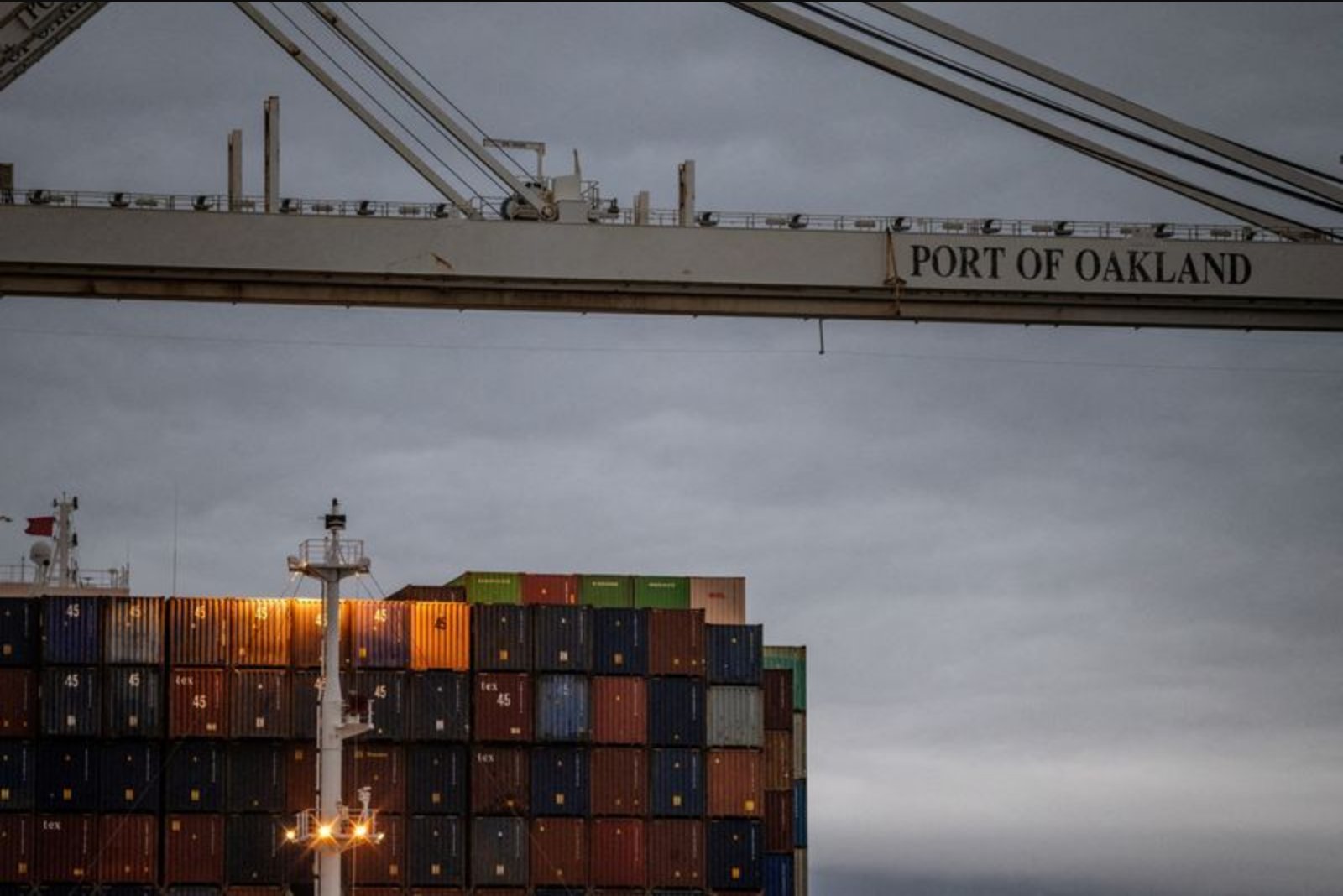
When the Supreme Court invalidated emergency tariffs on February 20, Ian Rosenberger of Pittsburgh expected relief for Day Owl, his backpack maker. Instead friends congratulated him while he braced for the reality of reclaiming tens of thousands of dollars he said his small company could not practically pursue.
"I don’t see any possible way to get that money back," Rosenberger said, describing a business with only a few million dollars in annual sales and limited ability to absorb attorneys' fees. His experience illustrates the difficult choice facing many small importers after the high court decision: even where the law is on their side, the time and money required to secure refunds may be prohibitive.
The ruling has triggered litigation across the country. About 2,000 firms, including major corporations such as FedEx, Costco, and L'Oreal, have filed suits in the U.S. Court of International Trade seeking refunds, and more claimants are expected. Still, lawyers and business owners say that many small companies are deciding the potential recovery is not worth the cost of fighting for it.
Scale of the problem
Researchers at the University of Pennsylvania’s Penn Wharton Budget Model estimate U.S. importers paid a total of $175 billion in tariffs, with roughly $55 billion of that burden borne by small businesses. The U.S. Chamber of Commerce has noted that about 97% of U.S. importers are small businesses. For these companies, the tariffs were a significant headwind in 2025 and a strain on cash flow.
For some small owners, the choice is stark. "Some cash-strapped small businesses will just have to eat the loss," said Oliver Dunford, an attorney at the Pacific Legal Foundation, which represented children’s clothing maker Princess Awesome, a lead plaintiff in the challenge to the tariffs.
Why many small firms are reluctant to sue
Owners and counsel describe several practical barriers. Litigation requires legal fees and management attention at a time when companies are trying to stabilize operations amid lingering global uncertainty. Cassie Abel, CEO of Idaho-based outerwear maker Wild Rye, said the analysis and internal conversations around potential suits have been a "time suck" for her team.
Even where the dollar amounts at stake are significant, the timing and expenses of securing a refund matter. Lee Siegel, founder and managing partner of ECR4Kids, which produces child-focused fixtures and educational furniture and has about $70 million in annual revenue, said his company had paid roughly $2 million in tariffs. Siegel is postponing any legal action until the procedures become clearer, noting that a protracted court fight could diminish the value of the unsold inventory that refunds are meant to free up.
"The refund is important," Siegel said, "but it’s more important if it’s done sooner, because it allows us to stabilize pricing." A drawn-out process, he added, could make refunds less useful for inventory management.
Advocates push for administrative refunds, government warns of lengthy litigation
Small business advocates argue the government already has mechanisms to refund tariffs and should be able to return duties without prolonged court battles. "This is not novel or difficult," said Dan Anthony, executive director of We Pay the Tariffs, a coalition formed to press for refunds.
But officials have suggested the issue could be tied up in courts. In a post-ruling press conference, President Donald Trump said, "we’ll end up being in court for the next five years" over the process of refunding disputed duties. Legal experts note that if claimants cannot or will not pursue suits, the government could retain some challenged funds.
"The government could wind up keeping some of the disputed money if claimants can’t afford to fight for it," said George Tuttle, a lawyer and international trade expert.
Small plaintiffs and limited options
Some small businesses represented in the litigation are hoping for straightforward administrative refunds, while keeping the option to litigate if necessary. Eva St. Clair, co-founder of Princess Awesome, said she hopes the government "will simply refund us" for about $30,000 in tariff payments, though she has not ruled out court if refunds do not materialize. Princess Awesome, which relied partly on customer contributions to survive the tariff period, collected roughly $8,000 through a virtual tip jar and was represented pro bono by PLF in the case that reached the Supreme Court.
Cost is a major deterrent to further action. St. Clair said she cannot imagine how to afford private counsel to pursue the refund if free representation is not available.
Secondary markets and principled refusals
To avoid legal proceedings, some companies are selling their refund claims. Banks and hedge funds have been buying claims for about 40 cents on the dollar, providing a way for claimants to recoup a portion of their payments without engaging in litigation. Others decline such offers on principle. Michael O’Shaughnessy, president of television supplier Element Electronics, said he would not accept a steep discount to expedite recovery. "I’m not the type who’d trade two dollars for one," he said. His company has sued for a refund but he tempered expectations about getting the money back, stating, "Once the government gets your money, you never get it back."
Business decisions shaped by tariff fallout
For some, foregoing pursuit of refunds has been an operational decision. Rosenberger said tariffs forced Day Owl to reduce its scope and lay off the head of a lucrative sales channel. He framed the choice as one between litigating and running his company: "If I’m spending all my time with lawyers, that’s time I’m not spending selling backpacks."
That tension - between legal remedies and near-term business survival - is central to why many small importers may let contested tariff payments remain unrecovered even after a favorable Supreme Court ruling. For larger firms with deeper legal resources and balance sheets, the calculus may differ, but for the many small businesses that account for the majority of importers, the practical hurdles are considerable.
As the litigation and administrative processes play out, businesses that paid into the disputed tariff program face difficult tradeoffs between pursuing refunds and preserving day-to-day operations. The final outcomes - whether through litigation, administrative refunds, or secondary-market sales of claims - will shape how much of the roughly $55 billion paid by small businesses is ultimately returned.