
In 2023 Shein announced an ambitious localization plan in Brazil designed to convert the South American giant into a production center for its fast-fashion operations across Latin America. The retailer committed to invest $150 million, work with 2,000 domestic factories and create 100,000 manufacturing jobs by 2026. By the end of that year the company had publicly signed partnership agreements with 336 Brazilian factories, a rapid initial rollout that suggested the country would be a major new production base.
Since that early momentum, however, progress on the initiative has faltered. Interviews with a dozen former manufacturers in Shein’s supply chain, industry associations and union representatives in Brazil describe a pattern of friction in which local suppliers were asked to meet steeper price cuts and accelerated delivery timetables than they could sustainably handle. Those sources say the combination of pricing pressure and compressed lead times made many partnerships unworkable.
Local industrial realities
Industry representatives point to Brazil’s distinct regulatory and industrial landscape as a key constraint. "Working in Brazil is different from working in China. Brazil has very different regulatory frameworks and standards," said Fernando Pimentel, managing director of the Brazilian Association of Textile and Apparel Industry, which represents more than 25,000 companies nationwide. That assessment underscores how operating requirements in Brazil - including strict labor rules and tax burdens - can raise the effective cost of locally produced garments and limit the flexibility suppliers have to meet steep price reductions and compressed schedules.
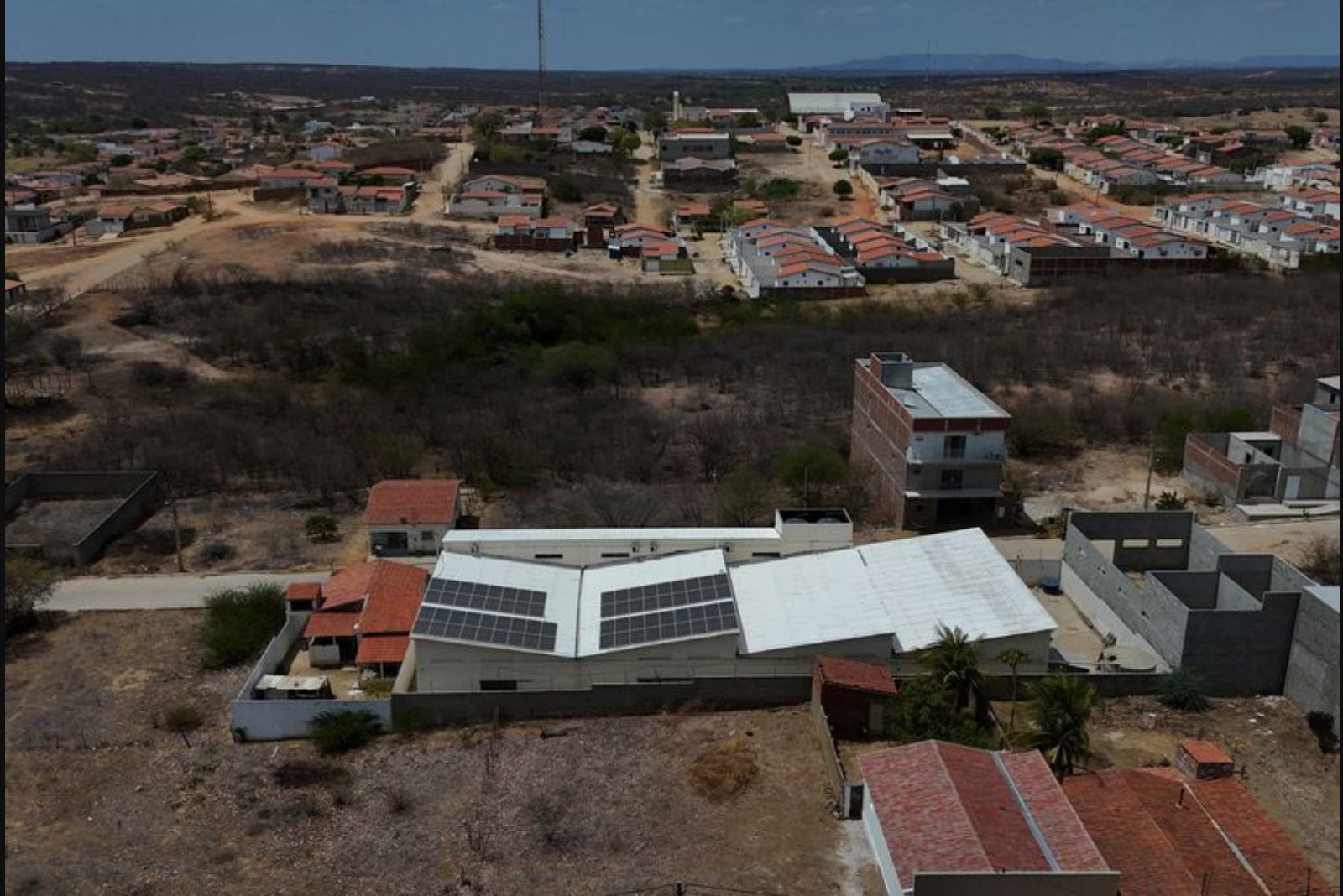
Multiple sources familiar with Shein’s operations in Brazil cited the country’s geographic scale and the rural siting of many garment plants as compounding logistical challenges. The combination of distance, road networks and distribution complexity affects transportation times and costs, making it harder for suppliers to match the quick turnarounds that define Shein’s production rhythm in China.
Two executives familiar with Shein’s Brazil strategy confirmed that local production failed to reach the company’s initial targets, though they did not provide quantitative figures. In a written response, Shein acknowledged the effort has been slower than planned. The company said production in Brazil required time to mature and that differences in business and industrial infrastructure became apparent, leading the company to adopt a more "selective" approach, deepening collaboration with suppliers it identifies as the most capable.
Shein also highlighted its online marketplace in Brazil, saying it "supports more than 45,000 local entrepreneurs and sellers," reflecting the company’s broader commercial footprint in the country beyond its manufacturing deals.
How the model clashed with Brazilian suppliers
Six factory owners interviewed by industry journalists told similar stories: short-lived partnerships, demand for sharp price reductions and deadlines that local operations could not meet without changing materials, processes or cost structures. Januncio Nobrega de Azevedo, owner of Nobre Confecções, a 59-employee operation in northeast Brazil that joined an apparel consortium to fulfill Shein orders in the second half of 2023, said the price points Shein sought were incompatible with the inputs he used. After supplying Shein for about six months, Azevedo said he was left with surplus materials he later sold domestically. He said he told Shein, "Look, unfortunately I can’t accommodate your business model." Shein declined to comment on Azevedo’s account.
Other small and medium-sized manufacturers recounted comparable experiences. José Medeiros de Araujo, owner of Zaja, a 128-employee factory in the northeastern town of Cerro Cora, said initial optimism evaporated when Shein moved to shorten delivery windows, reduce the number of orders and push price cuts of as much as 30 percent. Araujo gave specific examples of proposed wholesale reductions that his unit considered untenable, and said the altered terms made local production in his region not viable.
One manufacturer based in the southeastern state of Espirito Santo, GB Manufacturing, reported a different experience and remains identified in industry interviews as still producing for Shein. Owner Marco Britto praised the retailer’s payment practices, saying Shein typically paid within 30 days compared with payment terms of up to 90 days from other clients. He described working with Shein as comparatively straightforward. Two other firms were named by Britto as suppliers to the company but declined requests for interviews; Reuters reporting could not independently verify whether those firms currently make products for Shein. Shein declined to comment on its relationship with Britto or its former partners.
Regulatory shifts and trade policy
The push to localize production gained fresh urgency after Brazilian authorities in 2024 introduced a 20 percent duty on online purchases valued under $50 that had previously entered duty-free. The levy, derisively labeled the "little blouse tax" by some consumers, was framed by officials as a measure to promote fair competition and to redress the pressure that ultra-cheap imports placed on domestic industry. Uallace Moreira, Brazil’s secretary of industrial development, said the tax’s aim was to level the playing field between local manufacturers and low-cost foreign sellers.
For Shein, which built its business model on shipping individually packaged low-value parcels from China, changes to duty rules alter the calculus for cross-border trade. Several interviewees noted that governments in other markets, including the European Union and the U.K., are also moving toward ending low-value parcel duty waivers in coming years, a development that could raise the cost of Shein’s China-centric distribution strategy.
Why China’s production model is hard to transplant
Shein’s manufacturing system in China differs structurally from the way many retailers source goods. The company’s network of roughly 7,000 factories in China, concentrated largely in the southern province of Guangdong according to industry accounts, operates on a flexible, high-frequency ordering model. Small initial batches are produced and then ramped up rapidly as demand signals appear. That responsiveness is supported by dense industrial clustering, specialized labor, competitively priced inputs - including low-cost polyester fabric - and proximate suppliers of trims such as zippers and buttons. Factories in Guangzhou, the company’s noted manufacturing hub, can scale output quickly because those inputs and skilled workers are concentrated geographically.
By contrast, many Brazilian suppliers are smaller, dispersed geographically and embedded in value chains that do not provide the same scale advantages or the same proximity to inputs. In China, Shein often packages customers’ orders individually and ships them by air directly to buyers, leveraging duty exemptions on low-value parcels in some destination countries and reducing the need for expensive warehousing in foreign markets. That logistical and tariff environment is less favorable in Brazil and could be further constrained by new import duties and tariff rule changes elsewhere.
Shein’s general manager in Brazil was reported to have acknowledged publicly that growth required factories to change how they operate and that not all could or would do so. The company encouraged some local manufacturers to observe operations in China: Shein sponsored trips for a delegation of Brazilian firms to visit factories in Guangzhou and Hangzhou to show them the Chinese production model in action and to demonstrate operational methods. Several owners who participated said they appreciated the access and interest but ultimately could not offer prices low enough to meet Shein’s purchasing expectations.
Commercial significance of Brazil to Shein
Despite the production shortfall, Brazil has become an important commercial market for Shein. Industry estimates suggest the country was Shein’s second-largest market after the United States in 2025, contributing an estimated $3.5 billion, or roughly 7 percent, of $48.6 billion in global sales estimated by a research firm cited in market reports. Shein, as a private company, does not disclose its full financials and declined to confirm whether those publicly reported estimates were accurate. Still, the scale of Brazilian sales reflects how strategically important the market has become as tariffs and trade tensions make operations in the U.S. and other regions more costly.
Executives from Shein visited Brazil in late 2024 to assess local capacity and discuss potential partnerships with small and mid-sized manufacturers that form the backbone of regional apparel clusters. The company’s Latin America chairman did not respond to a request for comment about the Brazil program.
What producers say
Voices from the factories reveal the strain that the attempted transition placed on local firms. Some factory owners said they accepted initial orders hoping to scale up, hire more workers and expand production, only to find Shein’s follow-through required lower input costs or changes to fabrics and process flows that their businesses were not prepared to absorb. Others emphasized that faster delivery expectations created operational tension with Brazil’s labor regulations, which include controls on working hours and other protections that limit how quickly operations can run without violating rules.
One producer who toured Chinese plants but did not sign a contract, José Gomes Filho from Pernambuco, said the delegation was treated well and that Shein showed clear interest in local production. However he declined to commit because his lowest feasible price still exceeded what Shein was prepared to pay. Gomes Filho declined to disclose the price gap.
Implications for local industry and markets
The experience of Shein’s Brazil manufacturing initiative is a case study in the constraints companies face when they attempt to replicate supply chain models optimized for one industrial ecosystem in a very different one. In Brazil the combination of regulatory requirements, tax policy, geographic dispersion of suppliers and the scale benefits available in China created a commercial environment where many local factories found Shein’s expectations difficult to reconcile with their cost structures.
Shein says it will continue to operate in Brazil with a more selective supplier strategy and expand its marketplace presence that already lists tens of thousands of local sellers. For Brazilian manufacturers and regional economic planners, the aborted promise of large-scale nearshoring underscores the friction between industrial policy goals - such as encouraging domestic production through duty changes - and the operational realities small producers face when major buyers apply intense price and time pressures.
Although the initiative did not unfold as initially promised, Shein’s sizeable market presence in Brazil means the company will remain a significant commercial counterparty for many apparel sellers and digital entrepreneurs in the country. How quickly Shein adapts its sourcing approach - and how many Brazilian suppliers adjust their operations to meet the company’s requirements - will determine whether a scaled local production footprint for Shein ultimately materializes in the coming years.