
Summary
Serve Robotics Inc (NASDAQ:SERV) saw its stock decline 3.7% on Thursday after a report from short-seller The Bear Cave called attention to community resistance and operational incidents tied to the company’s sidewalk delivery robots. The report highlighted escalating pushback in Chicago, where an alderman said delivery robots will not be permitted to expand across parts of Wicker Park and Logan Square following negative feedback from constituents.
What happened
The stock drop followed publication of the short-seller analysis, which questioned Serve’s ability to scale as planned amid local opposition and reported mishaps involving robots in public spaces. In Chicago, Alderman Daniel La Spata announced restrictions on expansion after community reaction was overwhelmingly negative in surveys documented in the report.
The Bear Cave cited a survey of almost 500 residents in Chicago’s 1st Ward in which more than 83% said they strongly disagreed with allowing the robots to operate across the ward. According to the city’s website, the current robot delivery pilot will not be automatically extended beyond May 2027 without City Council approval.
Community actions and complaints
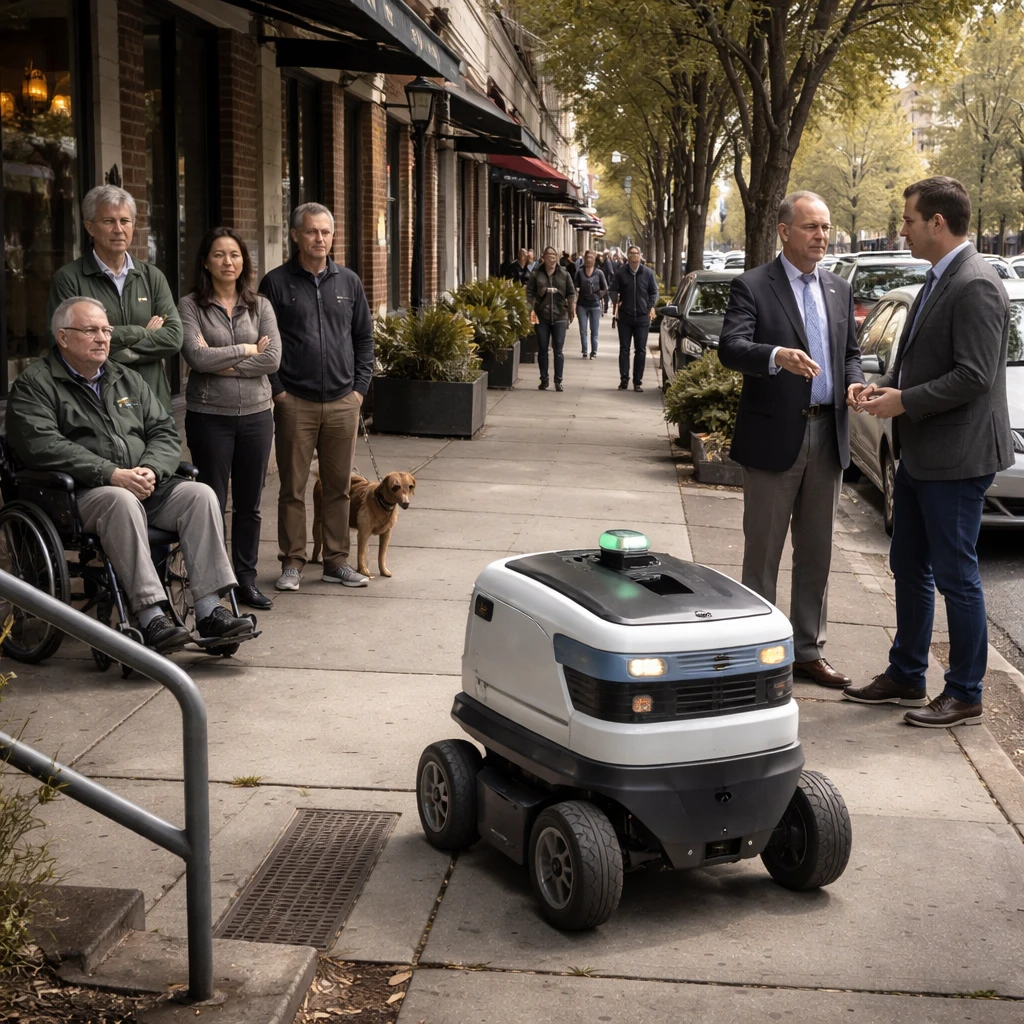
A petition hosted at NoSidewalkBots.org has collected in excess of 3,400 signatures opposing sidewalk robots in Chicago. The report cataloged resident complaints that robots have blocked wheelchair ramps, impeded dog walkers, and created broader accessibility concerns.
Operational incidents cited
The report also recorded several operational incidents involving delivery robots. Among those cited was an episode in January in Miami where a Serve robot broke down on train tracks and forced a Brightline train to stop. The report additionally referenced occasions when robots obstructed firetrucks and disrupted regular traffic flow.
Company footprint and timeline
Serve announced its Chicago expansion in September 2025, describing the city as offering favorable conditions for sidewalk delivery. The company currently operates self-driving robots for food delivery in Los Angeles, Miami, and Chicago.
Financial and growth concerns
The Bear Cave previously reported in December that Serve incurred roughly $80 million in losses on $2 million in revenue over the prior twelve months. The short-seller expressed skepticism about Serve’s ability to deliver the 10x revenue growth that some investors expect for 2026.
Implications
The convergence of local regulatory pushback, vocal community opposition, and reported operational failures has been cited by the short-seller as evidence that Serve could face significant obstacles to rapid expansion. The city-level limits and documented incidents are factors that may affect the company’s near-term operating environment.