
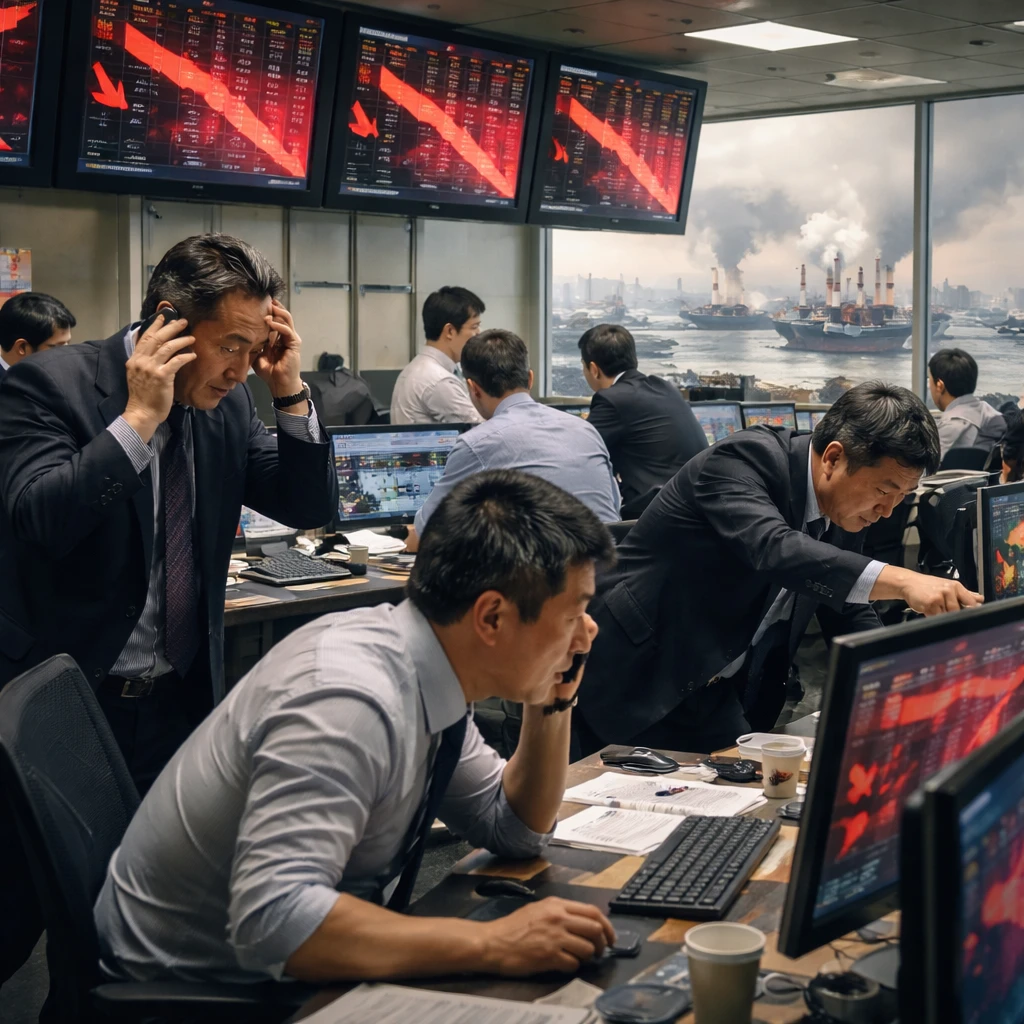
Trading on South Korea's main stock index was temporarily suspended on Monday after the KOSPI dropped into double-digit territory on the downside, falling 8.1% in morning trade and triggering the index's lower circuit breaker. Execution of the halt lasted about 20 minutes before trading resumed at 09:52 ET (01:57 GMT).
The steep decline followed a deterioration in risk appetite tied to a weekend escalation in the U.S.-Israel war with Iran. Investors moved to take profits after a strong rally in the KOSPI during the first two months of the year, with much of that earlier advance concentrated in memory-chip producers.
Market movers
Memory-chip leaders, which had been central to the market's earlier rise, plunged between 10% and 12% during the sell-off. Hyundai Motor, another stock that had contributed to the earlier gains on the index, dropped 10.4%.
Regional and commodity drivers
The wider Asian market sell-off was linked to military actions and attacks on energy-related targets. Israeli air strikes struck Iran's oil infrastructure for the first time since the conflict began. In response, Iran carried out missile and drone strikes against several neighboring Middle Eastern countries, aiming at some of their energy facilities. Iran also began attacking commercial vessels transiting the Strait of Hormuz - a critical shipping lane that handles about 20% of global oil consumption.
Those developments sent oil prices sharply higher, lifting Brent crude back to levels last observed at the onset of the Russia-Ukraine war in 2022. Asian markets were particularly sensitive to the move because many economies in the region are net importers of oil; the rise in energy costs raised concerns about inflation and the potential for more hawkish policy from major central banks.
Vulnerabilities highlighted
South Korea's exposure to Middle Eastern oil supplies was an acute factor in market reaction - roughly 70% of the country's oil imports come from countries in that region. The combination of higher energy costs and disrupted shipping routes is seen in market pricing as likely to create inflationary pressures and to weigh on economic activity.
The abrupt suspension of trading on the KOSPI underlines how geopolitical shocks can quickly unwind recent gains and concentrate losses in previously outperforming sectors.
Summary of facts
- KOSPI fell 8.1% in morning trade, activating the lower circuit breaker and halting trade for about 20 minutes.
- Trading resumed at 09:52 ET (01:57 GMT).
- Memory-chip companies dropped between 10% and 12%; Hyundai Motor fell 10.4%.
- Escalation in the U.S.-Israel war with Iran included Israeli strikes on Iranian oil infrastructure and Iranian missile and drone strikes against neighboring countries' energy infrastructure, plus attacks on ships in the Strait of Hormuz.
- Brent crude moved back to price levels last seen at the start of the Russia-Ukraine war in 2022; approximately 20% of world oil consumption transits the Strait of Hormuz.