
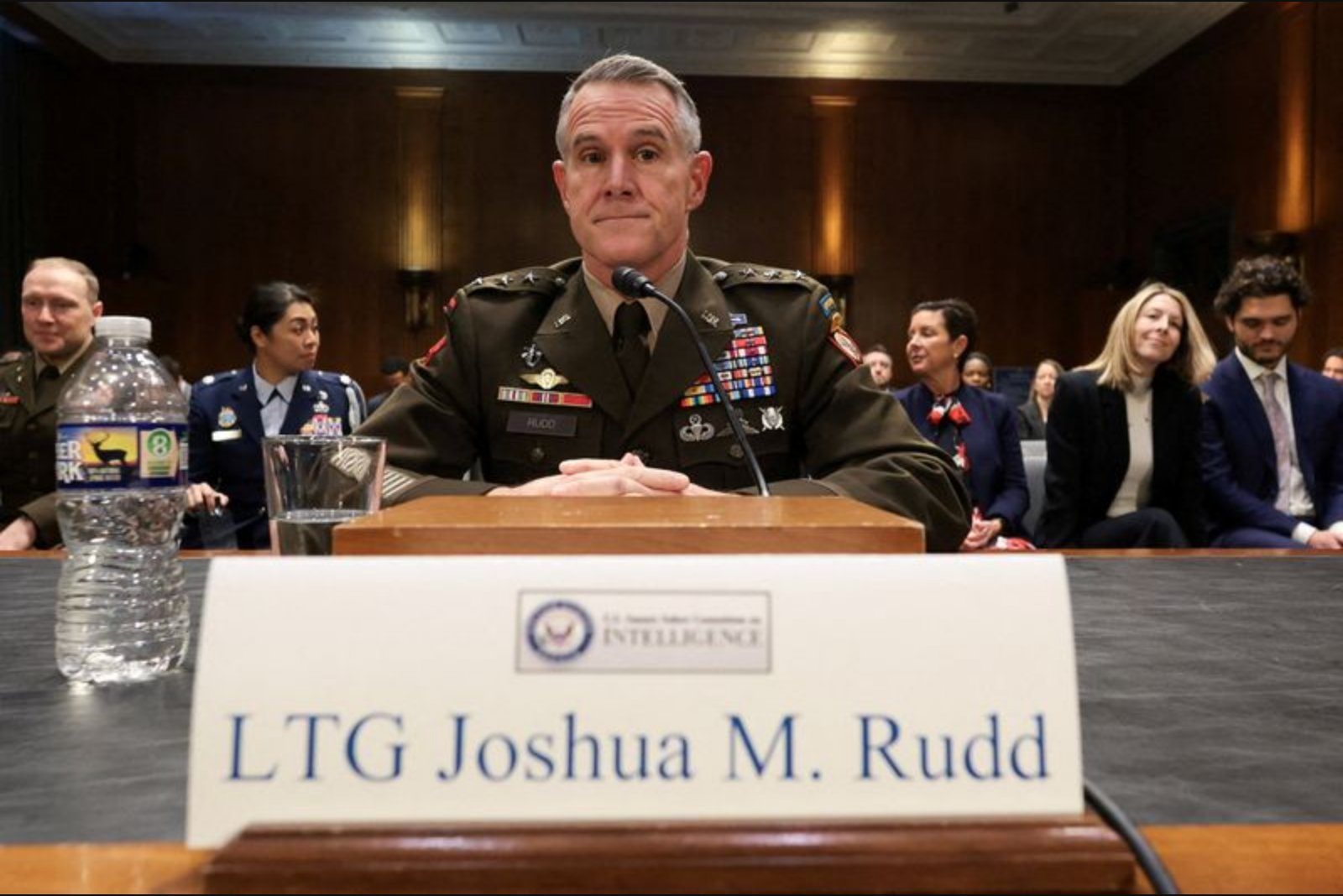
WASHINGTON, March 10 - The Senate on Tuesday approved the nomination of General Joshua Rudd to head the National Security Agency (NSA) and U.S. Cyber Command, resolving a leadership gap that opened after sudden personnel changes at the agency last year. The chamber voted 71-29 to confirm Rudd, who will assume the dual role and be promoted to four-star general.
President Donald Trump nominated Rudd in December. At the time of his nomination he held the rank of lieutenant general and served as the No. 2 officer at the military's Indo-Pacific Command. His confirmation places him in charge of both the NSA - the agency responsible for monitoring, collecting and processing information and data for global intelligence and counterintelligence - and Cyber Command, which oversees the military's offensive and defensive cyber operations.
Cyber Command's remit has grown as cyber operations have become a central element of modern military campaigns; the role is cited as significant in the context of the ongoing Iran war, where cyber activity forms part of broader military actions. The combination of the NSA and Cyber Command responsibilities means the confirmed leader will direct capabilities that span intelligence collection, analysis and active cyber engagement.
The agency underwent a notable upheaval in April when President Trump abruptly removed General Timothy Haugh and Wendy Noble, his deputy, from their posts. No official reason for those firings was provided. The departures occurred after an Oval Office meeting in which Trump met with Laura Loomer, a far-right political activist identified with conspiracy theories, who stated on X that she had presented the president with a list of officials she considered disloyal to him.
The Senate confirmation drew both endorsement and criticism from key lawmakers. Republican Senator Tom Cotton of Arkansas, who chairs the Senate Intelligence Committee, praised Rudd's elevation in a prepared statement. "General Rudd is a war hero with a lifetime of service to our nation. He is the right choice to lead the protection of our nation from cyberattacks by Iran, Russia, and China," Cotton said, and he criticized Democrats for not moving faster on the nomination.
Conversely, Senator Ron Wyden of Oregon, a senior member of the intelligence panel, expressed reservations in a letter to the president. Wyden said he did not believe Rudd was qualified and used procedural tools to prevent the nomination from being expedited.
Contextual note - The confirmation ends a period during which the NSA and Cyber Command operated without a permanent confirmed leader after the abrupt removals of senior officials. The incoming director will oversee both intelligence and cyber operations at a time when cyber threats are a central focus of national defense planning.