
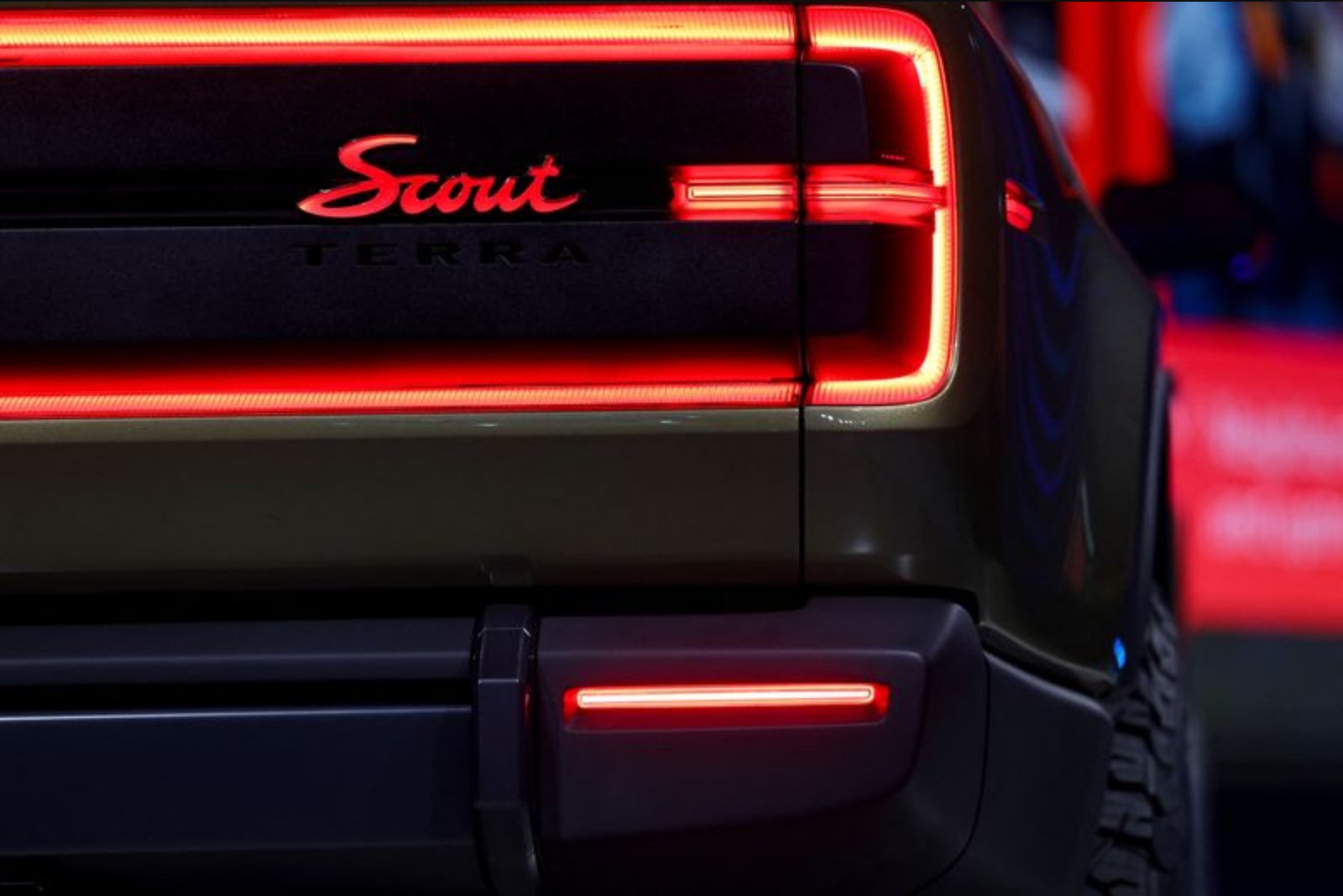
March 4 - Volkswagen’s newly launched Scout Motors label has drawn significant early interest, amassing in excess of 160,000 reservations for its inaugural vehicle, the company said on Wednesday. Scott Keogh, chief executive of Scout, told an Automotive Press Association event in Detroit that the bulk of buyers are selecting a hybrid variant rather than a fully electric configuration.
Of the total reservations, 87% are for an extended-range electric vehicle, commonly abbreviated as EREV, according to Keogh. The EREV variant pairs a large battery pack with a small internal-combustion engine that operates as a generator to recharge the battery while driving, offering on-the-go electrical replenishment instead of relying solely on plug-in charging.
Scout originally launched as a fully electric brand in 2022 but subsequently expanded its lineup to include EREVs after U.S. demand for purely battery-electric vehicles slowed. Keogh said Scout will begin assembling prototype units this year at a factory the automaker is building in South Carolina. He reiterated that Scout expects to have vehicles in customers' hands by 2028, a slip from the production start the brand previously cited for 2027. Recent media coverage had reported rollout delays tied to technical issues.
The Scout initiative forms part of Volkswagen’s strategy to increase its footprint in the United States, where pickups and sport-utility vehicles dominate sales. Keogh framed the brand’s direct-to-consumer sales structure as the best fit for the American market, saying that the approach "made the most sense, without a doubt." Volkswagen has long sought to expand market share in the U.S.; the company was 11th in U.S. vehicle sales last year, trailing Tesla, according to Motor Intelligence.
Not all stakeholders have embraced Scout’s retail approach. On Tuesday, two Volkswagen dealers in the United States filed suit against the automaker, contending that Volkswagen’s plan to sell Scout vehicles directly to customers breaches agreements with its dealer network. The dealers are pursuing class-action status. A Volkswagen spokesperson declined to comment on active litigation.
Context and implications
The reservation mix - heavy toward EREVs - underscores a distinct preference among early Scout customers for an extended-range hybrid configuration rather than a battery-only model. Scout’s shift from a strictly electric positioning to one that includes a gasoline-backed generator option reflects the company’s response to softer growth in the U.S. EV market.
For Volkswagen, Scout represents a targeted effort to better compete in the truck-and-SUV-centric U.S. market where the automaker has historically underperformed relative to global scale.