
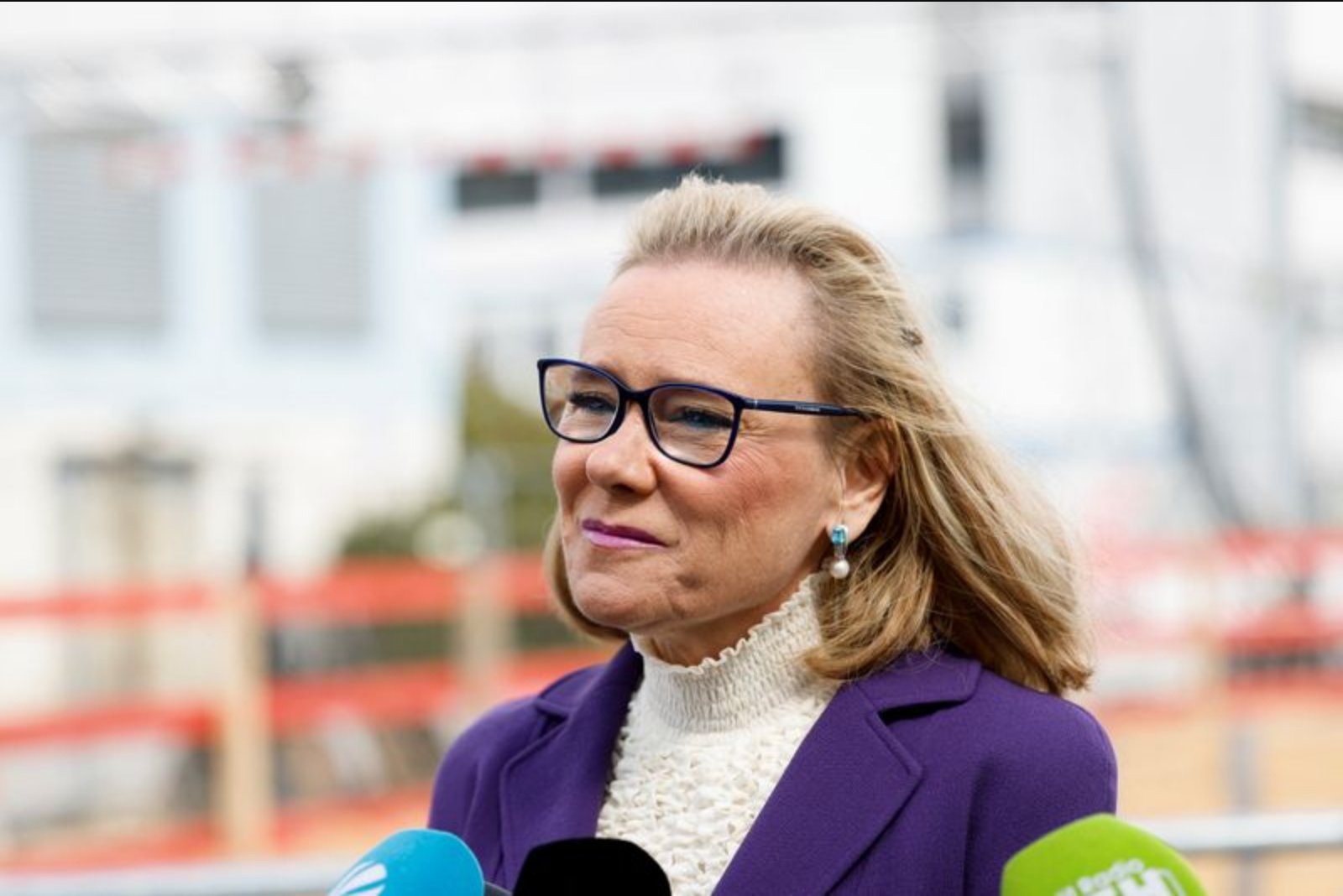
Sanofi's incoming chief executive, Belén Garijo, 65, arrives at the French drugmaker with a lengthy mandate: convince investors, accelerate a lagging drug pipeline and steer a vaccine business facing weaker sales amid growing scepticism in the United States. She will take over in April following the departure of Paul Hudson, 58, who will step down this month.
Sanofi shares have been under pressure. The stock is down about 25% over the past year and fell 3.5% on the announcement that Hudson would leave. Investors and analysts say the change at the top highlights a broader failure - or a slow pace - in transforming R&D at the company.
"The CEO change at Sanofi is a sign that R&D transformation has failed or is happening too slowly," said Markus Manns, a portfolio manager at Sanofi investor Union Investment. "Belen’s priority at Sanofi will be to increase R&D productivity."
Garijo arrives with significant operational experience from her role as CEO of Germany's Merck KGaA since 2021. People close to her and investors familiar with her tenure describe her as bold, detail-focused and effective at execution. Yet they also point to mixed outcomes on research and development, noting that Merck's share price declined under her stewardship and that the company experienced several R&D setbacks.
At Sanofi, the most pressing development challenge is replacing Dupixent, the asthma blockbuster that now represents more than 30% of group revenues. Executives and advisers inside and outside the company acknowledge that finding a successor to Dupixent is the single most important strategic task facing the firm as patents on the drug begin to expire in the early 2030s.
"Replacing Dupixent is the key strategic challenge for Sanofi," said Nicolas Dumas, a partner at consultancy firm Roland Berger and a former Sanofi employee.
Vaccines constitute close to a fifth of Sanofi's revenue, and that segment has weakened in recent years. Paul Hudson had previously attributed part of the weakness to a more hostile stance toward vaccines from the U.S. health administration. Reviving growth in vaccines, alongside bolstering the pipeline for new drugs, will be central to Garijo's task.
Sanofi said Garijo, who previously spent years at the company until 2011, would bring "increased rigour to the implementation of" Sanofi's strategy. She did not immediately respond to requests for comment.
Garijo will be Sanofi's first female CEO. She is also set to be the only woman leading a large-cap global drugmaker after GSK's Emma Walmsley stepped down this year. Garijo was the first woman to head a German DAX-listed company when she became chief executive at Merck KGaA.
Her record at Merck shows operational strengths. As head of the pharmaceutical business she helped steer the group's supply chain through the COVID-19 pandemic and supervised acquisitions, including Merck KGaA's $3.9 billion purchase of SpringWorks Therapeutics last year. Observers credited her with improving internal structure and protecting margins.
At the same time, Merck KGaA suffered setbacks in drug development under her watch. During her tenure only three new drugs reached the market, according to people familiar with the company, and several R&D projects failed to meet expectations. Some investors who have worked with Garijo said the visible parts of her track record - namely R&D and business development - had been disappointing, even as she reworked internal organisation.
Roel Bulthuis, managing partner at Syncona Limited, described Garijo as a leader who reshaped a company that had been "stuck in rules and hierarchy" into a more decisive organisation. "She... challenged executives to have guts to stand up for their decisions and actually get shit done," he said, reflecting views from within Merck's corporate venture effort during part of Garijo's tenure.
Another investor who had worked with Garijo praised her energy, dynamism and deep knowledge of Sanofi from her prior years at the group. "She knows the house, don’t underestimate the importance of that," the investor said.
Garijo's background is in clinical pharmacology. She began her career as a physician at La Paz Hospital in Madrid and is known for operational execution and attention to detail. Analysts note she brings more operations experience than a pure science background, leaving observers curious about how she will seek to stimulate Sanofi's R&D engine.
"She has more operations experience than a science background, so will be interesting to see how she can reinvigorate the R&D department in Sanofi," said Claus Henrik Johansen, CEO of Global Health Invest, a Danish healthcare investment fund that holds Sanofi shares.
Some market participants said Garijo was not widely anticipated as a successor, a choice that took parts of the market by surprise and prompted questions about the length of her tenure at Sanofi. "I think she’s a transition CEO. What she’s good at, she’s someone who can put the organisation under pressure," Dumas said. "She’s not there to stay forever."
Investors will be watching closely for tangible signals of improved R&D productivity, a credible plan to replace Dupixent's revenue stream over the long run and effective steps to stabilise vaccine sales in key markets such as the United States. Garijo's early moves on those fronts will likely shape market confidence and the company’s prospects under her leadership.