
Summary
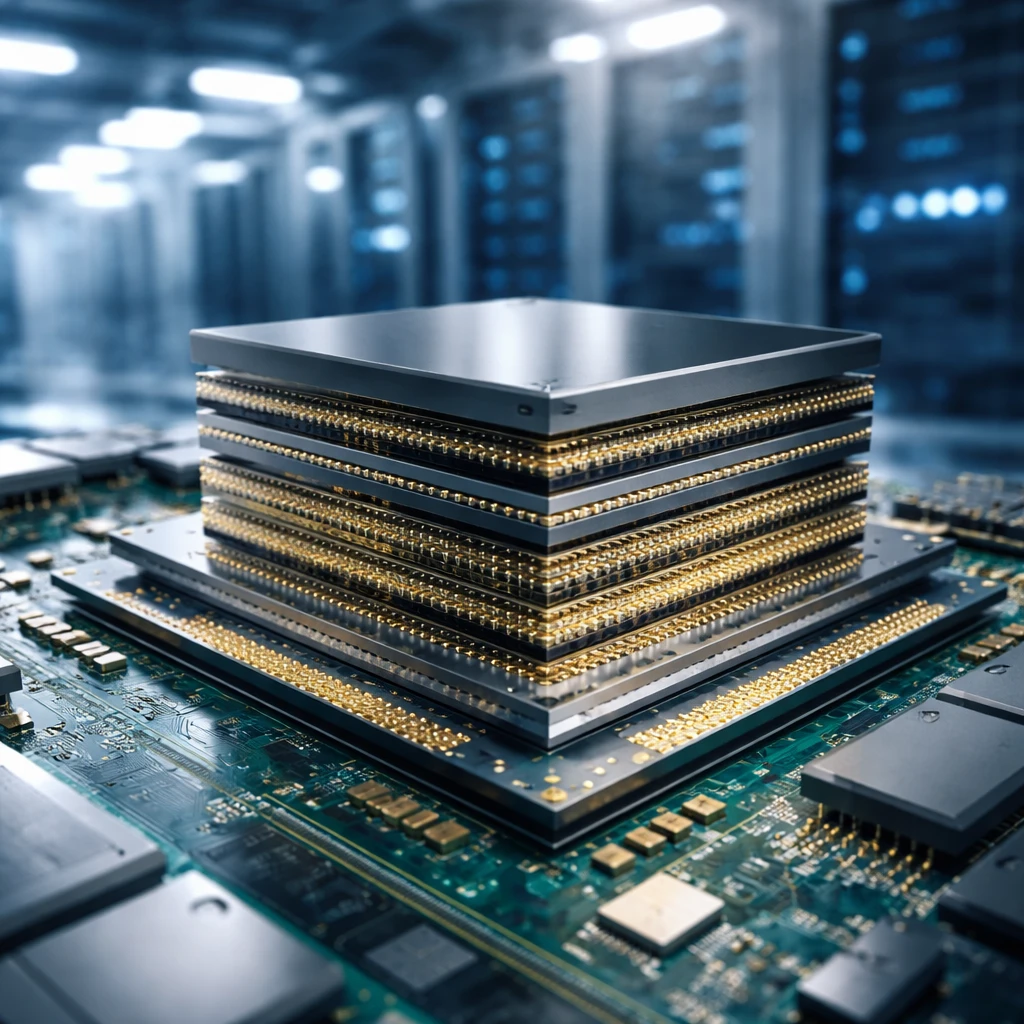
Samsung Electronics said on Thursday it has moved into mass production of its fourth-generation high-bandwidth memory (HBM4) and has shipped commercial products to customers. The company also said it expects sales of HBM chips to more than triple in 2026 compared with 2025 and that it is proactively expanding HBM4 production capacity.
Production, shipments and performance claims
In its announcement, Samsung said HBM4 is now in mass production and that the chips set a new benchmark within the industry for performance and power efficiency. The firm added that it is the first company to mass-produce and ship HBM4 chips. Samsung additionally stated it will begin sampling an advanced version, HBM4E, in the second half of 2026.
Market reaction and competitive context
Shares of the South Korean memory-chip maker rose more than 6% to a record high on Thursday following the news. Samsung's statement follows a recent announcement from U.S. rival Micron Technology Inc (NASDAQ:MU), which said it had commenced shipments of HMB4 chips. The two companies appear to have beaten rival SK Hynix Inc (KS:000660) in commencing shipments of HBM4 memory.
The company has been identified in media reports as a major memory supplier to NVIDIA Corporation (NASDAQ:NVDA) and is reported to be supplying chips for Nvidia's next-generation Vera Rubin AI processors. The announcement noted that HBM-class memory is an important component for AI workloads because these chips support faster processing speeds and larger effective memory capacity, attributes important for generative AI models' demanding compute requirements.
Strategic focus and demand
Samsung said it has shifted a greater share of its product focus toward higher-margin HBM and AI memory products in recent quarters, reflecting strong demand from the industry. The company described its approach as proactive expansion of HBM4 capacity to meet anticipated customer needs.
Key points
- Samsung began mass production and commercial shipments of HBM4 chips and claims industry-leading performance and power efficiency - sectors impacted include semiconductors, AI infrastructure and data centers.
- The company expects HBM chip sales to more than triple in 2026 versus 2025 and is expanding production capacity - this affects memory markets and suppliers to hyperscalers and AI chipmakers.
- Micron has also announced shipments of HMB4 chips, and Samsung plans HBM4E sampling in H2 2026, indicating competitive dynamics in high-bandwidth memory supply.
Risks and uncertainties
- Competitive pressure: Micron's recent shipment announcement and competition from SK Hynix could affect market share dynamics in HBM memory - impacts semiconductor and memory sectors.
- Timing and execution risk: Samsung's HBM4E sampling is scheduled for the second half of 2026; actual timing and product performance will determine adoption rates - relevant to AI infrastructure buyers and foundry suppliers.
- Demand concentration risk: Samsung has shifted toward higher-margin HBM and AI memory driven by outsized industry demand; changes in AI capex or customer preferences could influence revenue outcomes - affects memory makers and data-center customers.
What remains limited or to watch
The announcement reiterated Samsung's production milestones and plans but did not provide detailed volume guidance or specific customer shipment figures beyond confirming commercial deliveries and planned HBM4E sampling timing. Media reports identified Nvidia as a reported customer, while Samsung framed its actions as proactive capacity expansion to meet demand.